Game Dev
-
Resquício: A Game for Introductory Programming (2024)
Final paper (PDF, in Portuguese)Gameplay:
A third-person 3D RPG in which the player takes on the role of a newly graduated Repair Technician sent to a remote village, set in a world rebuilding itself after a nuclear war. Movement uses the W, A, S and D keys, jumping uses the space bar and interaction with characters and objects uses the F key, while the mouse controls the camera. The core mechanic is solving programming exercises: on interacting with damaged pre-war objects, the player opens a built-in code editor and has to write snippets in Lua to repair the equipment and move through the quests. The challenges cover the opening topics of an introductory programming course, such as arithmetic operations, conditionals and loops. Progression combines exploring the scenery, talking to the villagers and solving the exercises, so that mastering the programming concepts is what drives the narrative and earns the trust of the residents. The project was built in the Godot Engine with GDScript, with low poly 3D modelling done in Blender.
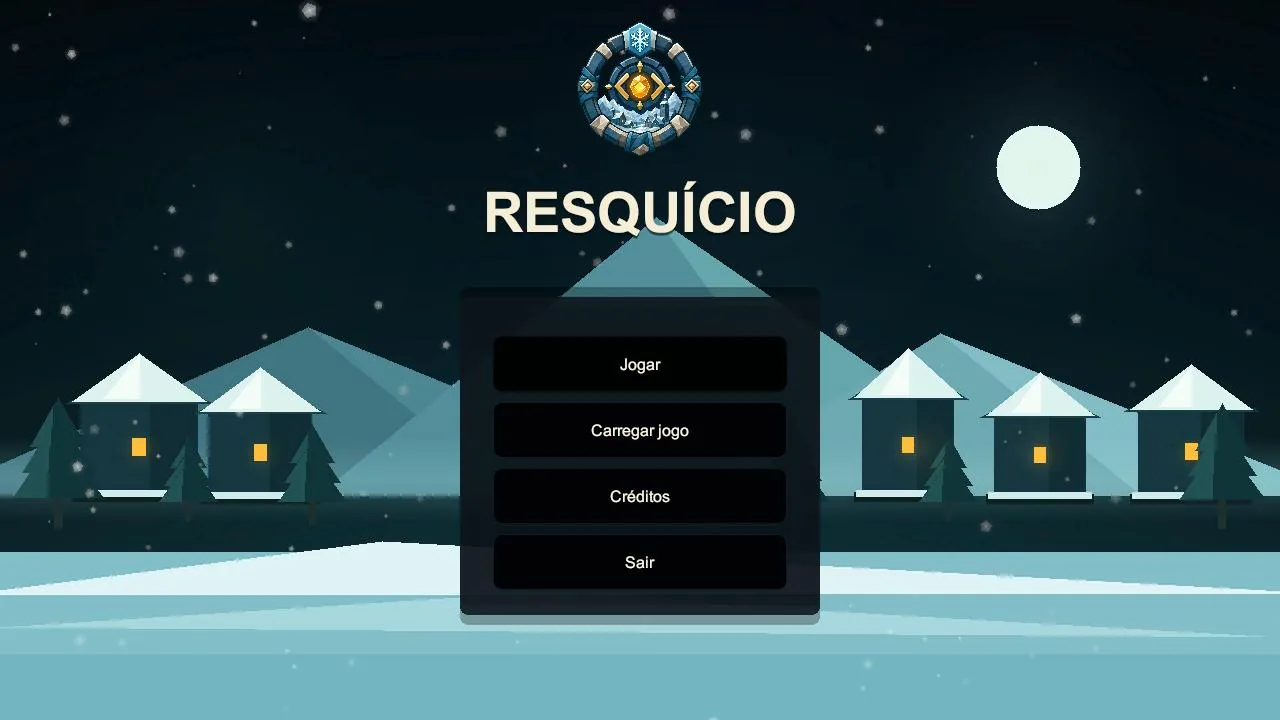
![Resquício (2024) — Main menu, with the village in the background.]()
Resquício (2024)
Main menu, with the village in the background.
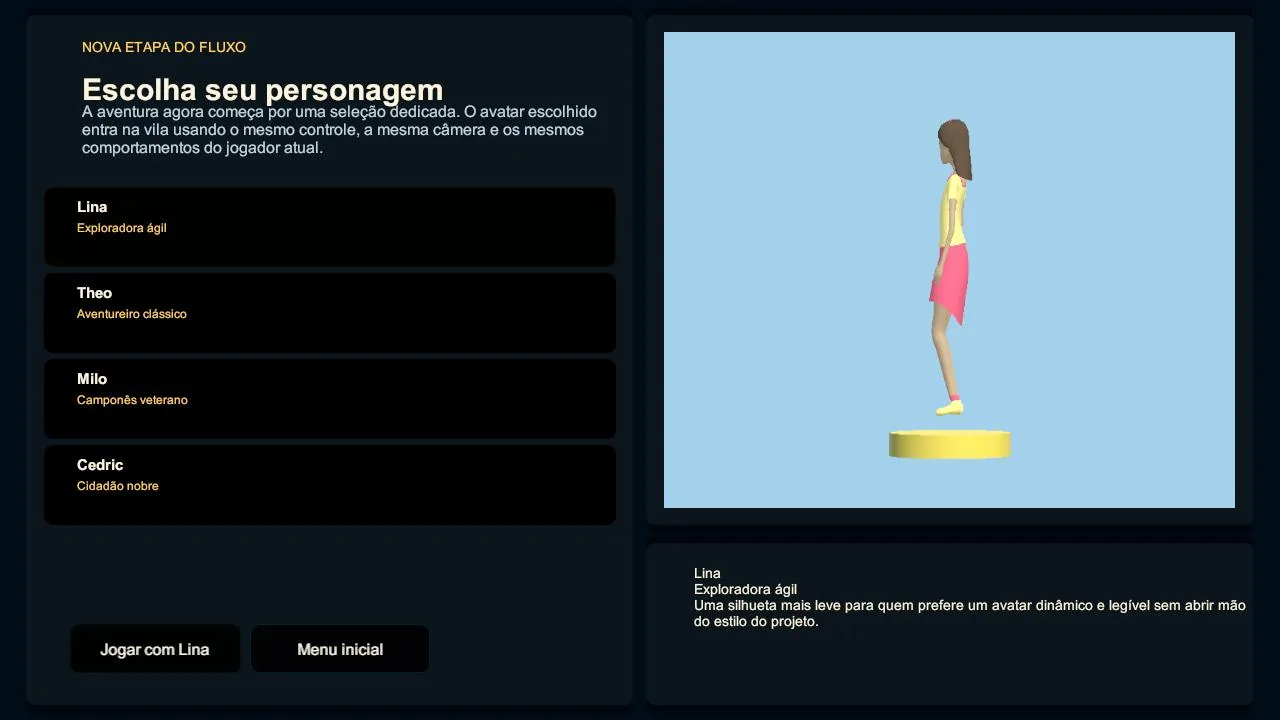
![Resquício (2024) — Character selection screen, with a preview of the avatar.]()
Resquício (2024)
Character selection screen, with a preview of the avatar.
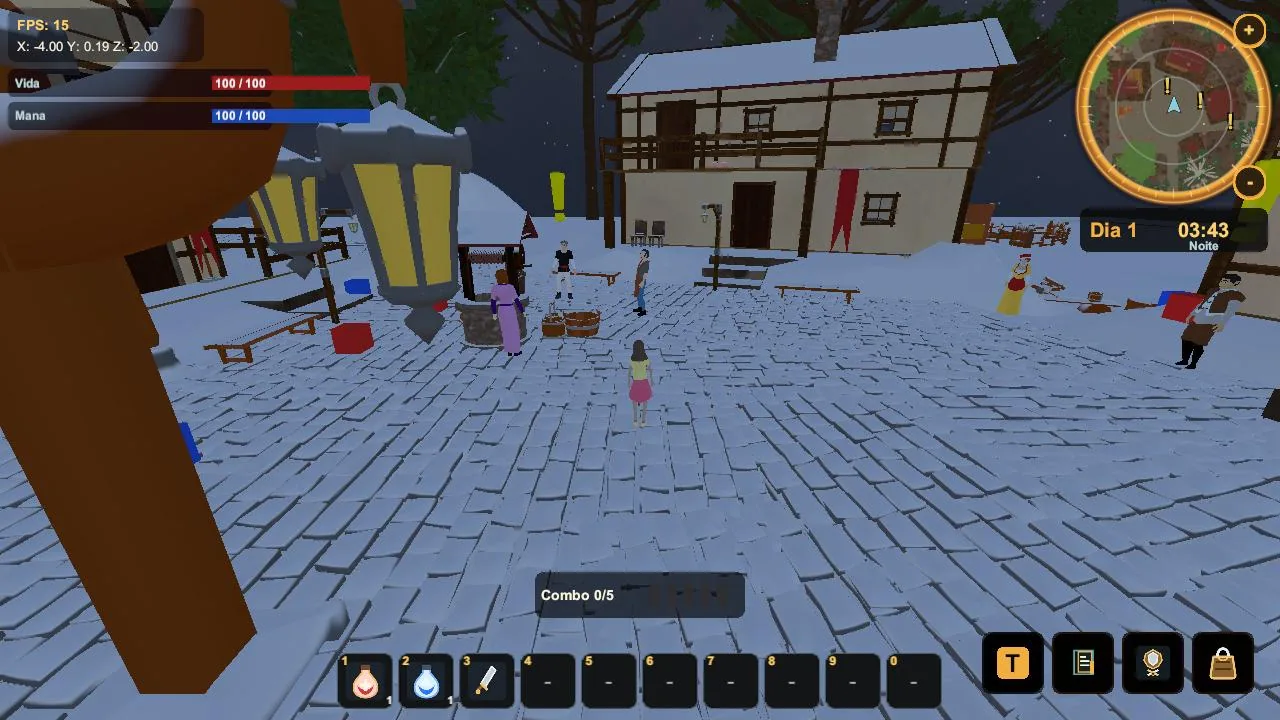
![Resquício (2024) — The village square at night, with the health, mana, minimap and item shortcut interface.]()
Resquício (2024)
The village square at night, with the health, mana, minimap and item shortcut interface.
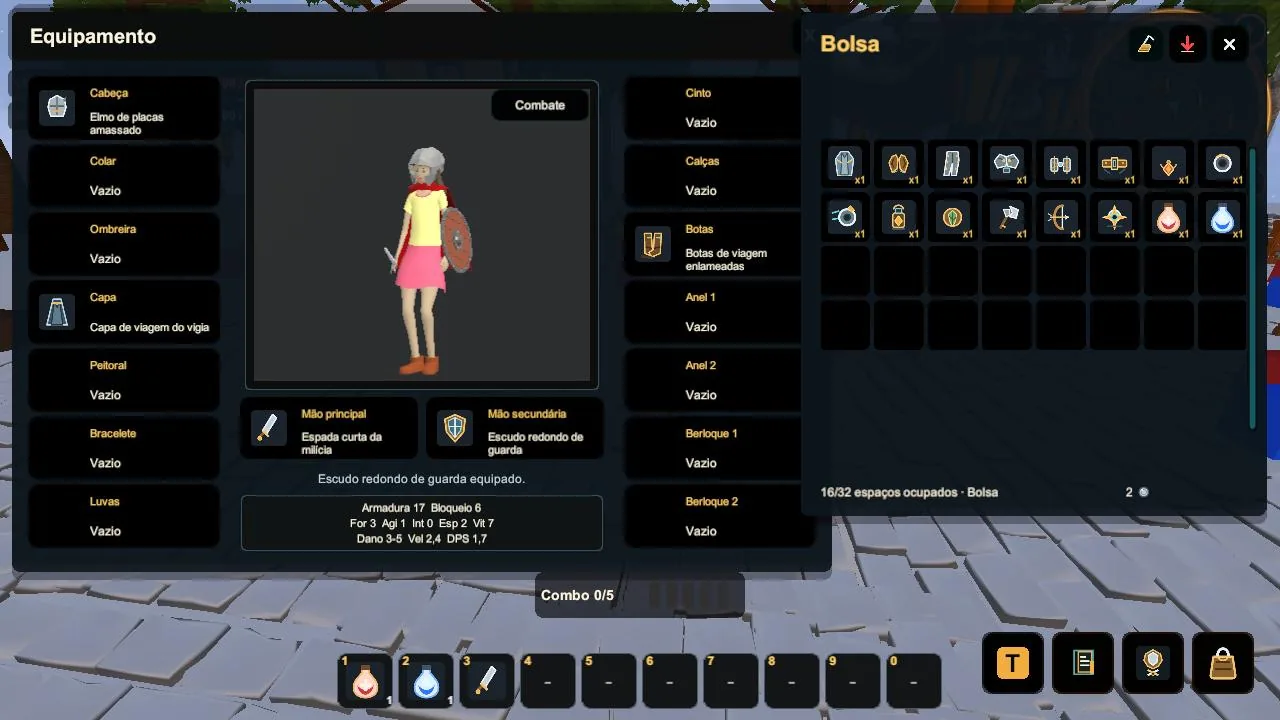
![Resquício (2024) — Equipment and bag screens of the inventory.]()
Resquício (2024)
Equipment and bag screens of the inventory.
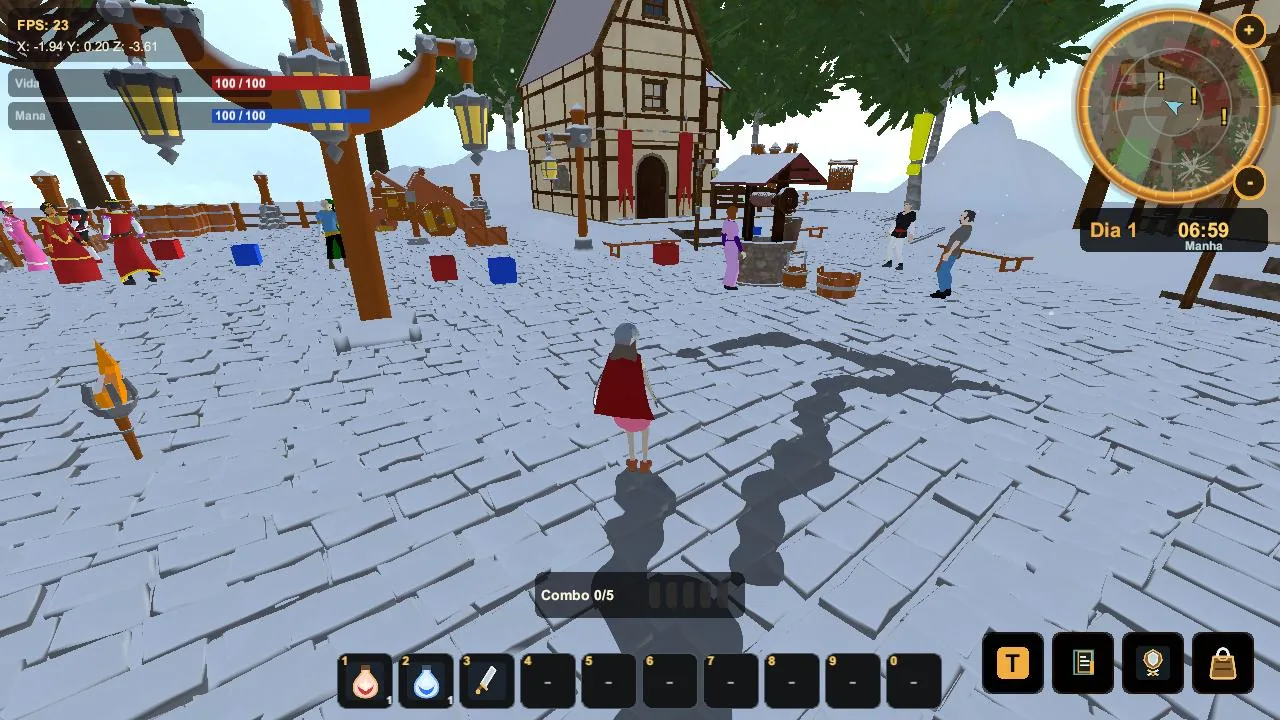
![Resquício (2024) — Exploring the village square in the morning, in third-person view.]()
Resquício (2024)
Exploring the village square in the morning, in third-person view.
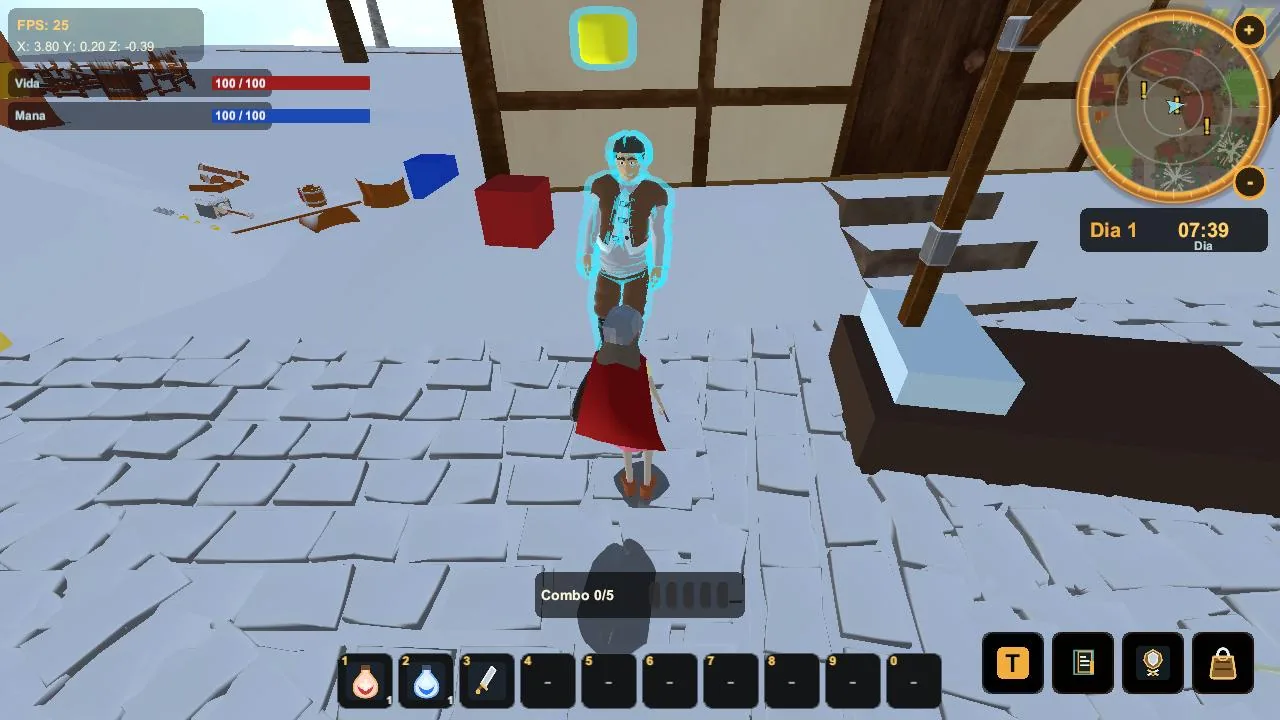
![Resquício (2024) — Meeting the automaton that sets the programming challenges.]()
Resquício (2024)
Meeting the automaton that sets the programming challenges.
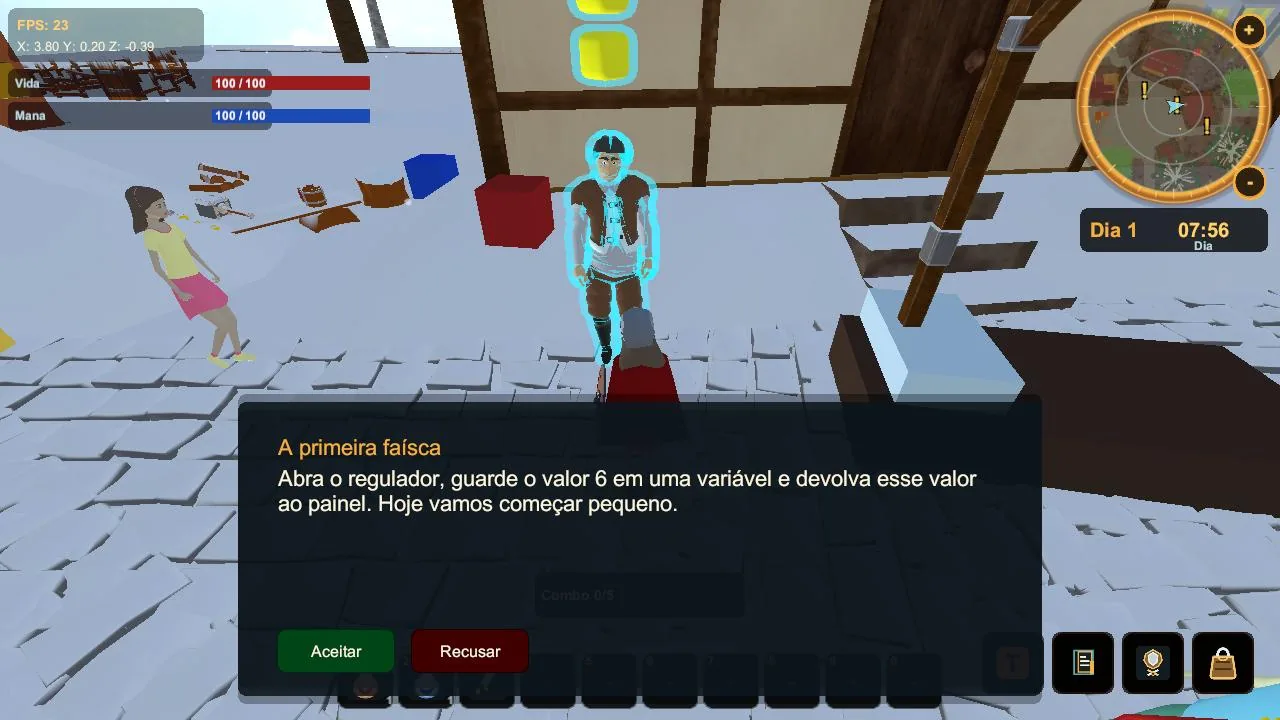
![Resquício (2024) — Opening dialogue of the quest “A primeira faísca”, with the options to accept or decline.]()
Resquício (2024)
Opening dialogue of the quest “A primeira faísca”, with the options to accept or decline.
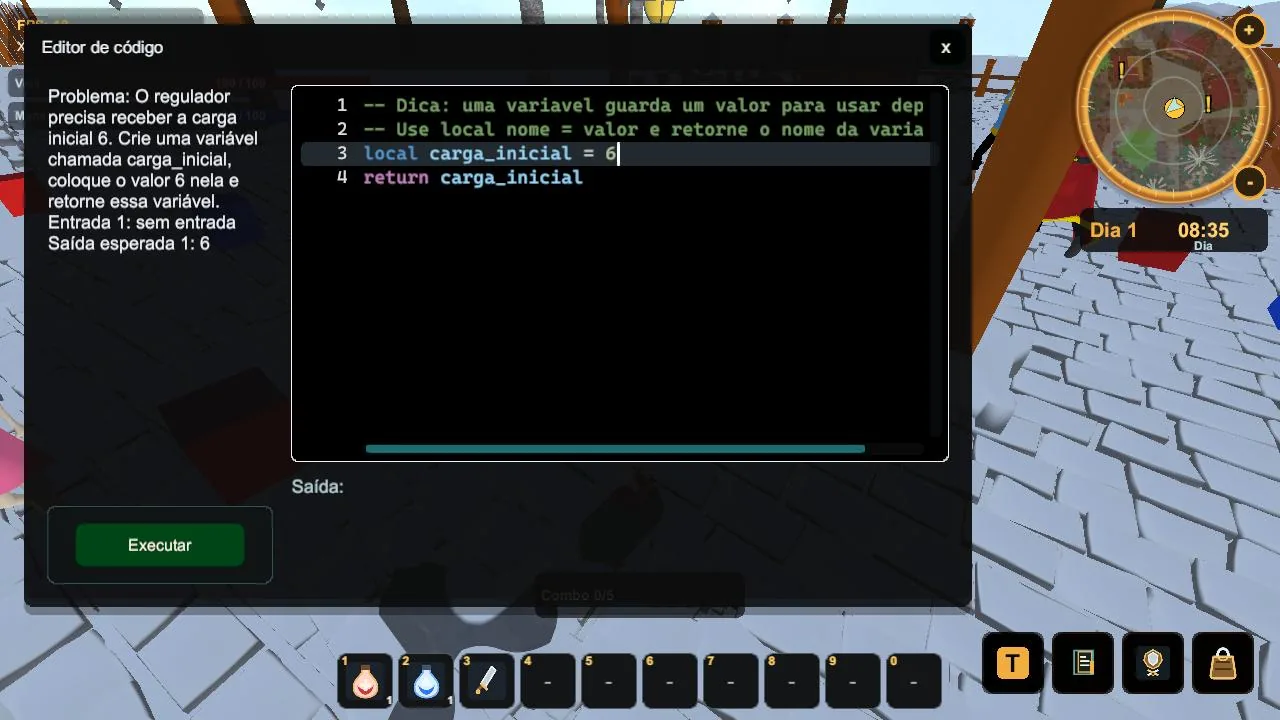
![Resquício (2024) — The quest code editor, with the problem statement, the hint and the solution in Lua.]()
Resquício (2024)
The quest code editor, with the problem statement, the hint and the solution in Lua.
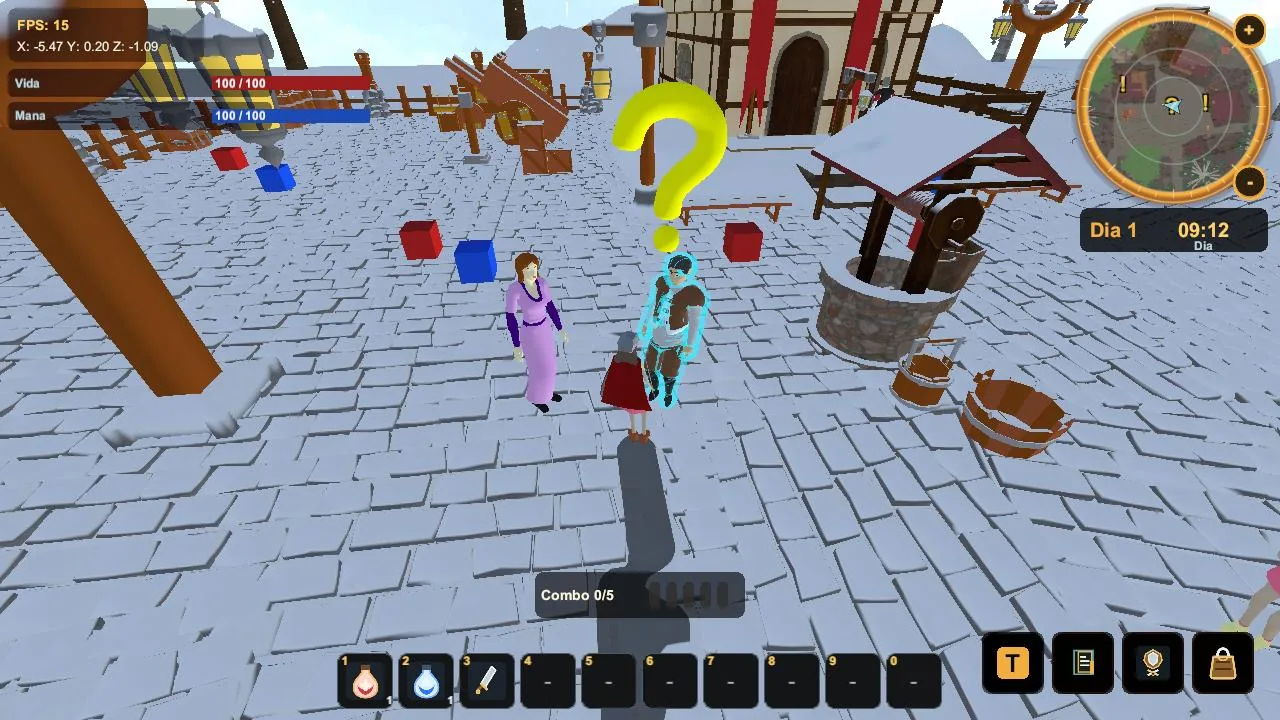
![Resquício (2024) — An NPC flagging an available quest, next to the village well.]()
Resquício (2024)
An NPC flagging an available quest, next to the village well.
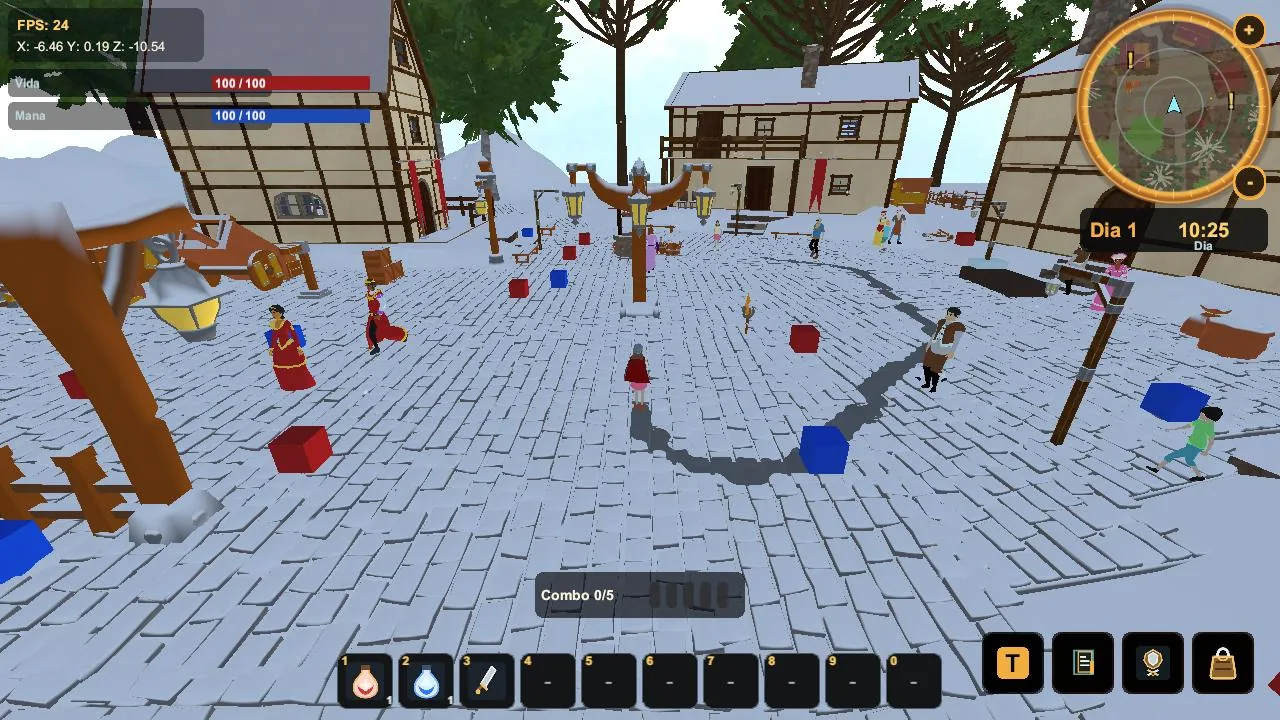
![Resquício (2024) — Another part of the village, now during the day.]()
Resquício (2024)
Another part of the village, now during the day.
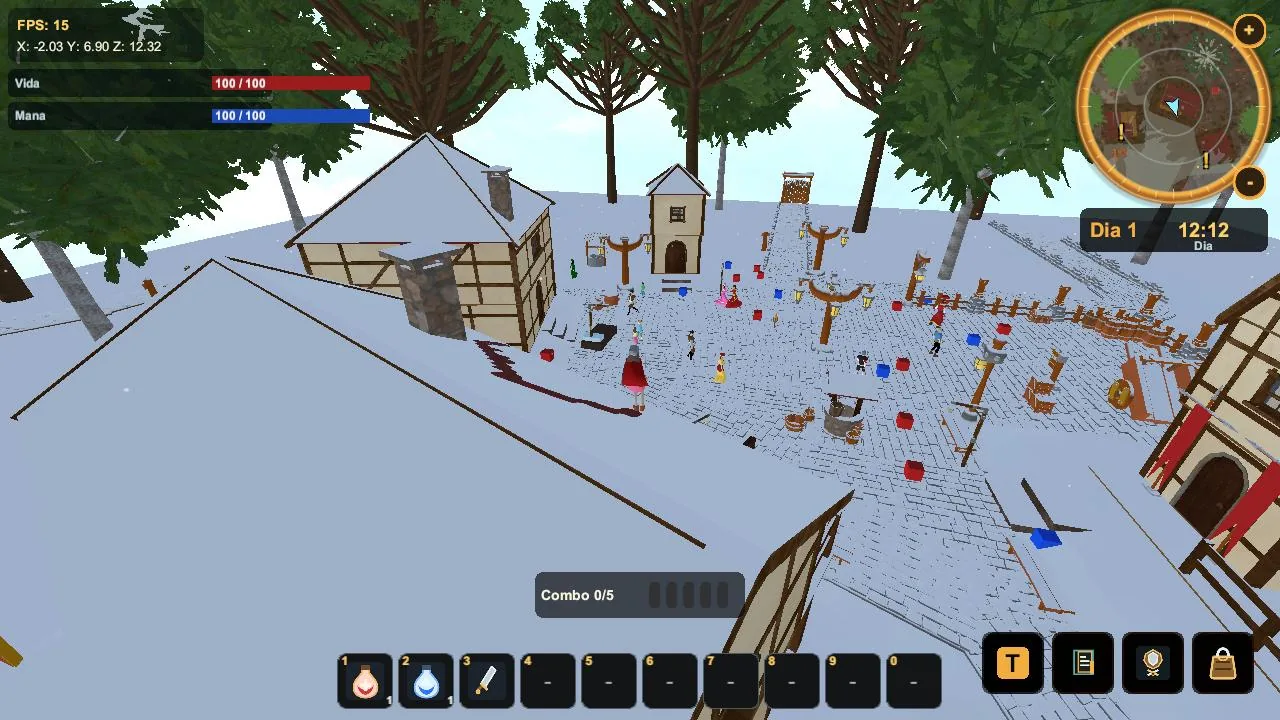
![Resquício (2024) — Wide view of the village square from the rooftops.]()
Resquício (2024)
Wide view of the village square from the rooftops.
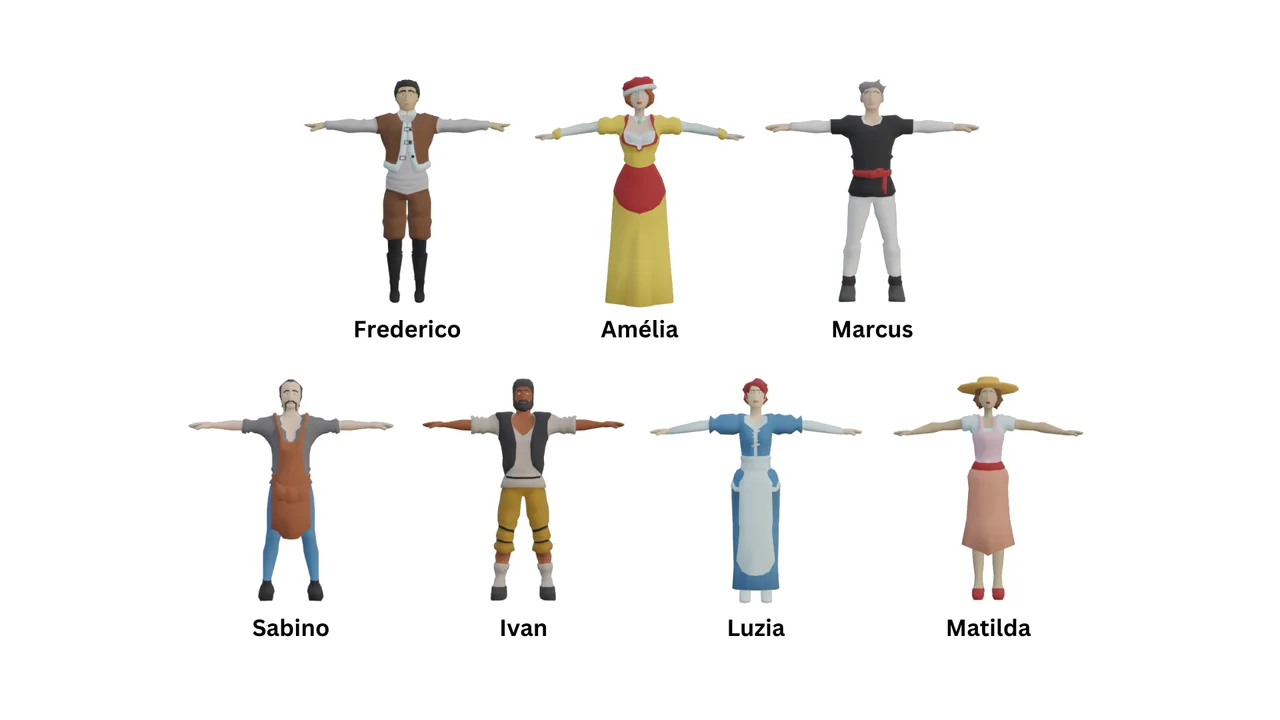
![Resquício (2024) — The characters who live in the village, modelled in Blender.]()
Resquício (2024)
The characters who live in the village, modelled in Blender.
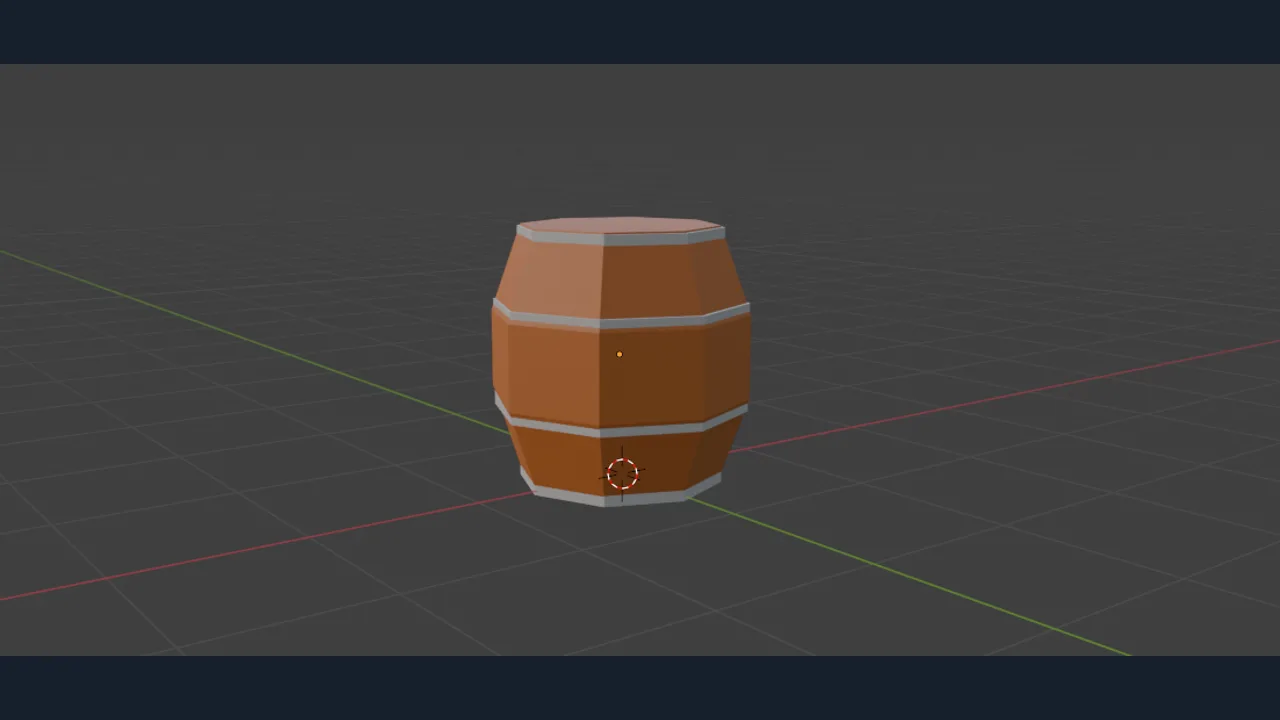
![Resquício (2024) — A low poly 3D model created for the scenery.]()
Resquício (2024)
A low poly 3D model created for the scenery.
-
Generating 2D Character Art for Video Games with Artificial Intelligence (2023)
Final paper (PDF, in Portuguese)Project goal:
Bring advances in image generation with diffusion models into the production of 2D character art for video games. The proposal explores the use of artificial intelligence to generate art, focusing on character representation, in order to reduce human intervention and therefore development costs. It is worth stressing that this project does not set out to create new artificial intelligence models or algorithms, but to use technologies that already exist in the field.
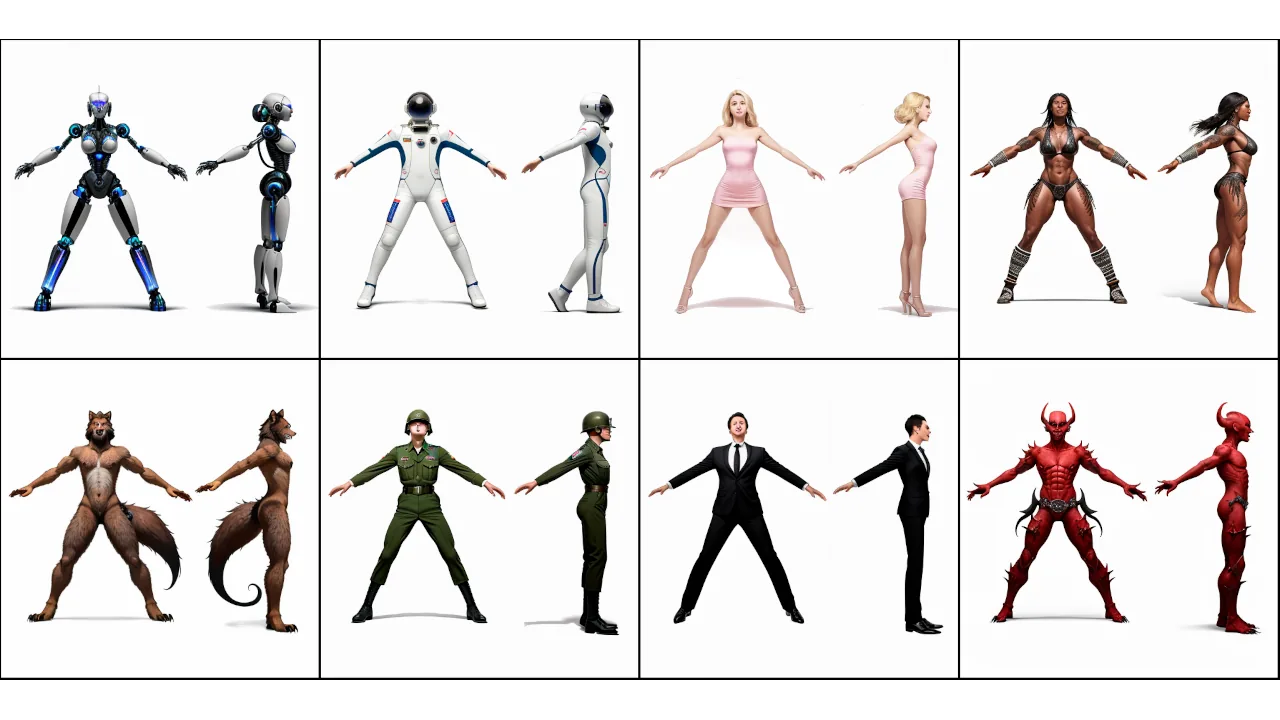
![2D Characters with AI (2023) — The final generated characters]()
2D Characters with AI (2023)
The final generated characters
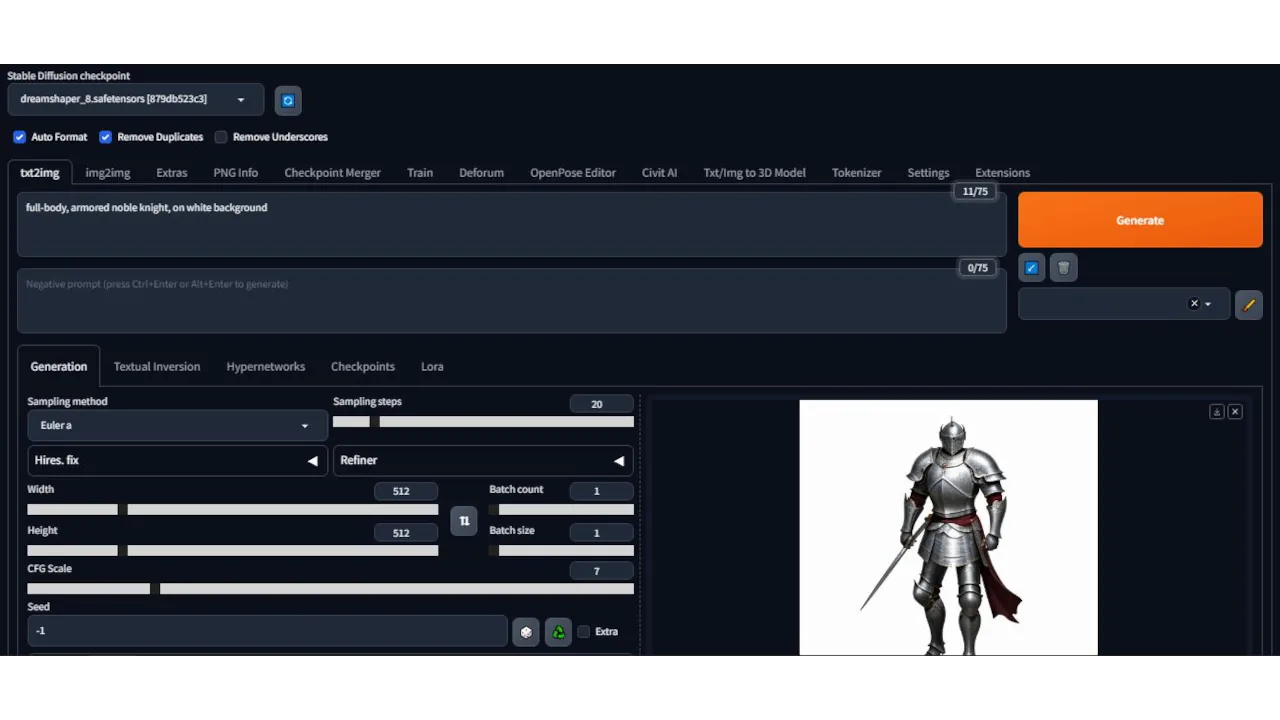
![2D Characters with AI (2023) — Setting up Stable Diffusion]()
2D Characters with AI (2023)
Setting up Stable Diffusion
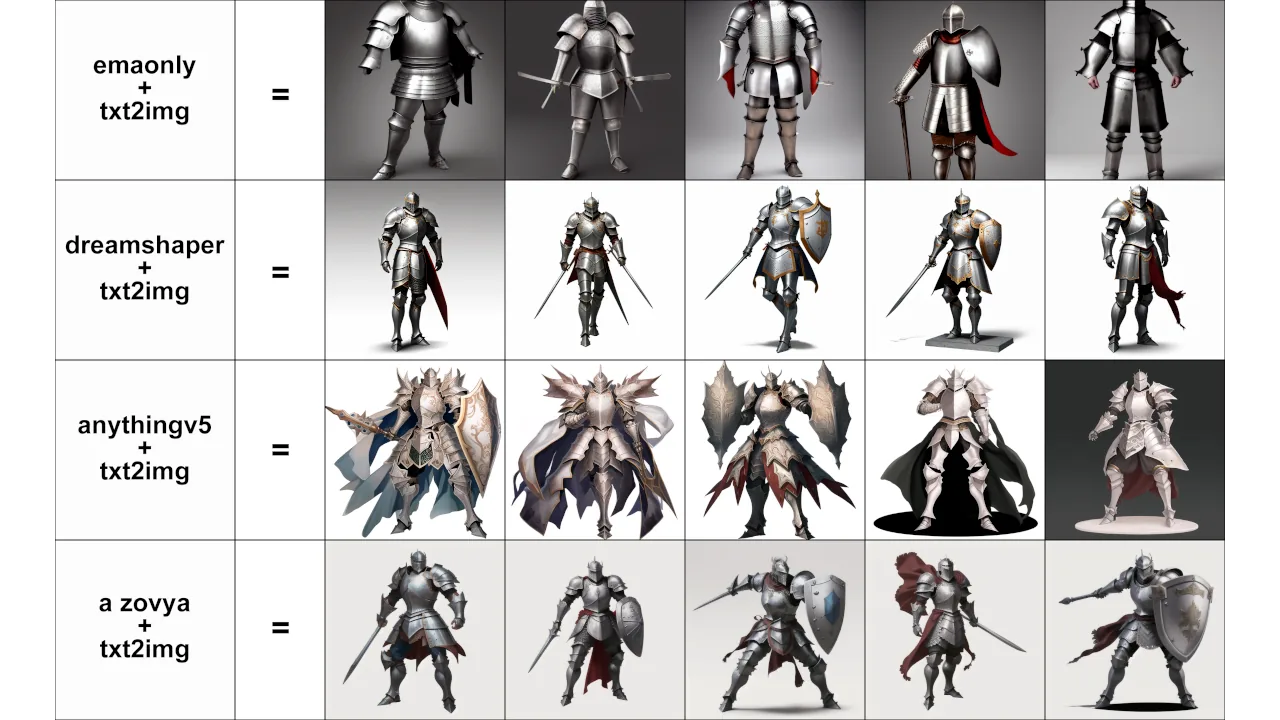
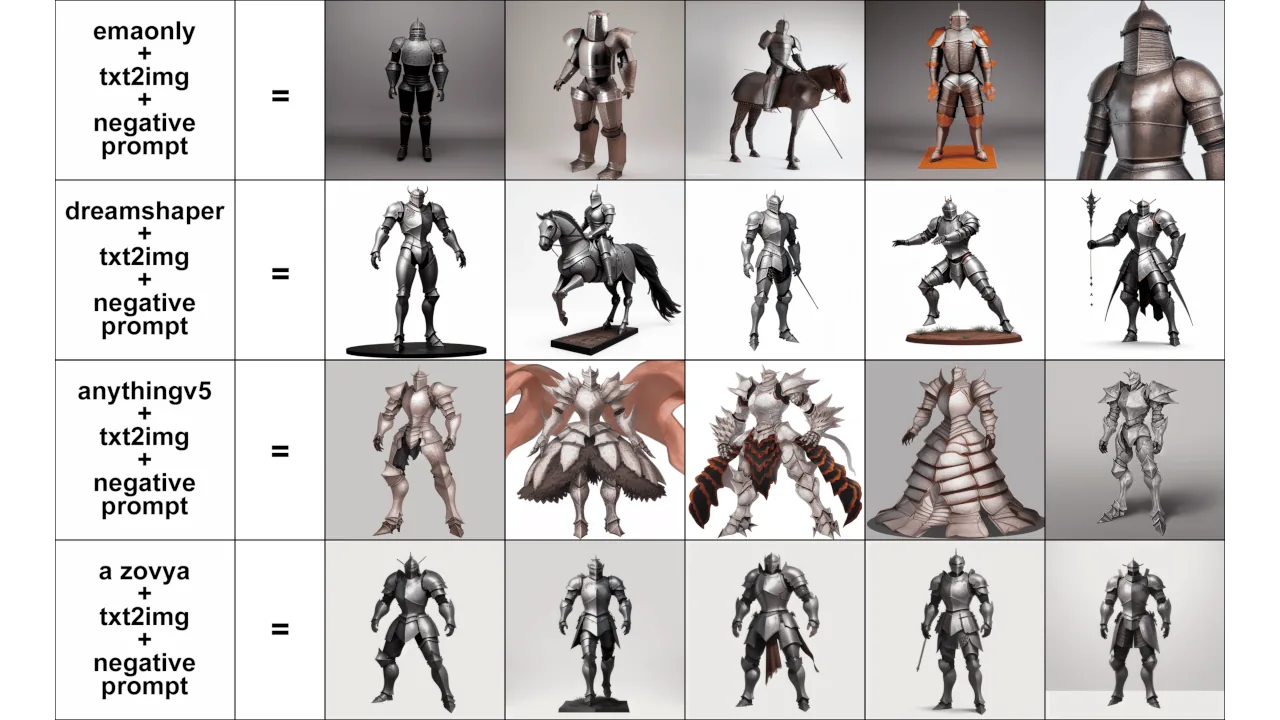
![2D Characters with AI (2023) — txt2img results with different models]()
2D Characters with AI (2023)
txt2img results with different models
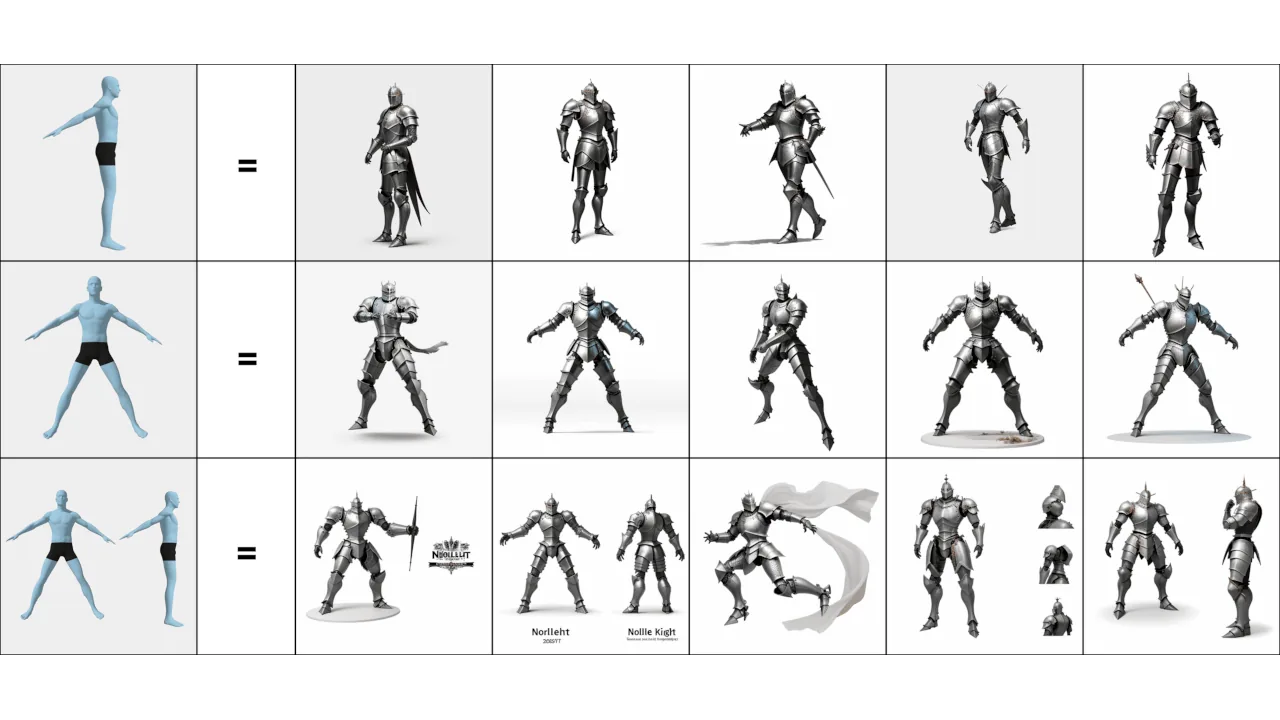
![2D Characters with AI (2023) — txt2img results with a negative prompt across different models]()
2D Characters with AI (2023)
txt2img results with a negative prompt across different models
![2D Characters with AI (2023) — img2img results]()
2D Characters with AI (2023)
img2img results
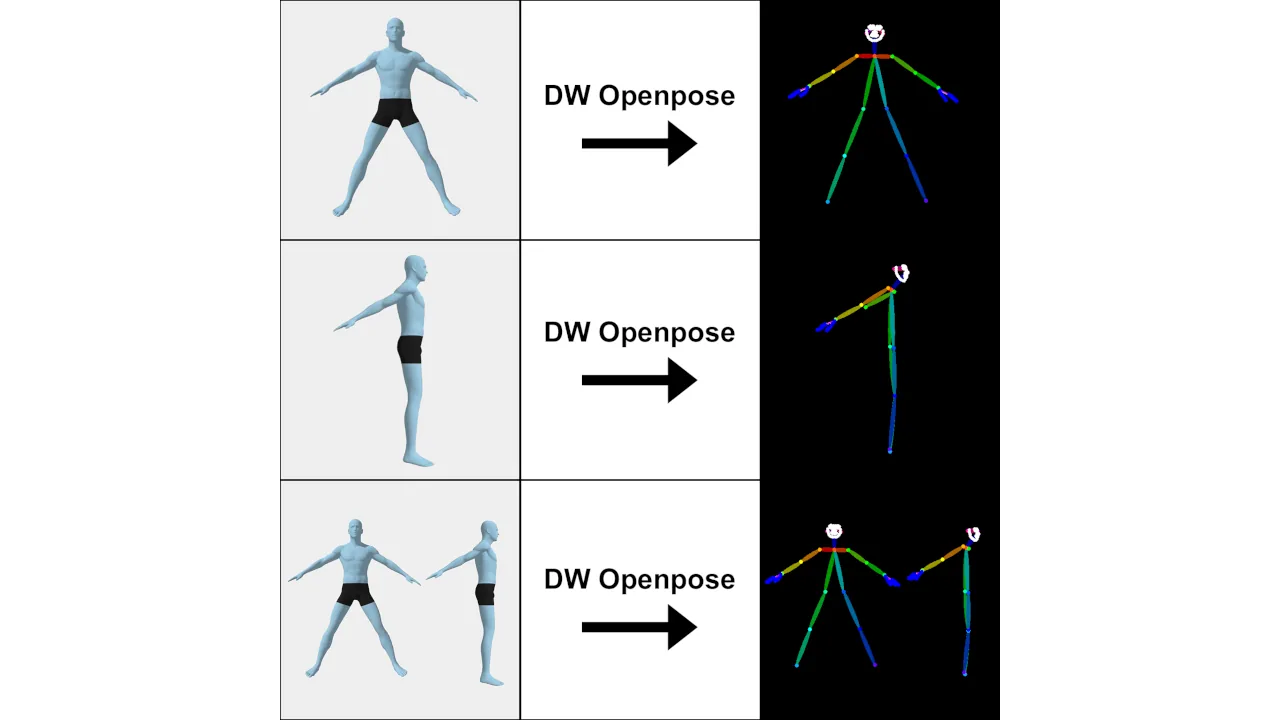
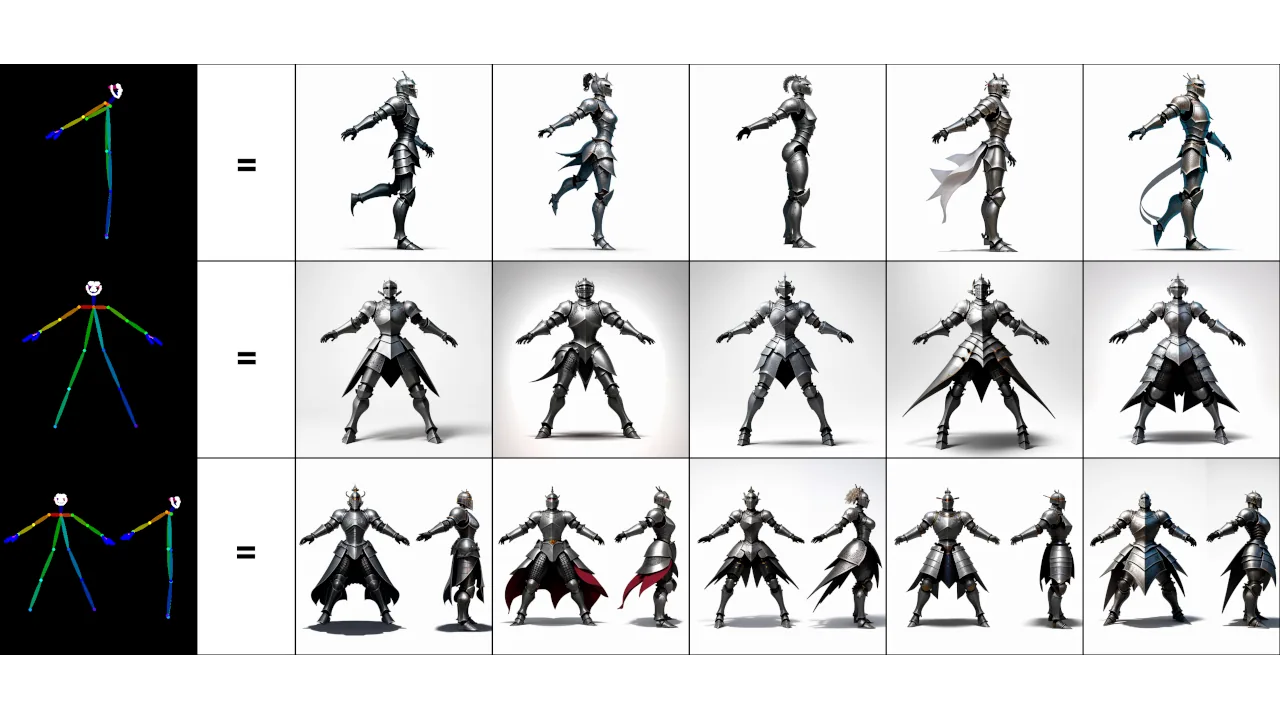
![2D Characters with AI (2023) — Skeletons generated by DWOpenpose from an input image]()
2D Characters with AI (2023)
Skeletons generated by DWOpenpose from an input image
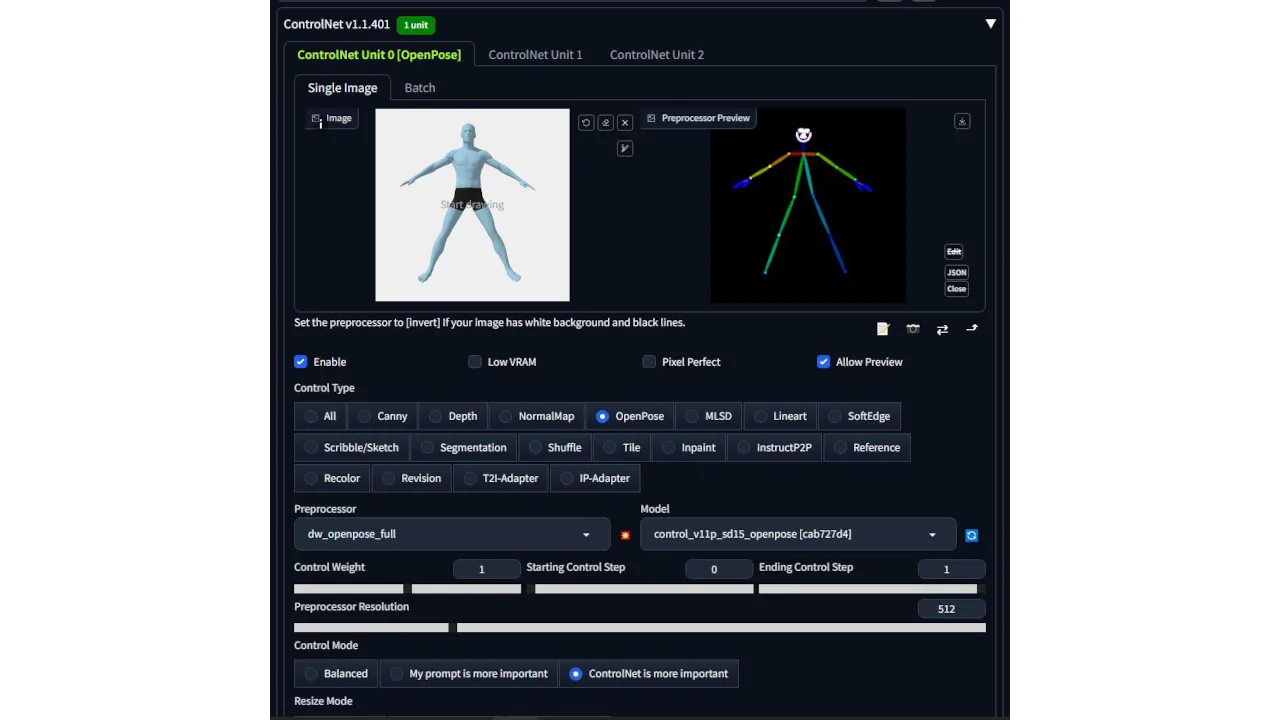
![2D Characters with AI (2023) — Configuration of ControlNet’s “Unit 0”]()
2D Characters with AI (2023)
Configuration of ControlNet’s “Unit 0”
![2D Characters with AI (2023) — txt2img results with DWOpenpose]()
2D Characters with AI (2023)
txt2img results with DWOpenpose
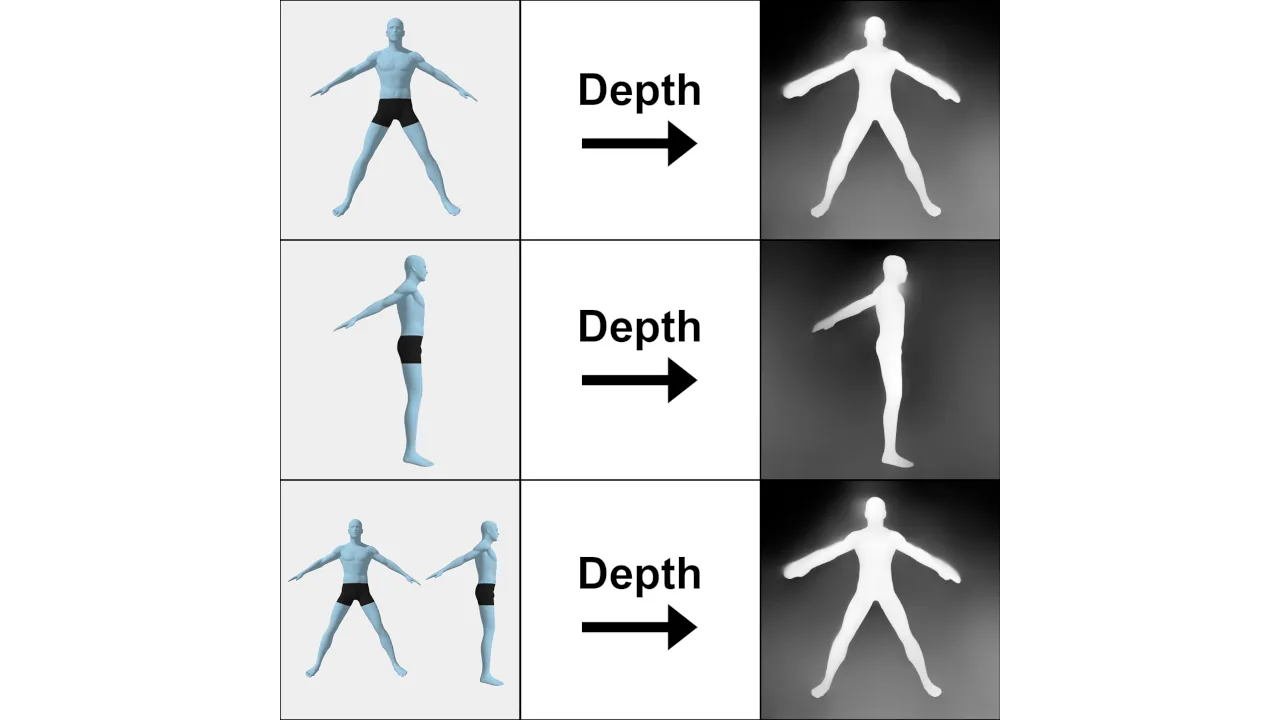
![2D Characters with AI (2023) — Maps generated by Depth from an input image]()
2D Characters with AI (2023)
Maps generated by Depth from an input image
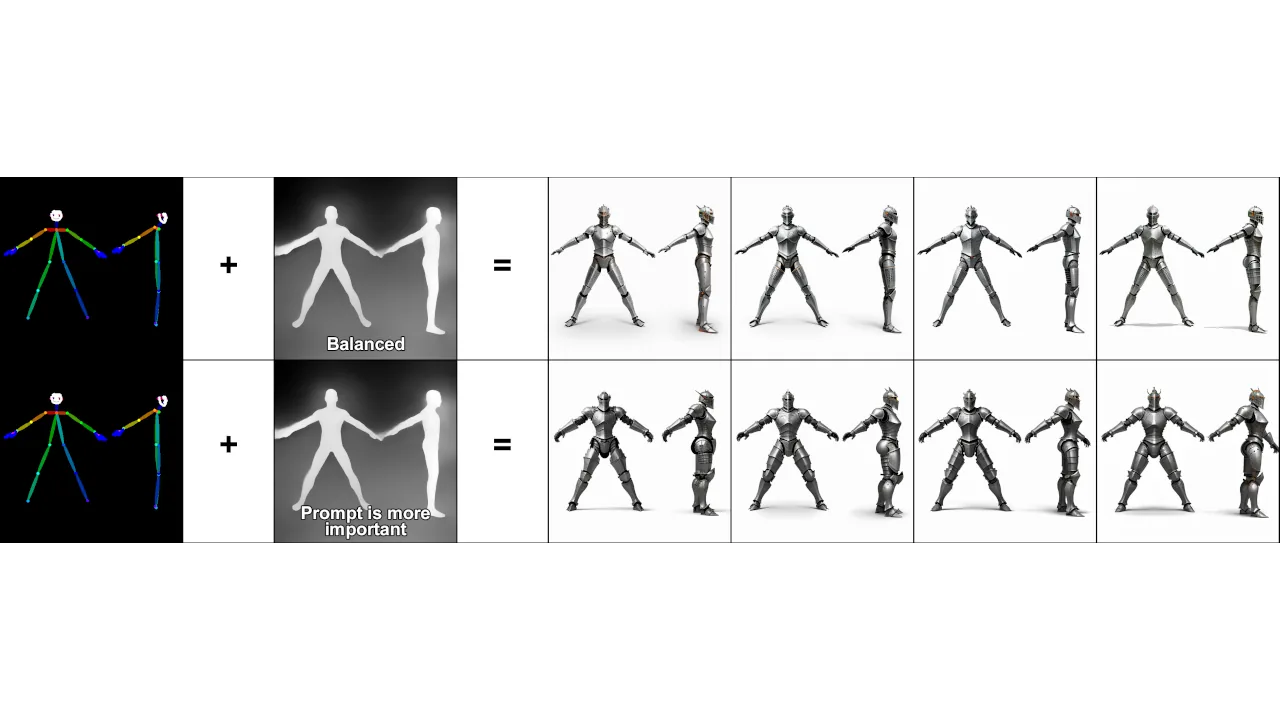
![2D Characters with AI (2023) — txt2img results with DWOpenpose plus Depth]()
2D Characters with AI (2023)
txt2img results with DWOpenpose plus Depth
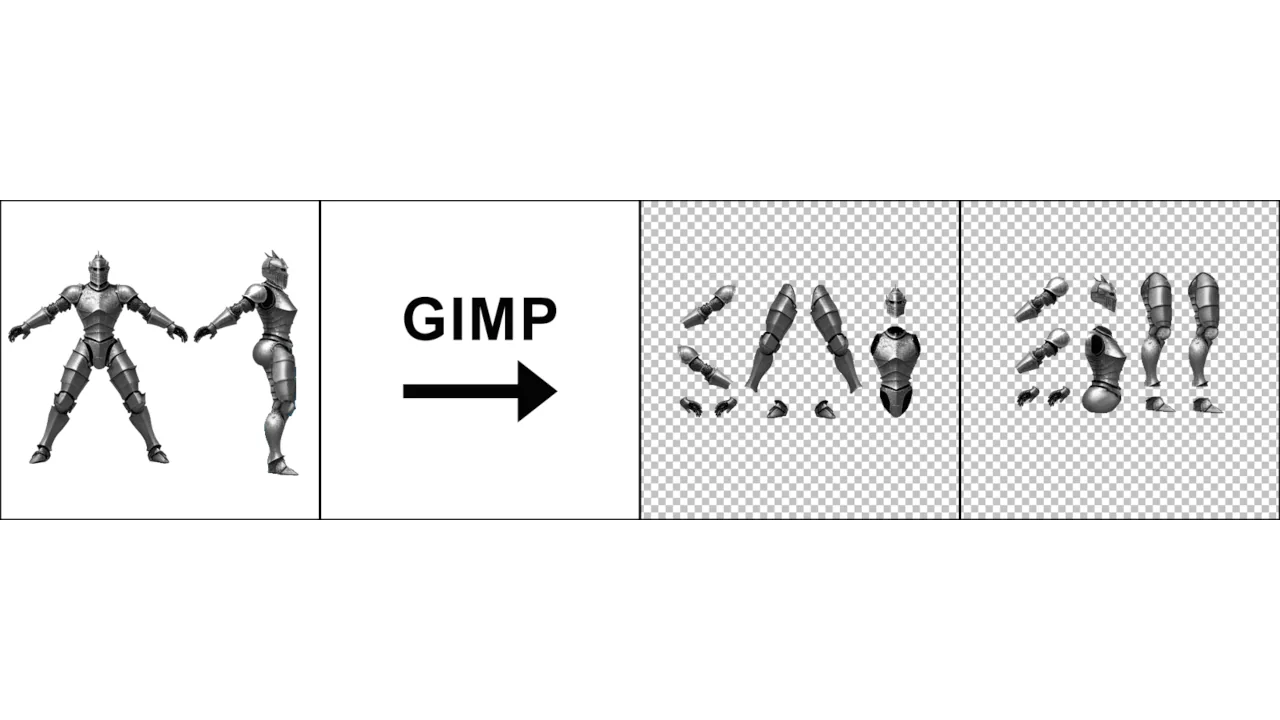
![2D Characters with AI (2023) — Result of splitting a character into limbs]()
2D Characters with AI (2023)
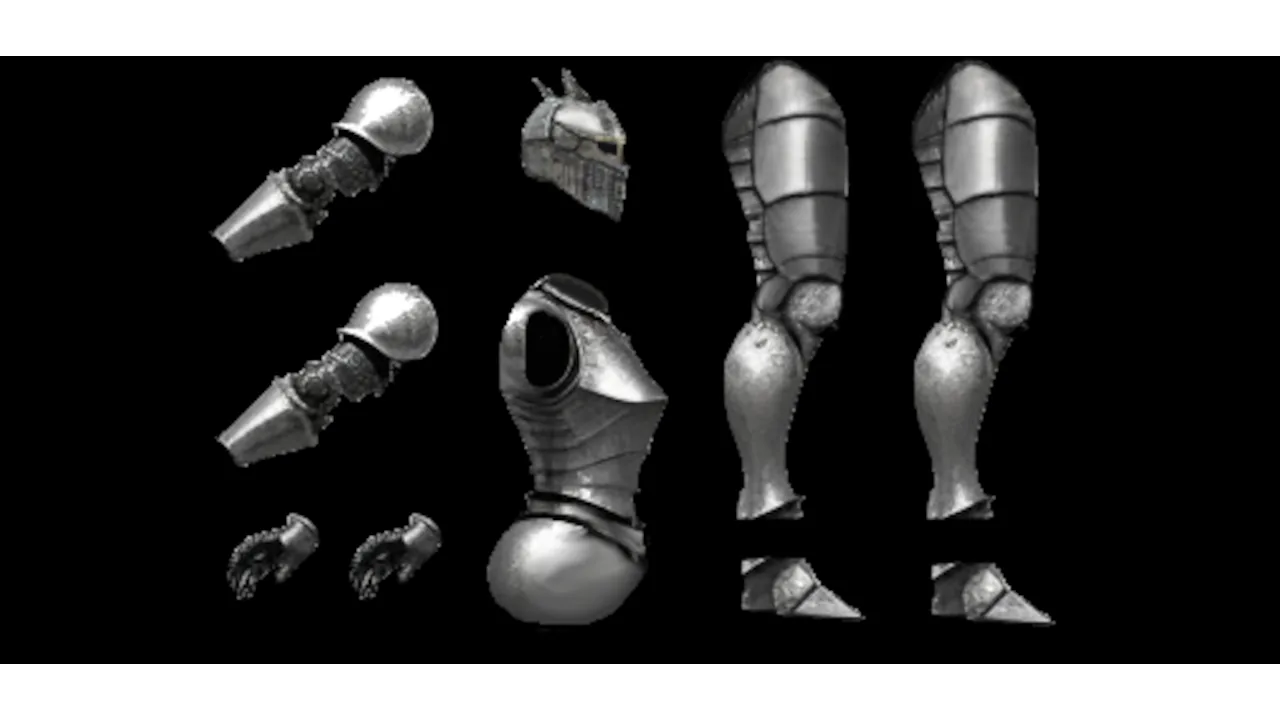
Result of splitting a character into limbs
![2D Characters with AI (2023) — Side view of a character with split limbs]()
2D Characters with AI (2023)
Side view of a character with split limbs
![2D Characters with AI (2023) — Animation skeleton weights over the limbs]()
2D Characters with AI (2023)
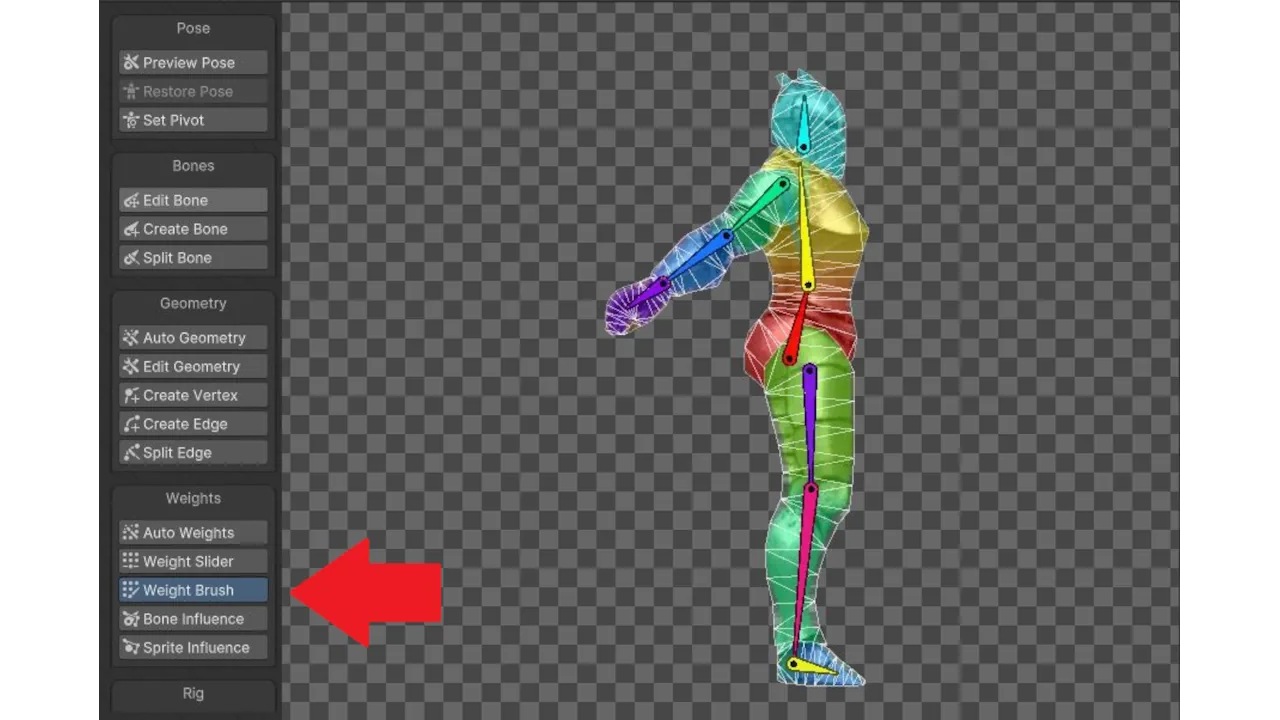
Animation skeleton weights over the limbs
![2D Characters with AI (2023) — An example of changing the character’s pose]()
2D Characters with AI (2023)
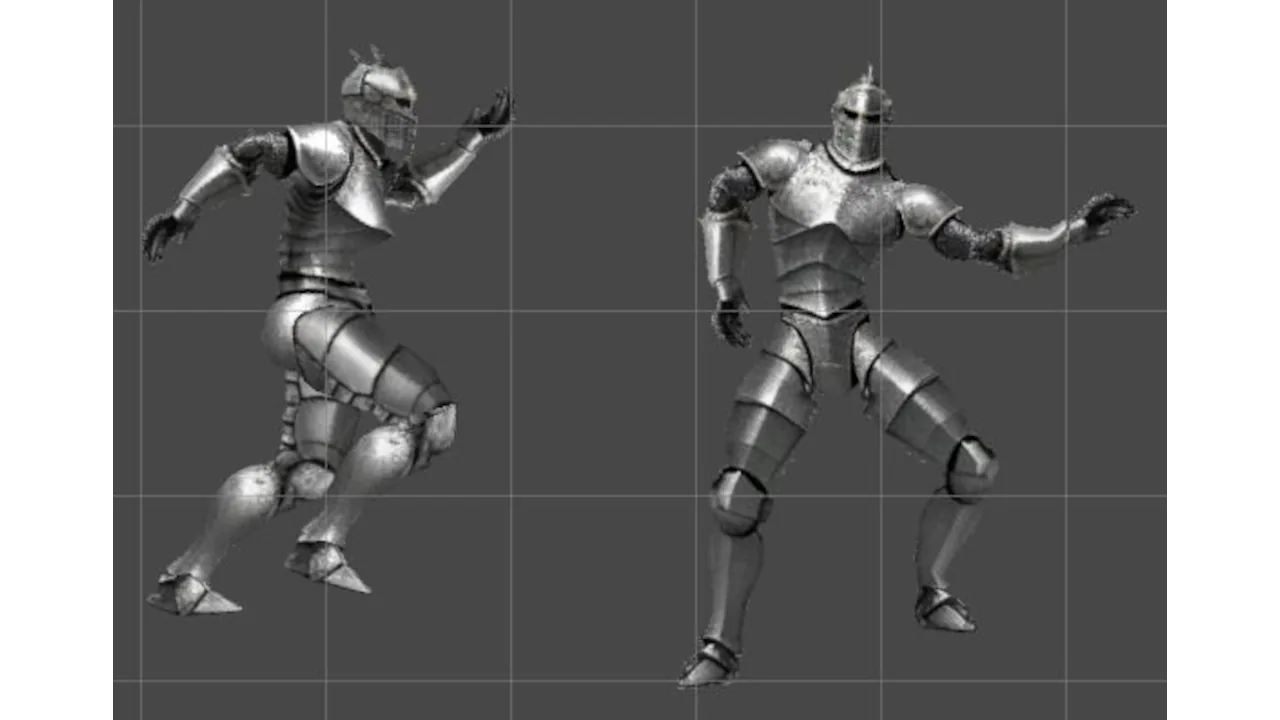
An example of changing the character’s pose
![2D Characters with AI (2023) — An example of the character animated]()
2D Characters with AI (2023)
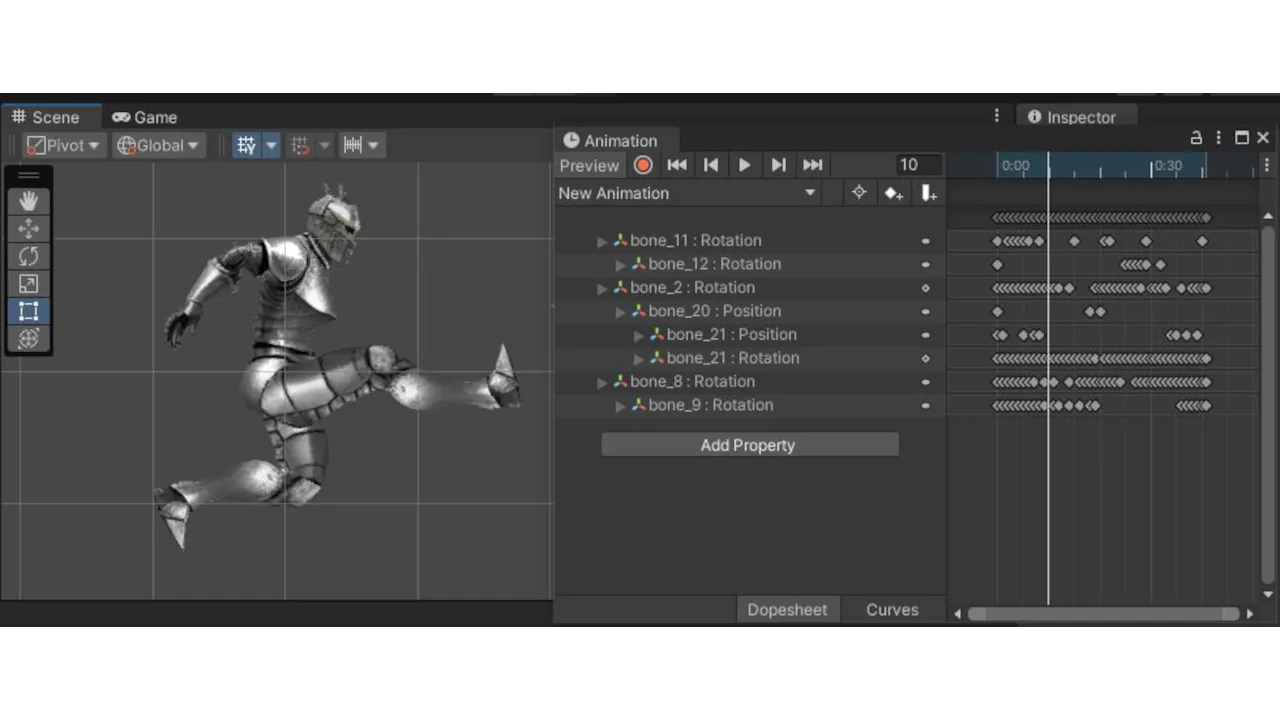
An example of the character animated
-
Data Guida (2022)
Final paper (PDF, in Portuguese) Download for WindowsGameplay:
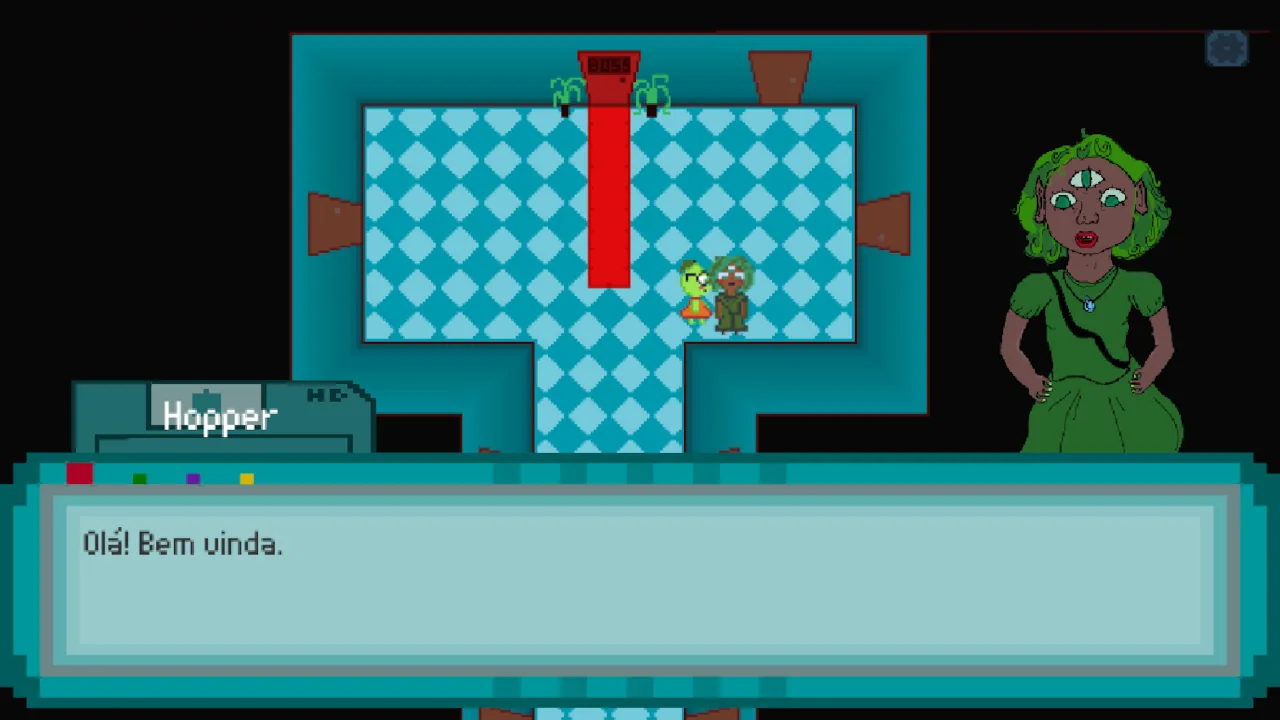
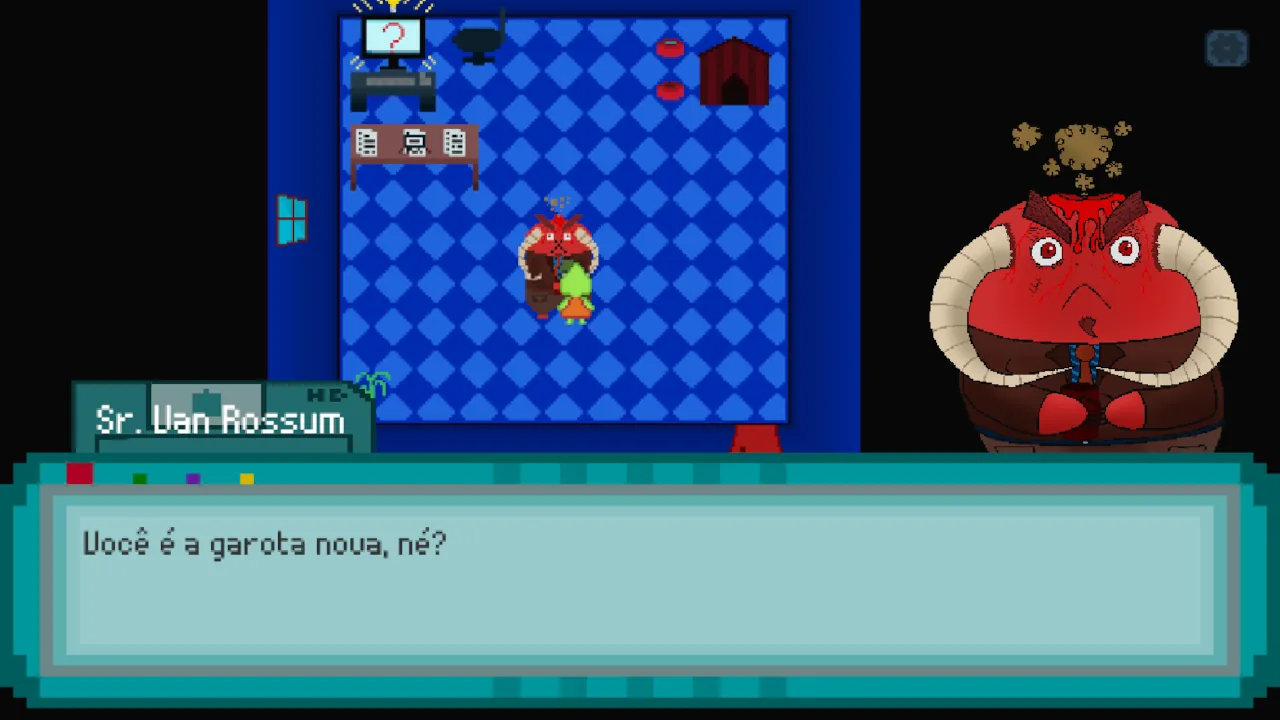
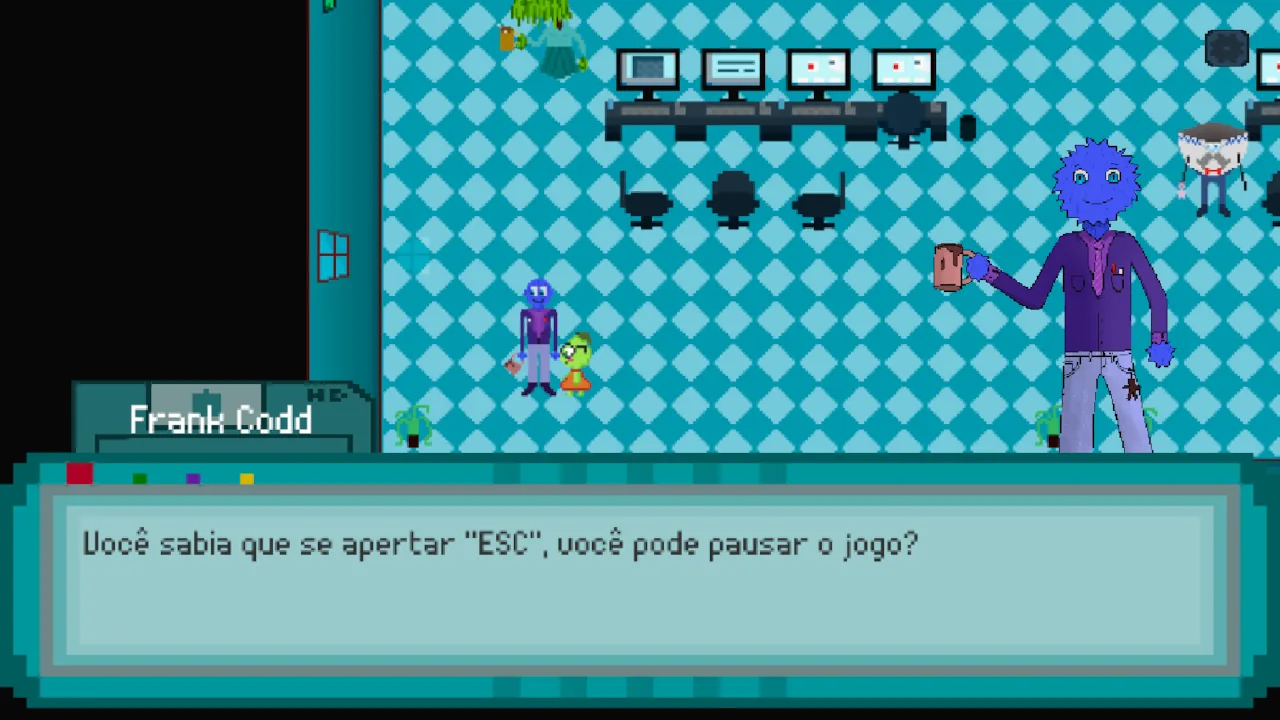
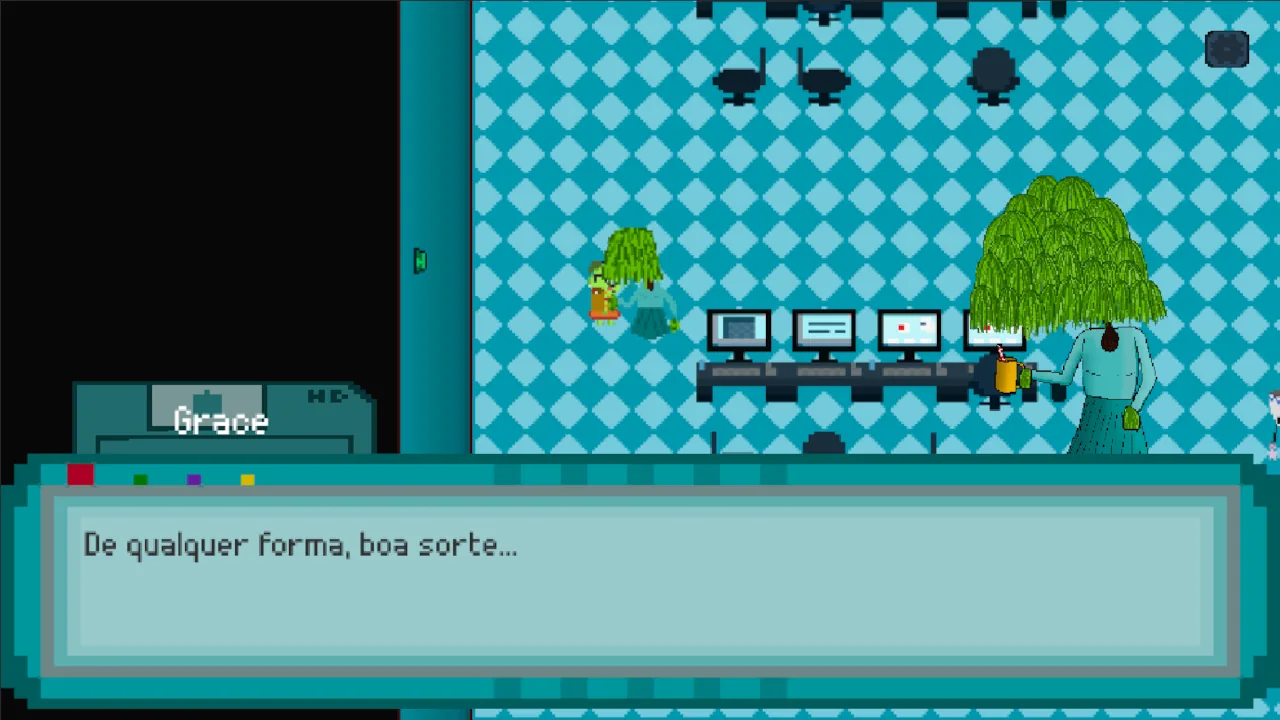
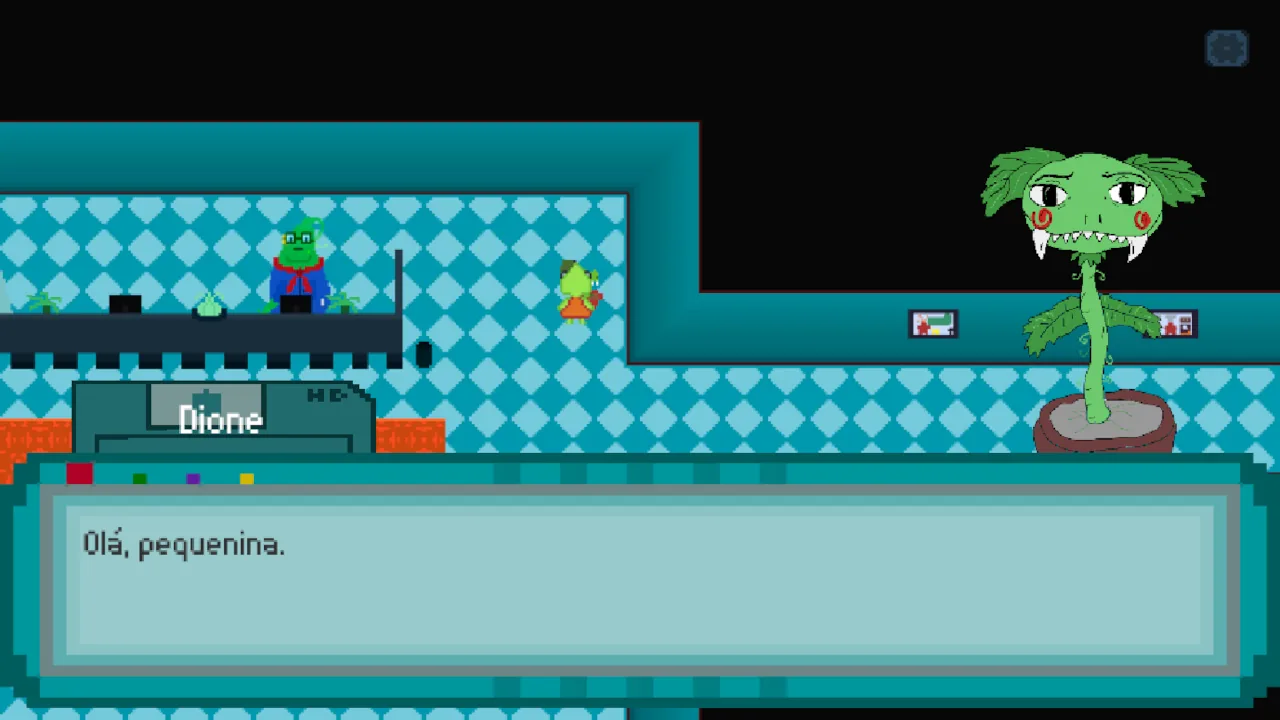
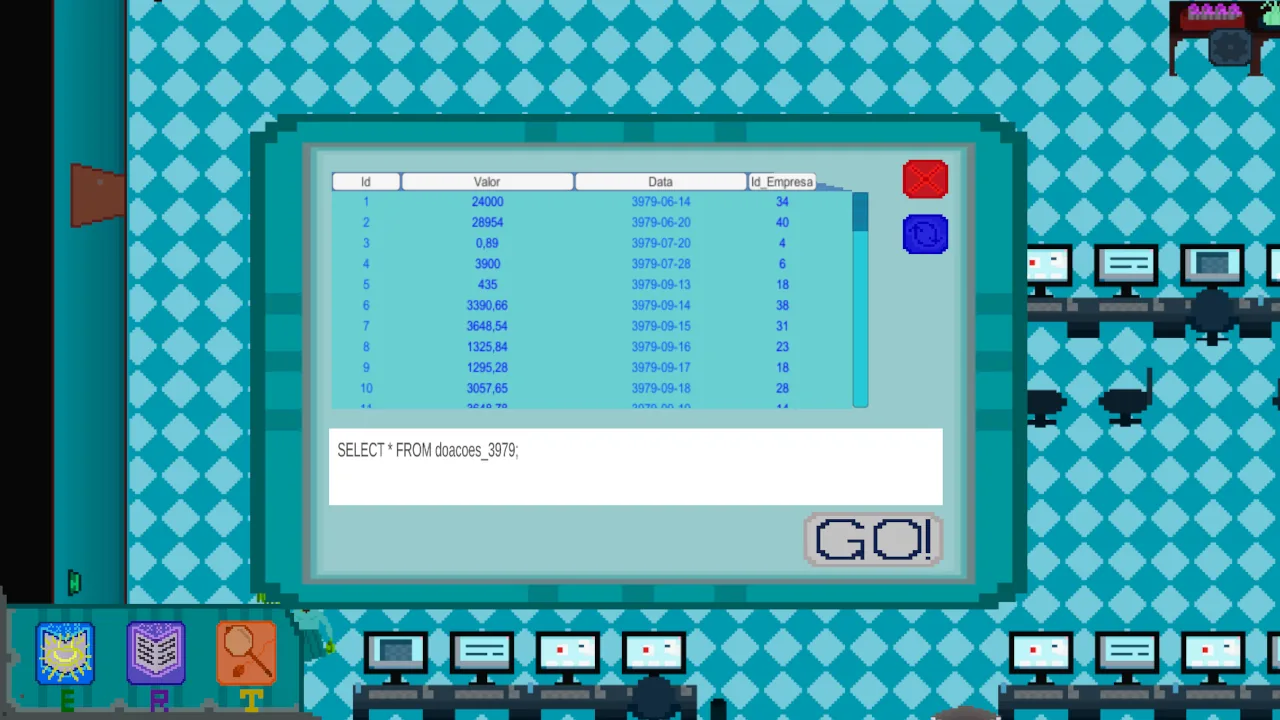
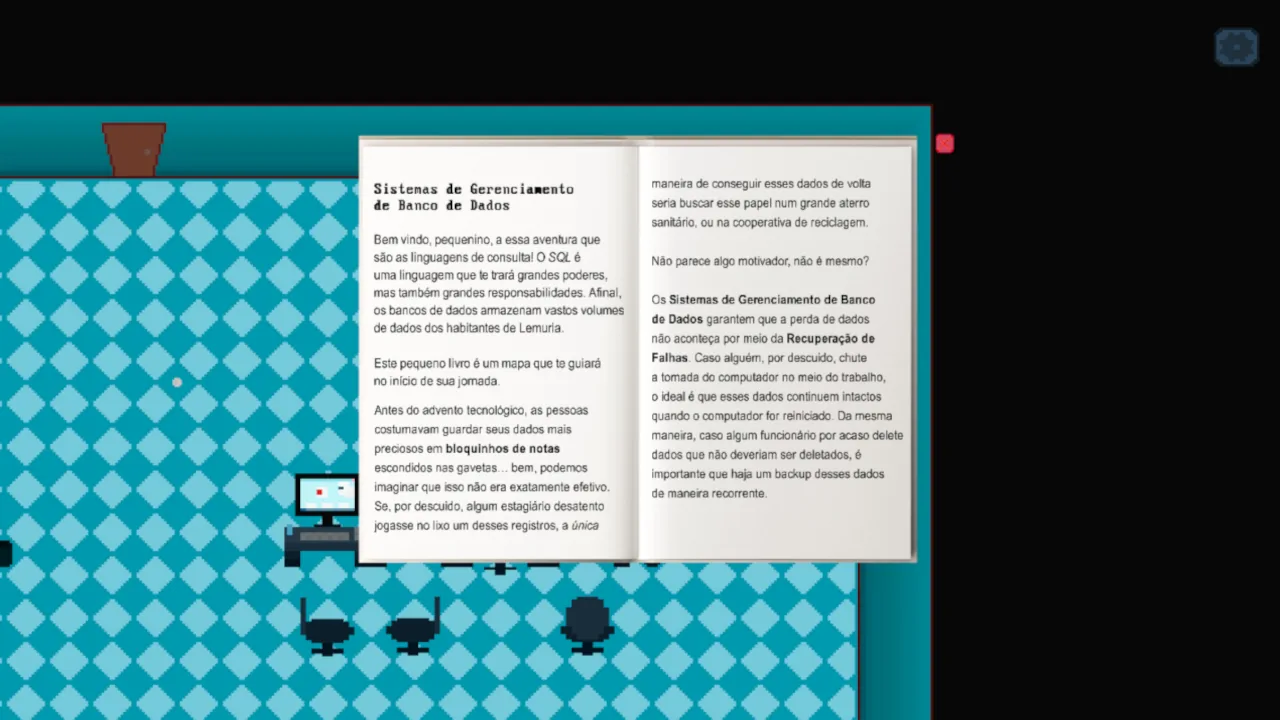
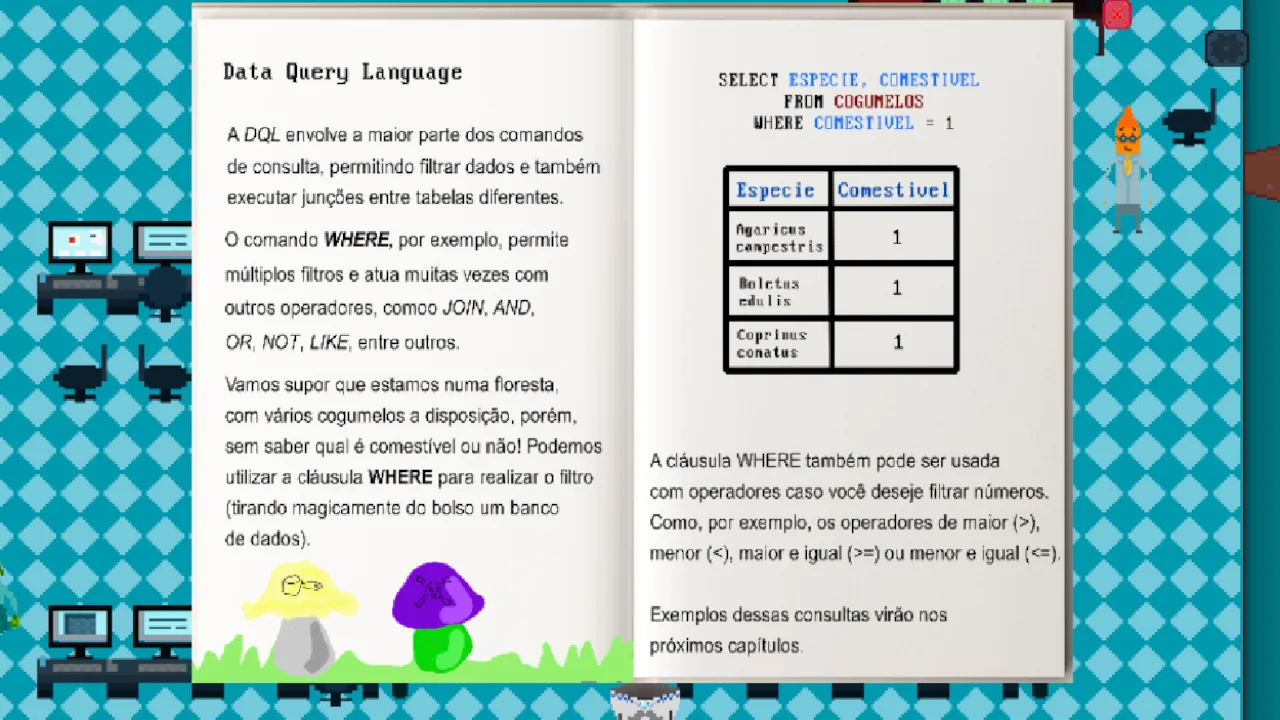
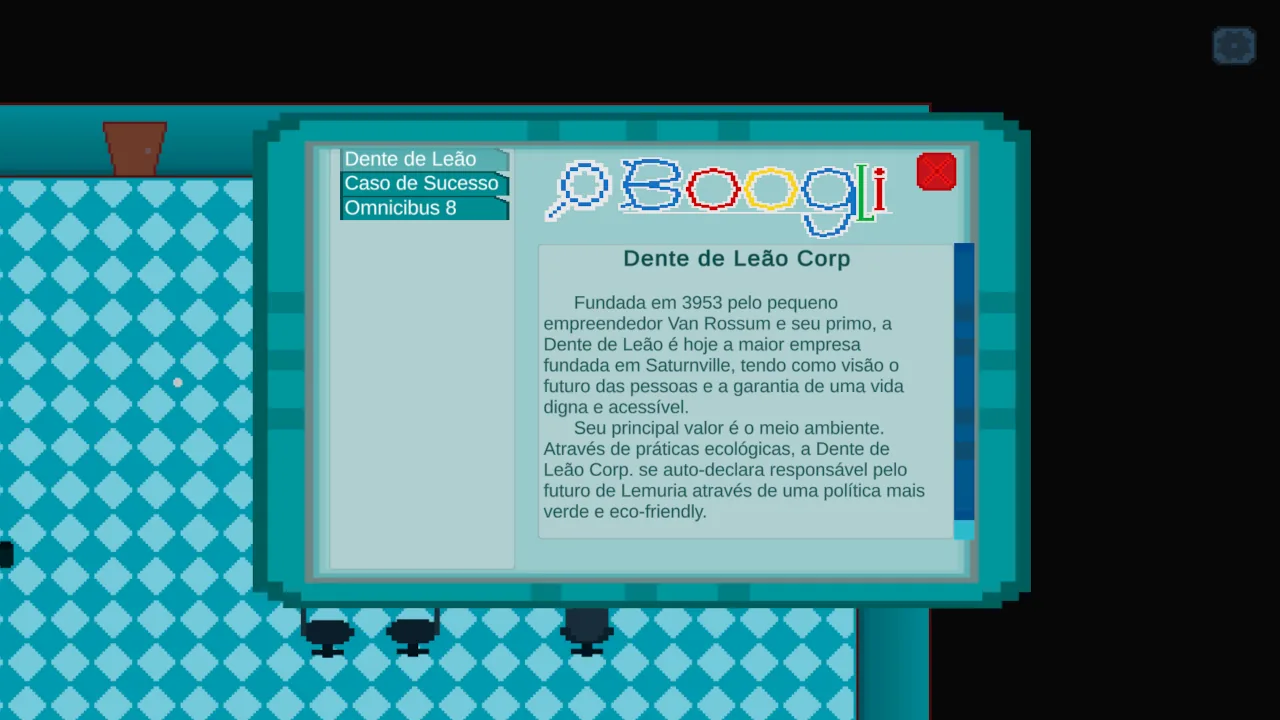
A 2D RPG set indoors, built around exploring, talking to NPCs, reading dialogue, gathering information, using interactive interfaces and solving SQL challenges as the core of its progression. The player controls Guida inside a company split into departments, moving around the map, talking to characters, using computers to query tables, reading books with introductory SQL material and consulting the “Boogli” system, which fills in the narrative background of the game world. Gameplay therefore combines narrative investigation, quest-based progression and practice with database commands, in a structure aimed at active learning.
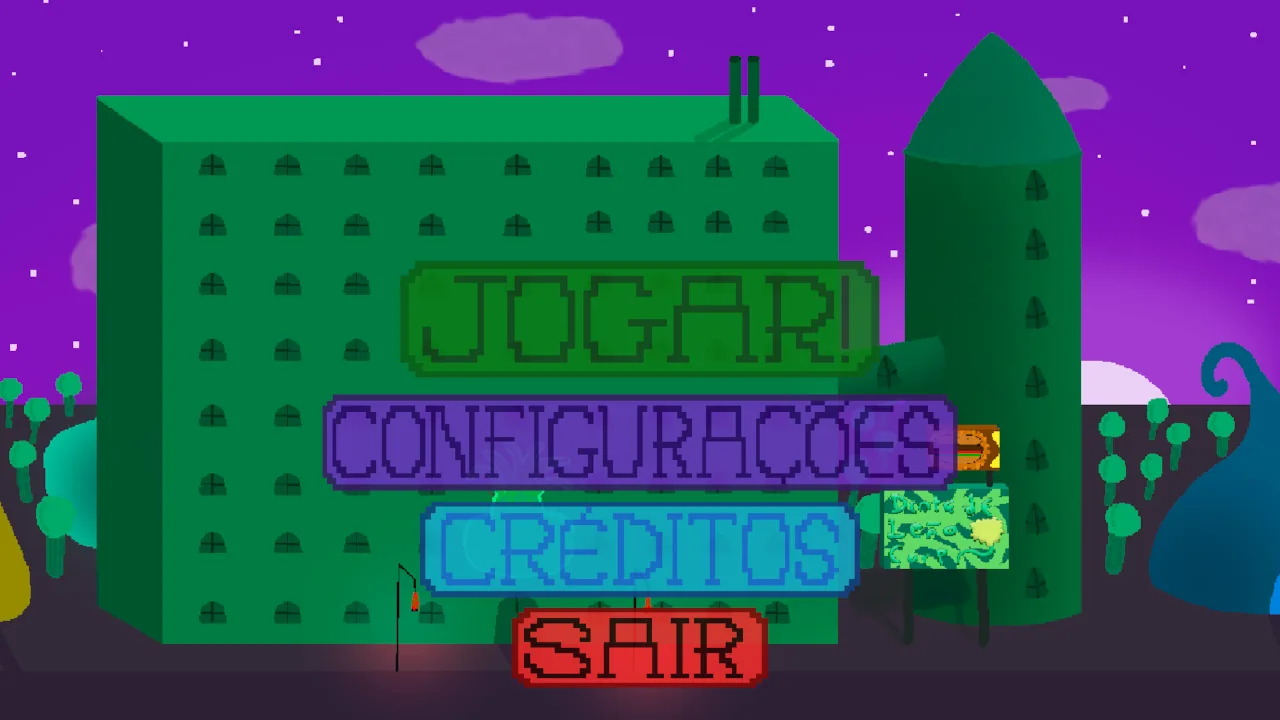
![Data Guida (2022) — Title screen]()
Data Guida (2022)
Title screen
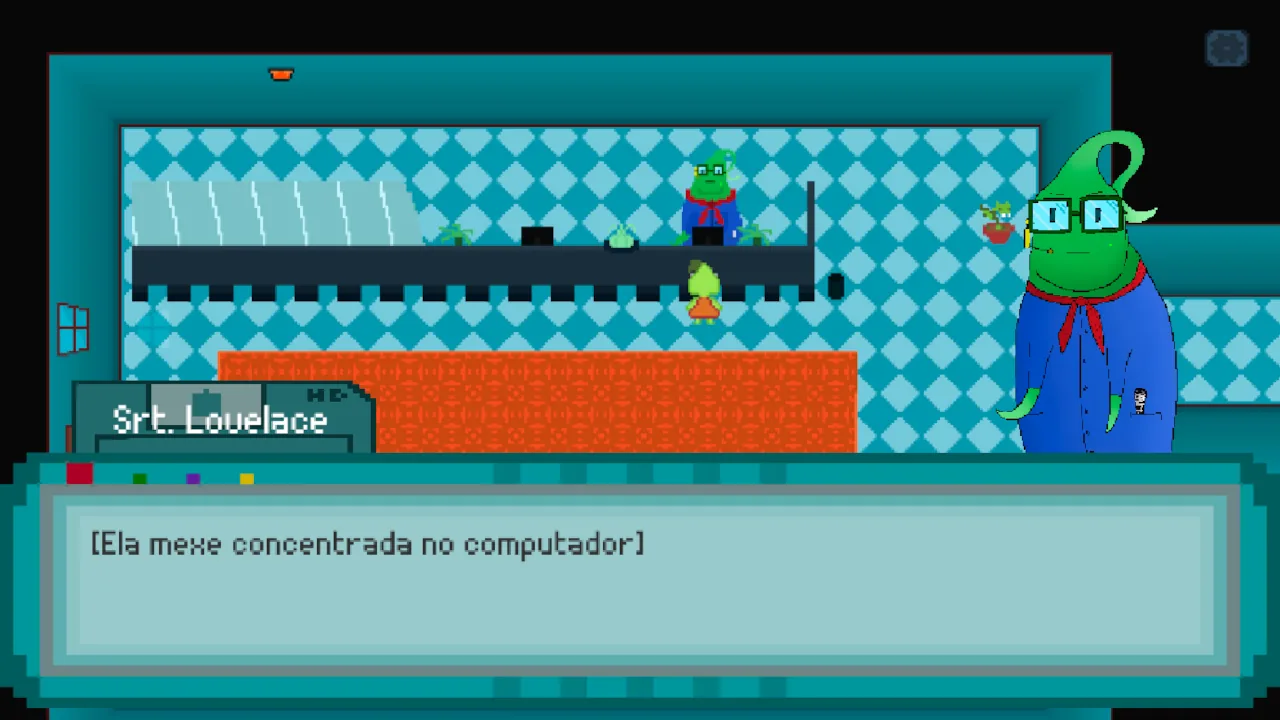
![Data Guida (2022) — NPC Srt. Lovelace]()
Data Guida (2022)
NPC Srt. Lovelace
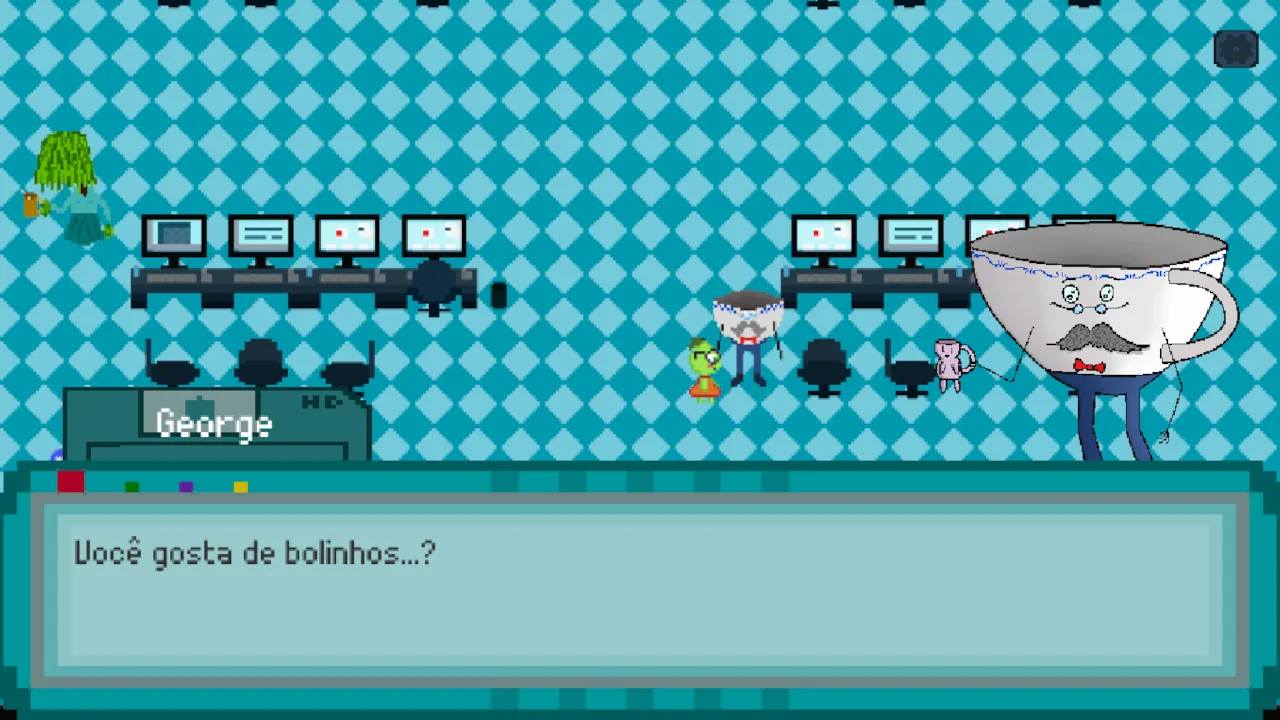
![Data Guida (2022) — NPC George]()
Data Guida (2022)
NPC George
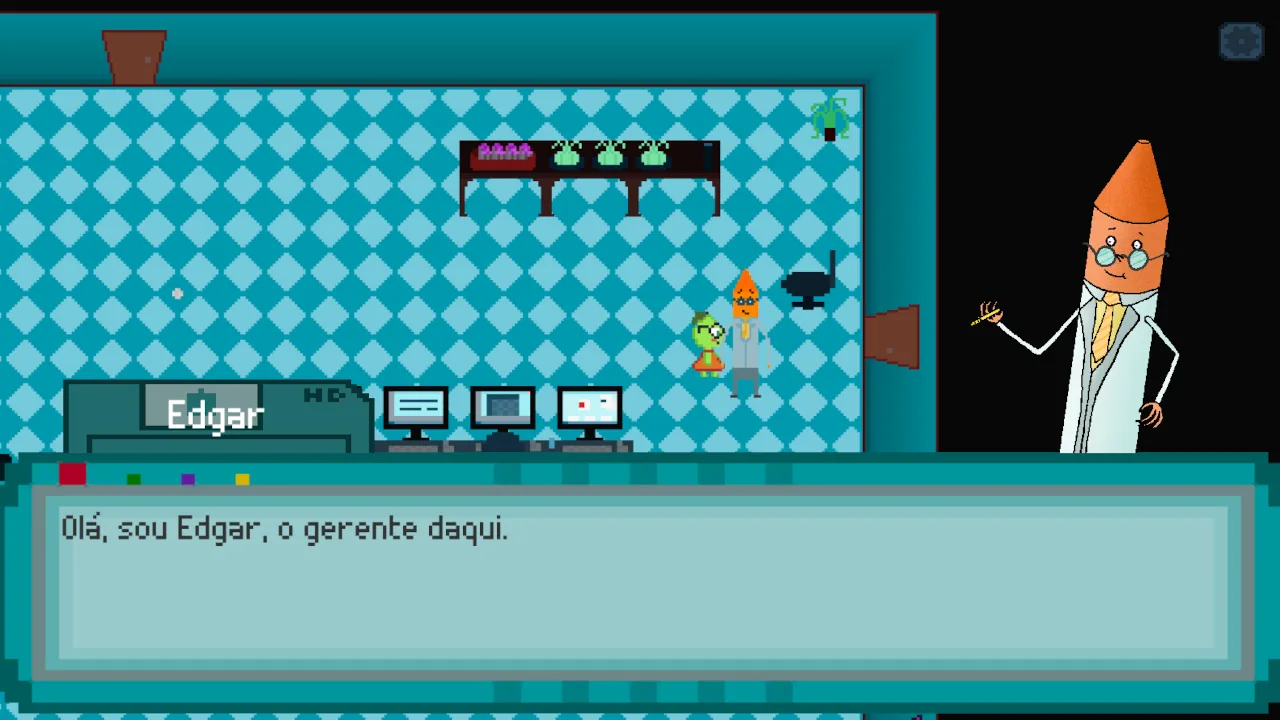
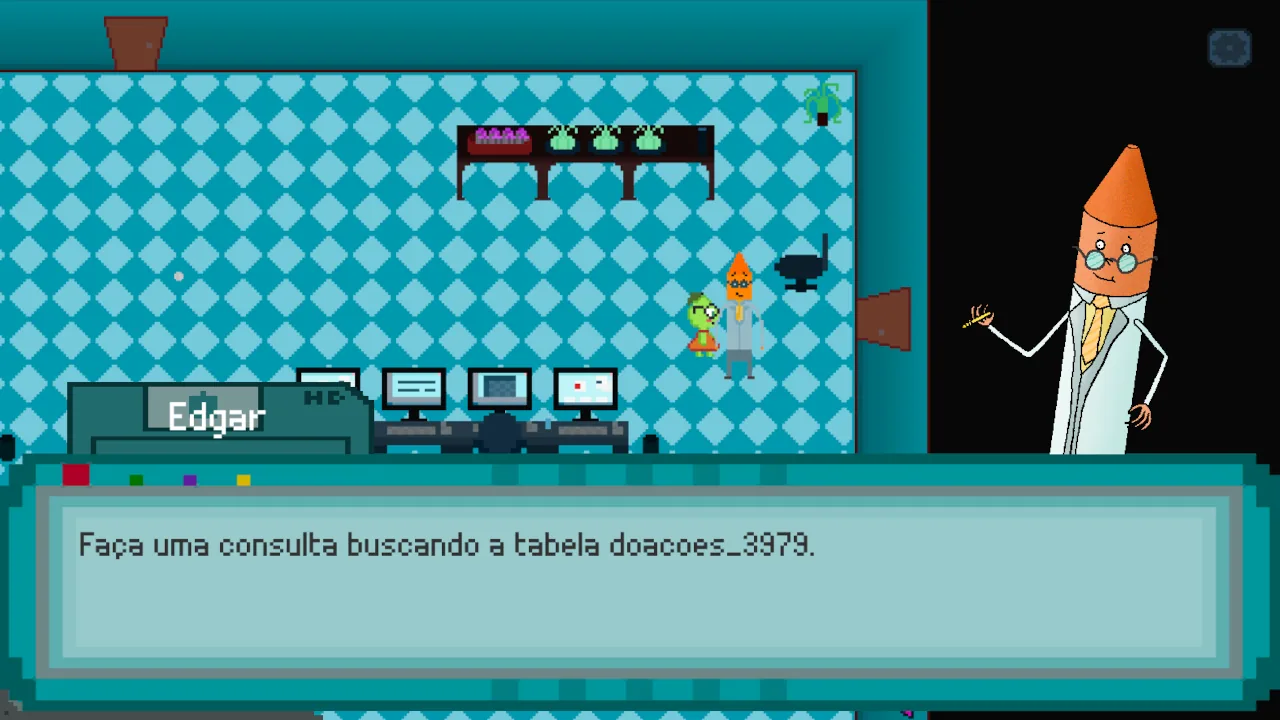
![Data Guida (2022) — NPC Edgar]()
Data Guida (2022)
NPC Edgar
![Data Guida (2022) — NPC Hopper]()
Data Guida (2022)
NPC Hopper
![Data Guida (2022) — NPC Sr. Rossum]()
Data Guida (2022)
NPC Sr. Rossum
![Data Guida (2022) — NPC Frank Codd]()
Data Guida (2022)
NPC Frank Codd
![Data Guida (2022) — NPC Grace]()
Data Guida (2022)
NPC Grace
![Data Guida (2022) — NPC Dione]()
Data Guida (2022)
NPC Dione
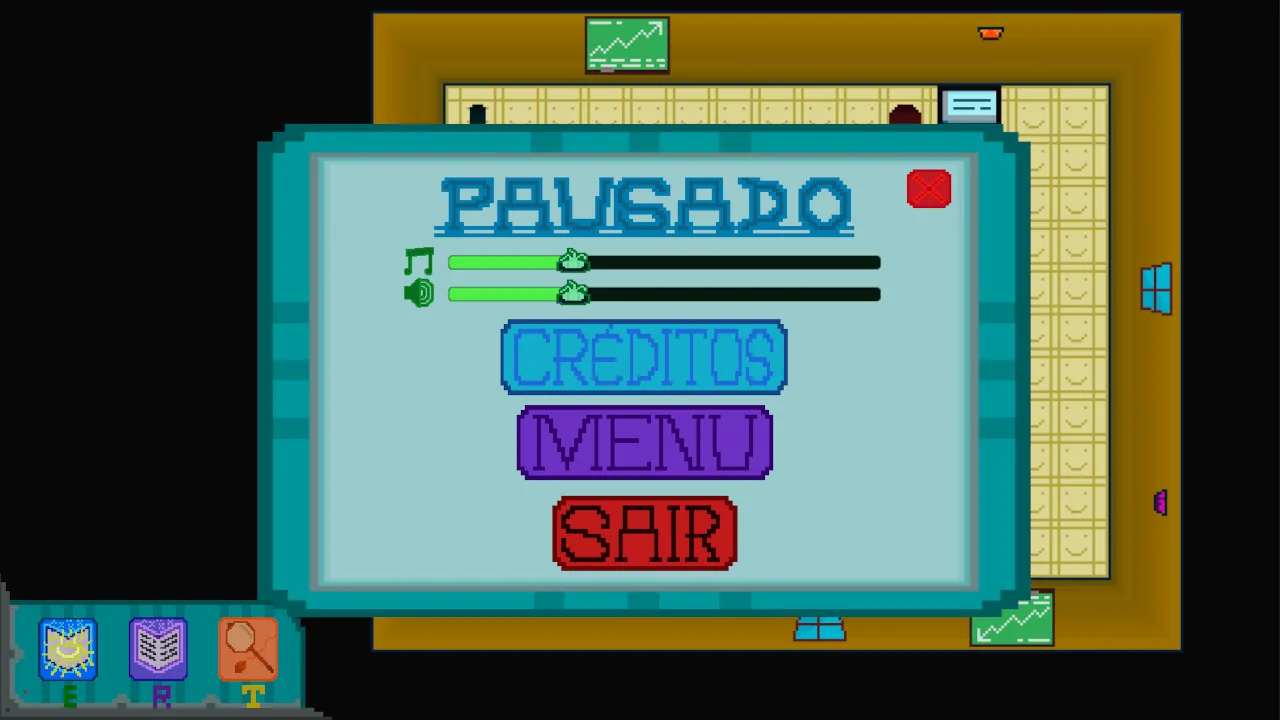
![Data Guida (2022) — Pause screen]()
Data Guida (2022)
Pause screen
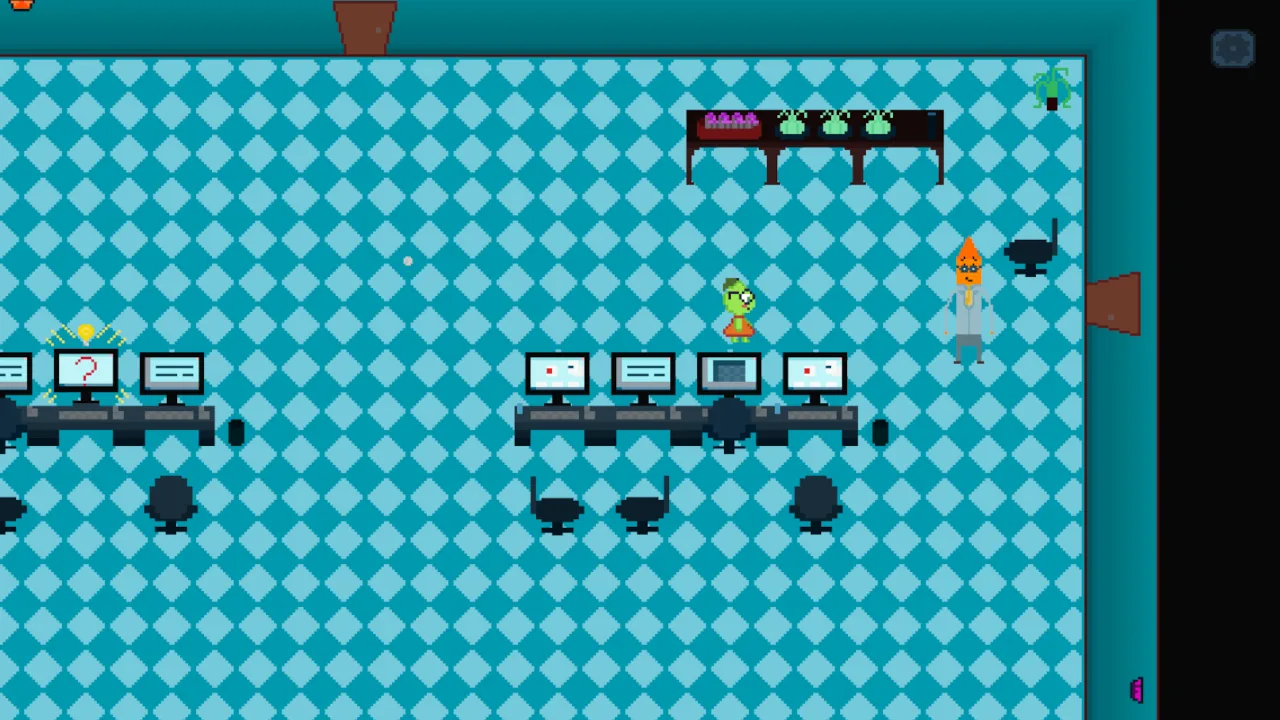
![Data Guida (2022) — The game environment]()
Data Guida (2022)
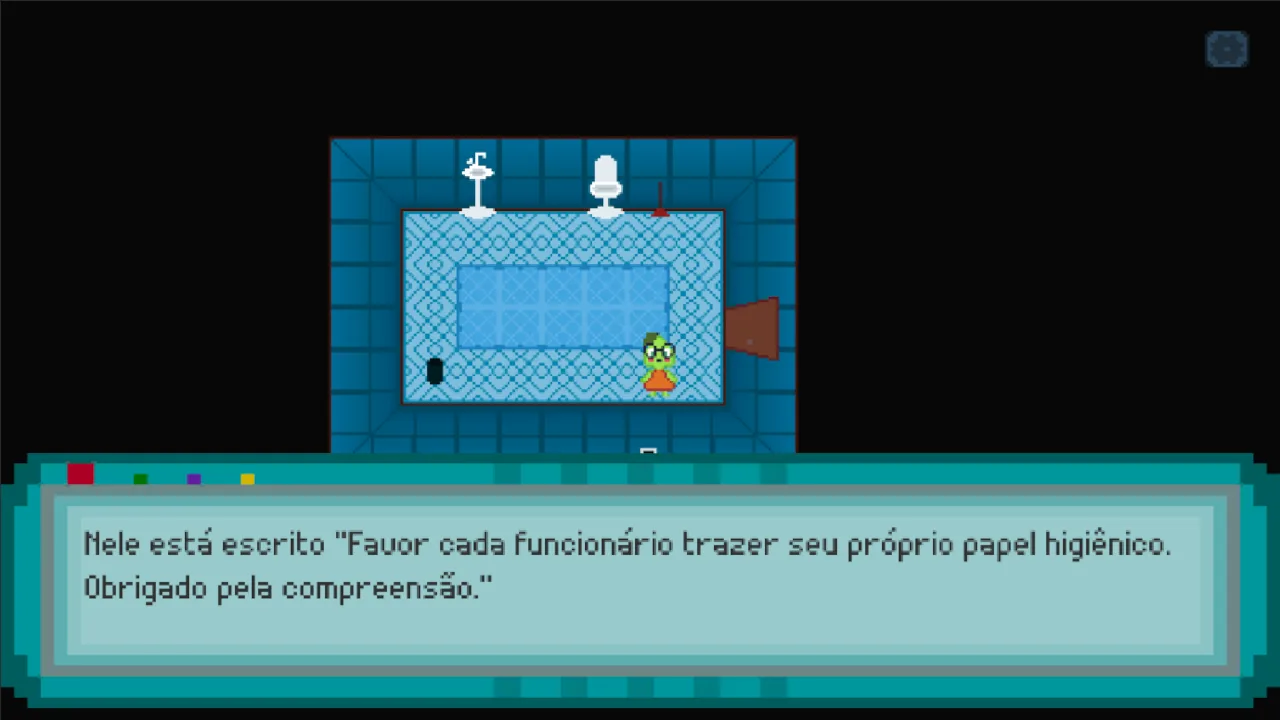
The game environment
![Data Guida (2022) — The SQL command input interface]()
Data Guida (2022)
The SQL command input interface
![Data Guida (2022) — NPC Edgar]()
Data Guida (2022)
NPC Edgar
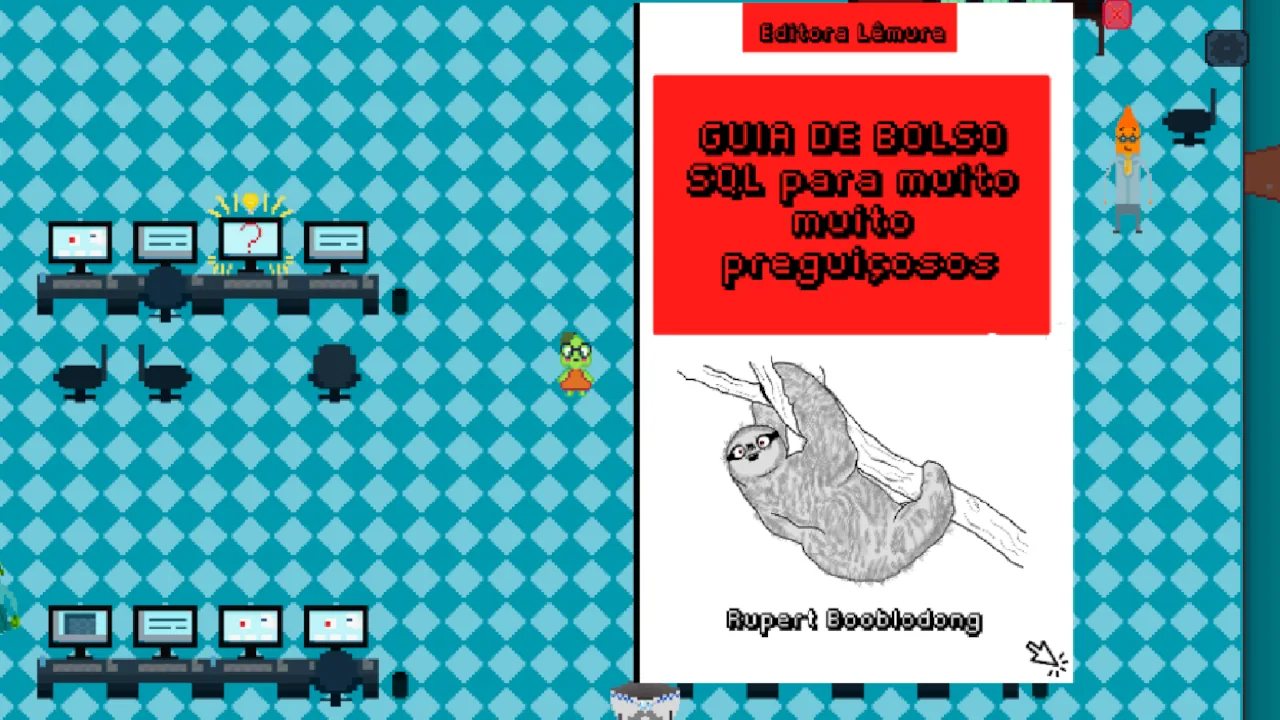
![Data Guida (2022) — Pocket guide: SQL for the very lazy]()
Data Guida (2022)
Pocket guide: SQL for the very lazy
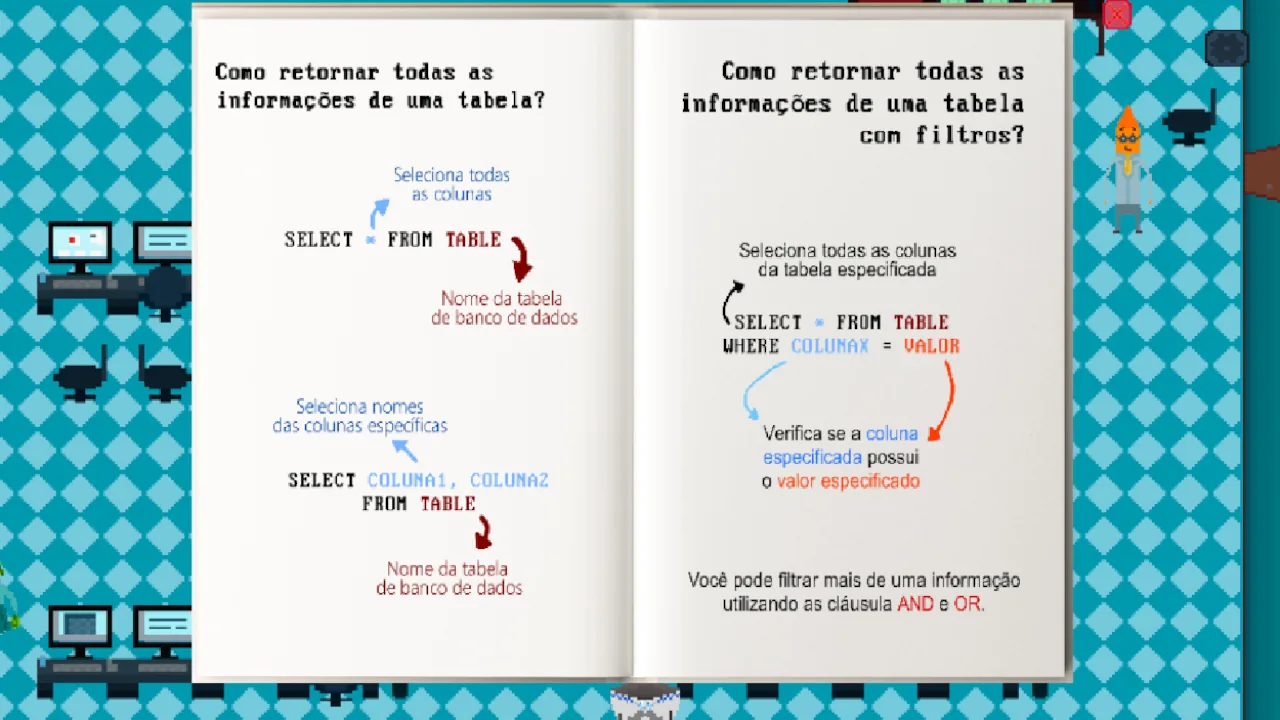
![Data Guida (2022) — Pocket guide: SQL for the very lazy — inside pages]()
Data Guida (2022)
Pocket guide: SQL for the very lazy — inside pages
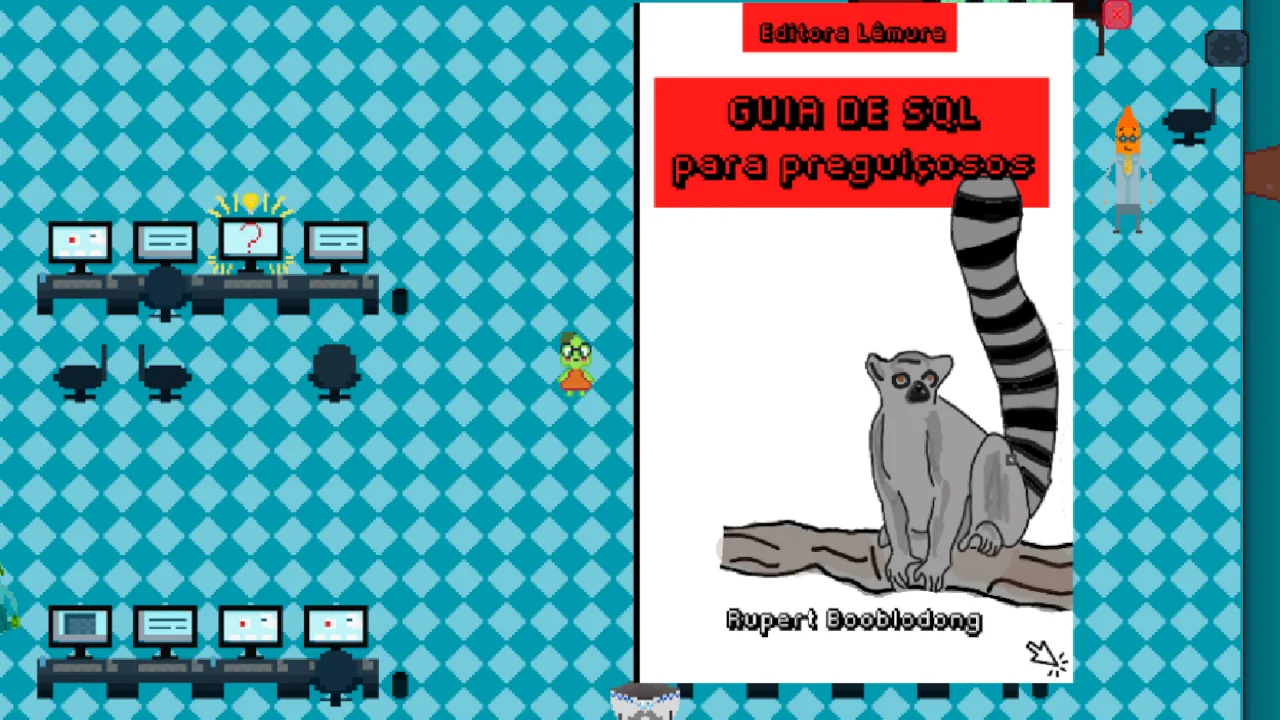
![Data Guida (2022) — SQL guide for the lazy]()
Data Guida (2022)
SQL guide for the lazy
![Data Guida (2022) — SQL guide for the lazy — inside pages]()
Data Guida (2022)
SQL guide for the lazy — inside pages
![Data Guida (2022) — SQL guide for the lazy — inside pages]()
Data Guida (2022)
SQL guide for the lazy — inside pages
![Data Guida (2022) — SQL guide for the lazy — inside pages]()
Data Guida (2022)
SQL guide for the lazy — inside pages
![Data Guida (2022) — Boogli — the in-world knowledge manager]()
Data Guida (2022)
Boogli — the in-world knowledge manager
![Data Guida (2022) — Set dressing of the scenery]()
Data Guida (2022)
Set dressing of the scenery
![Data Guida (2022) — The full map]()
Data Guida (2022)
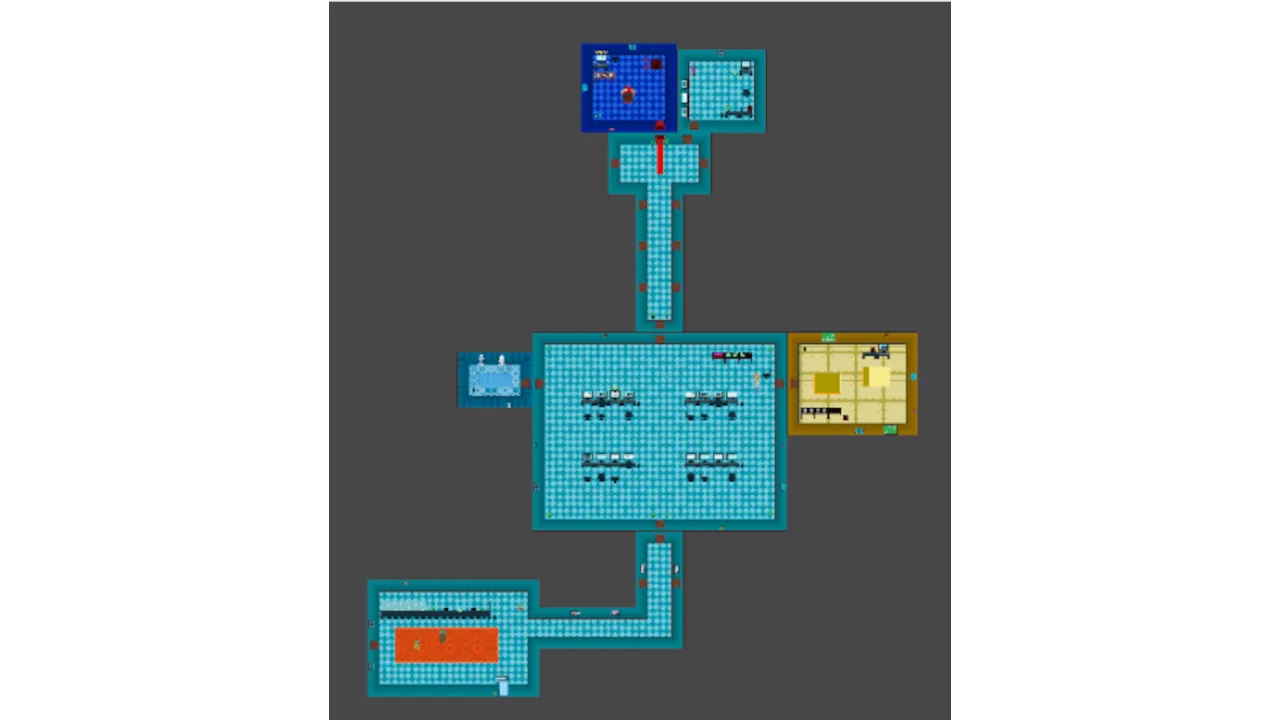
The full map
![Data Guida (2022) — Animation of the character Guida]()
Data Guida (2022)
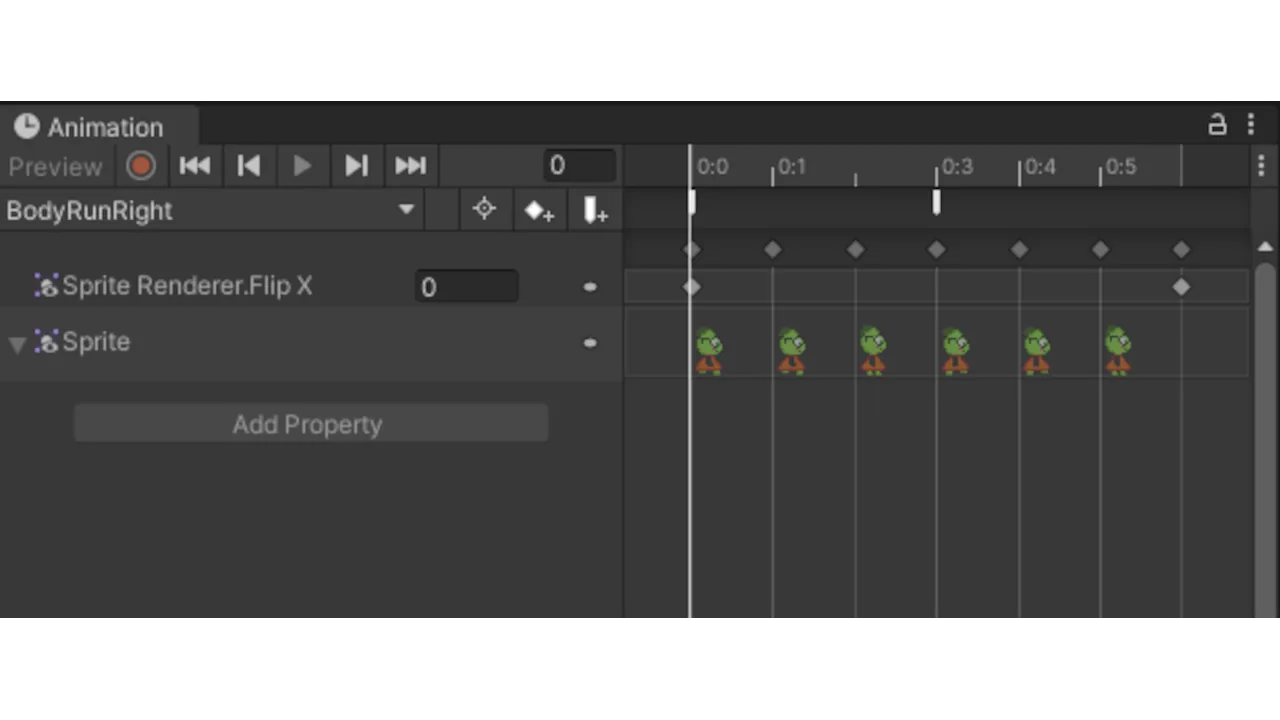
Animation of the character Guida
![Data Guida (2022) — Diagram of the interaction between objects]()
Data Guida (2022)
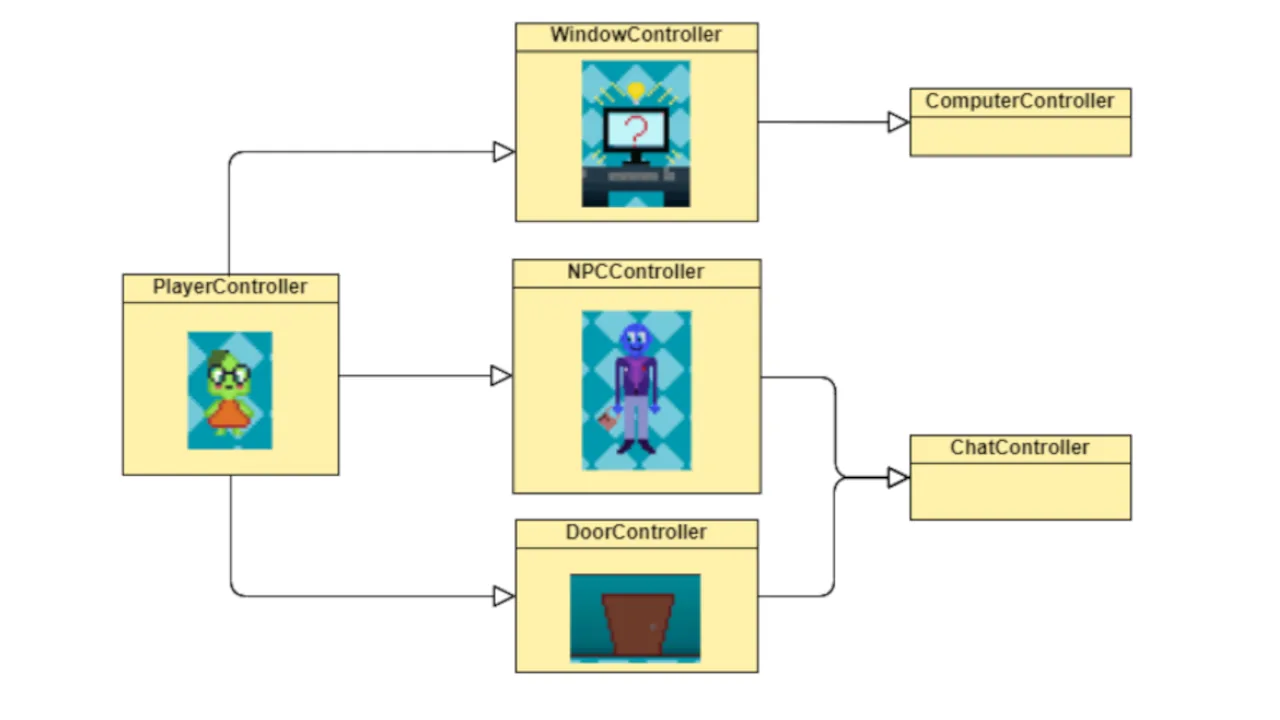
Diagram of the interaction between objects
-
Carpilator (2022)
Final paper (PDF, in Portuguese) Download for WindowsGameplay:
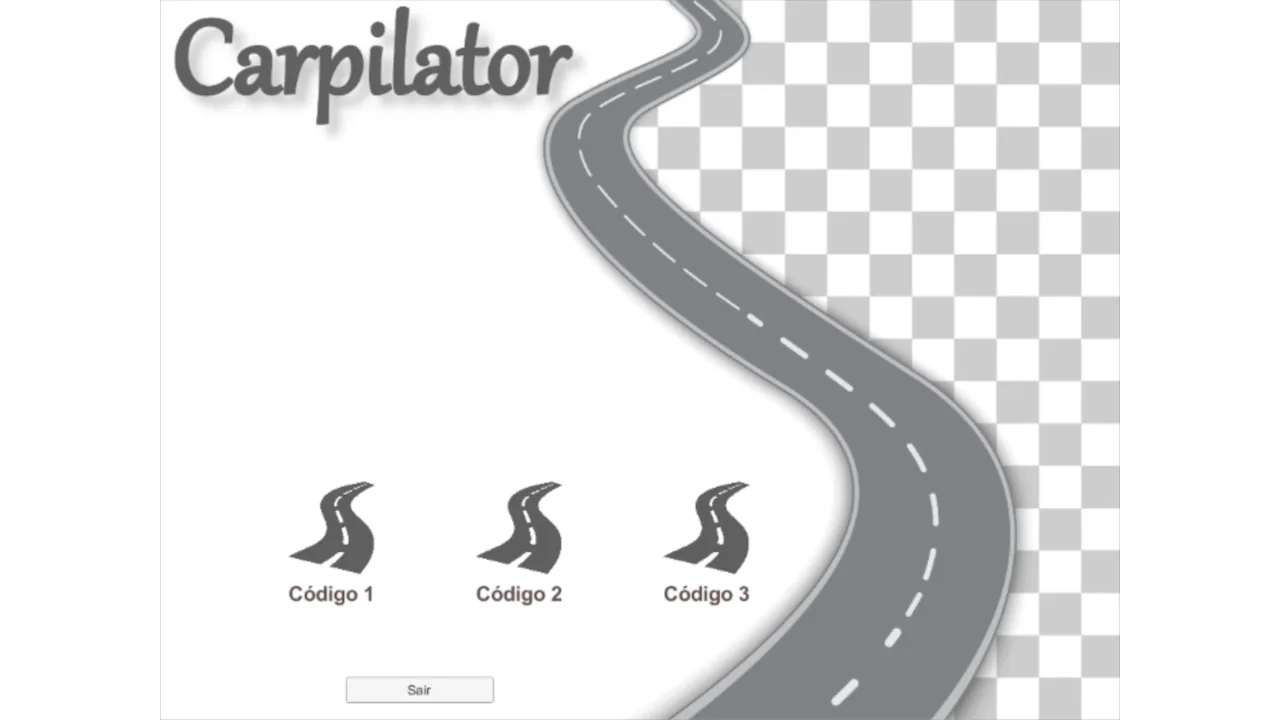
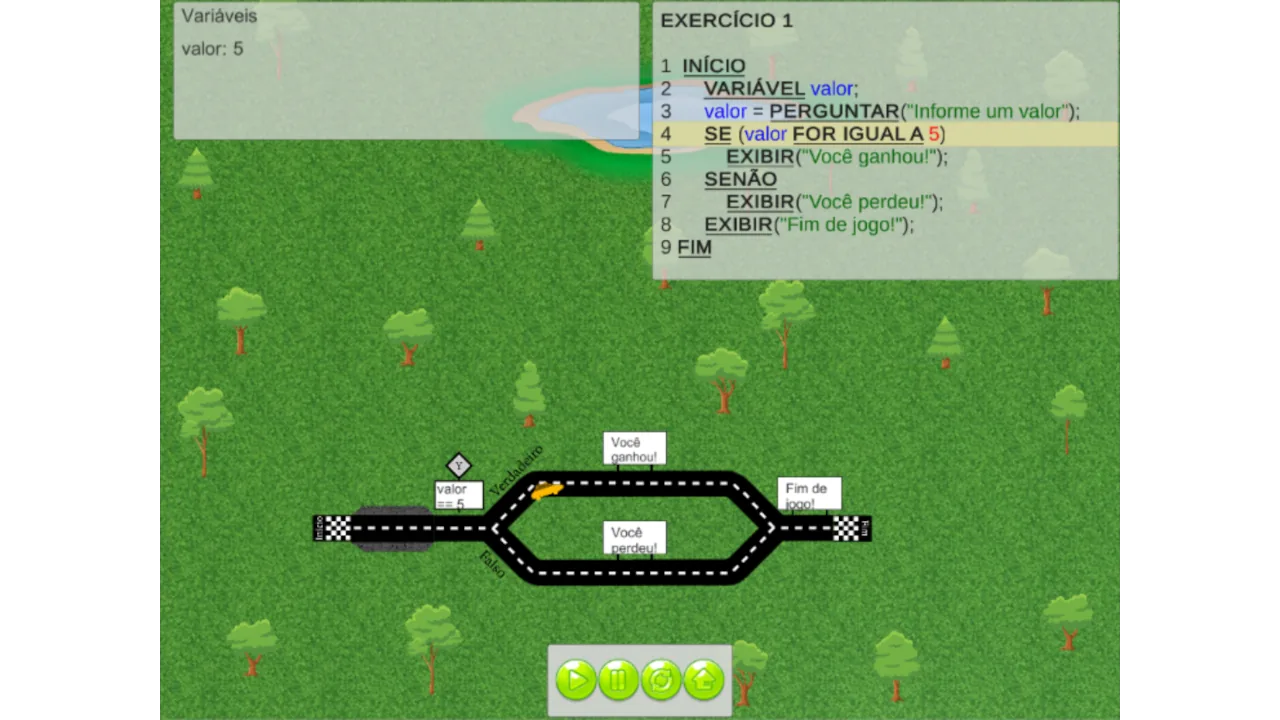
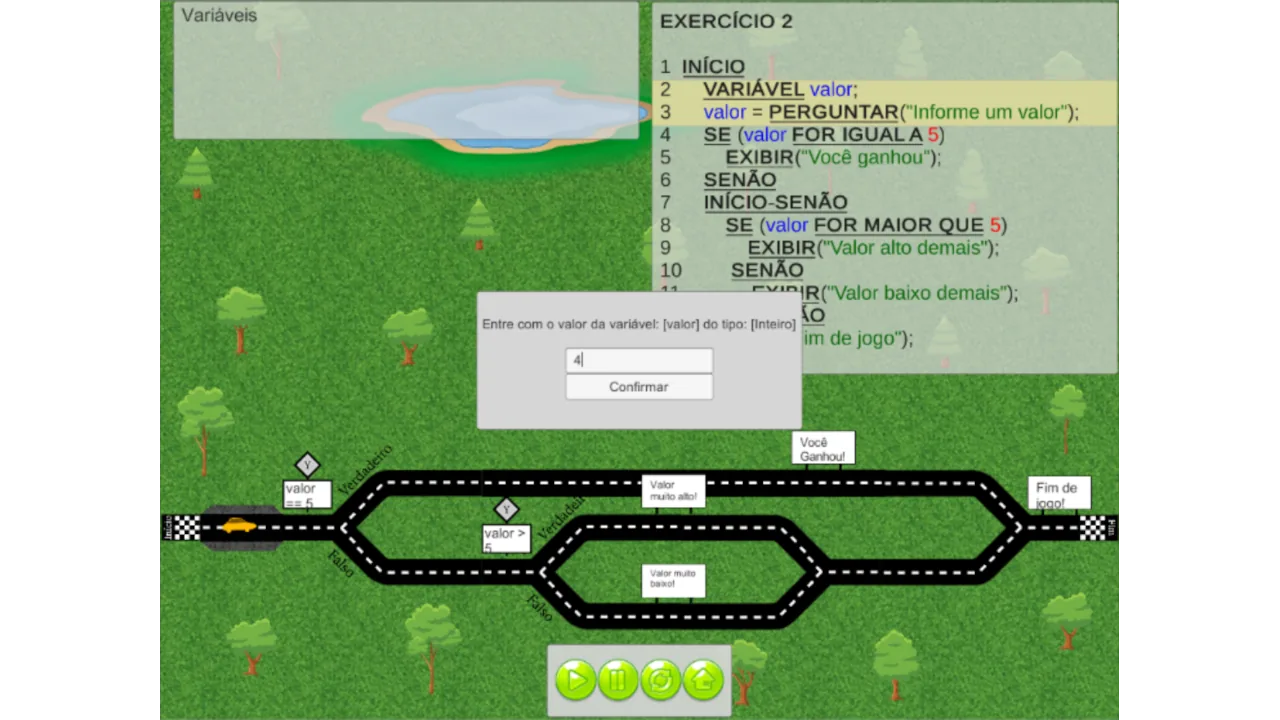
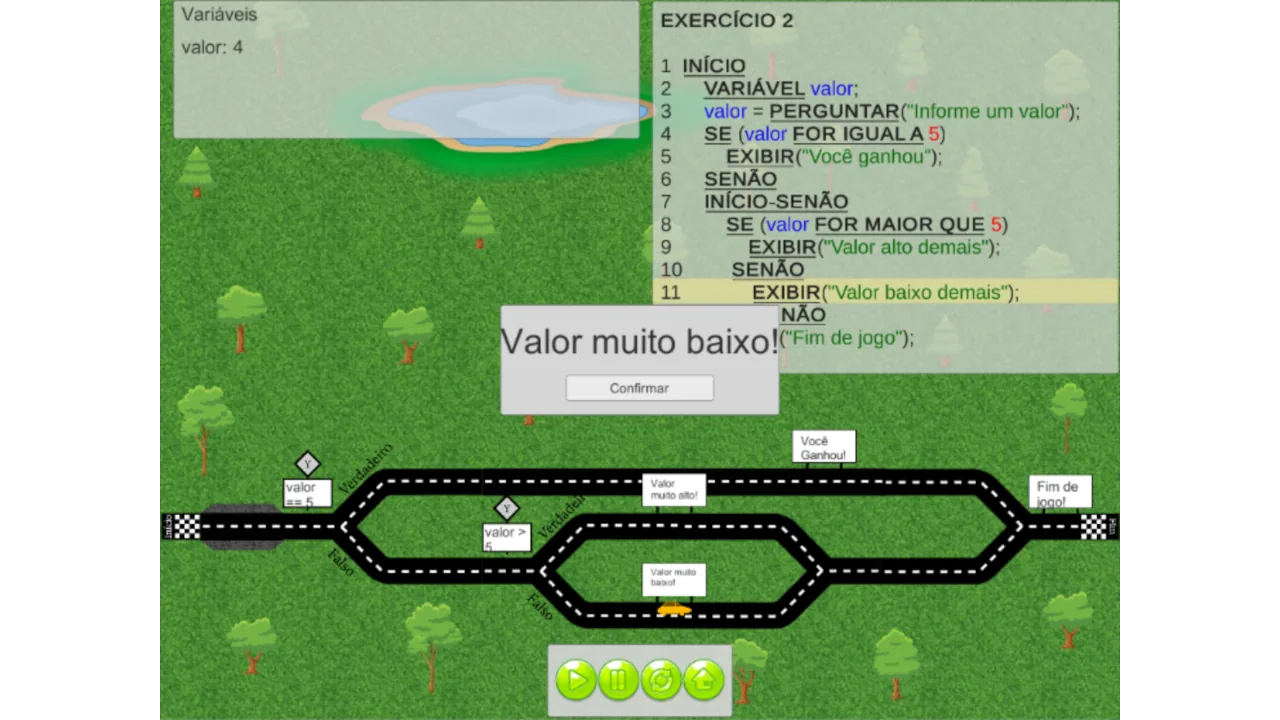
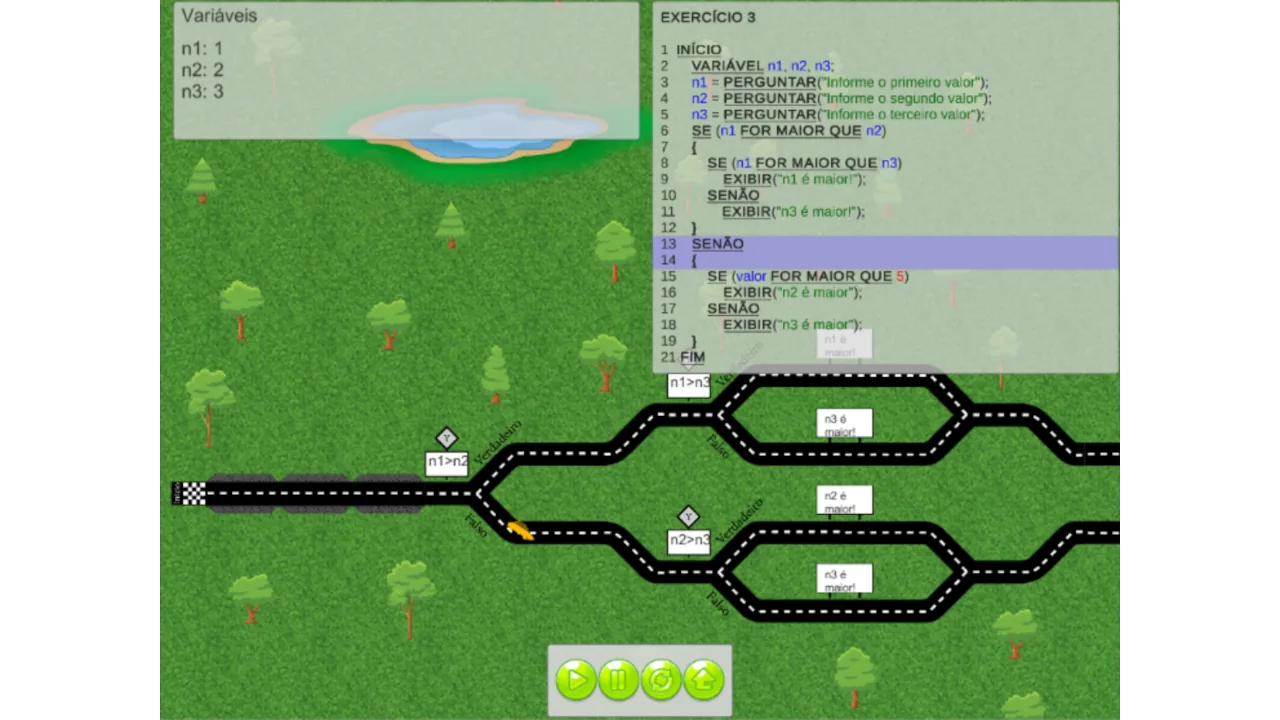
An educational game about logic and the simulated execution of code, in which the player watches the behaviour of basic programming constructs through a car driving along a road laid out as the flow of an algorithm. There are two main modes: in user-only mode the player has to work out which inputs are needed for the program to reach the expected result; in code mode the player has to write code that produces a scene equivalent to the one the level shows. While the program runs, elements of the scenery stand for commands and constructs — forks for conditionals, roundabouts for loops, laybys for reading data and road signs for displaying information — so the student can see the logical chaining of the program concretely. Gameplay therefore combines reading code, problem solving, feeding in data and watching the algorithm flow graphically, aiming to make introductory programming concepts easier to grasp.
![Carpilator (2022) — Title and stage selection screen]()
Carpilator (2022)
Title and stage selection screen
![Carpilator (2022) — First stage, showing the IF conditional]()
Carpilator (2022)
First stage, showing the IF conditional
![Carpilator (2022) — Second stage, showing the instruction that reads a variable]()
Carpilator (2022)
Second stage, showing the instruction that reads a variable
![Carpilator (2022) — Second stage, showing the output instruction]()
Carpilator (2022)
Second stage, showing the output instruction
![Carpilator (2022) — Third stage, showing the ELSE construct]()
Carpilator (2022)
Third stage, showing the ELSE construct
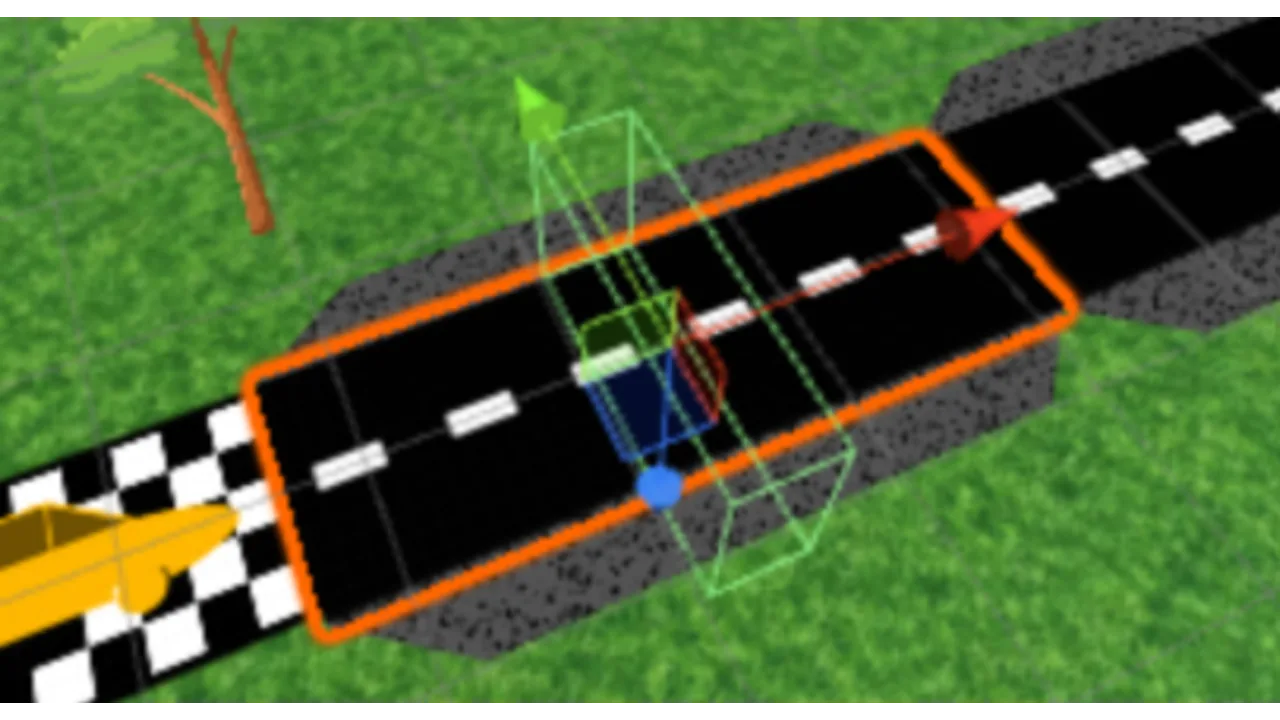
![Carpilator (2022) — Inside Unity, showing the trigger for the instruction that reads a variable]()
Carpilator (2022)
Inside Unity, showing the trigger for the instruction that reads a variable
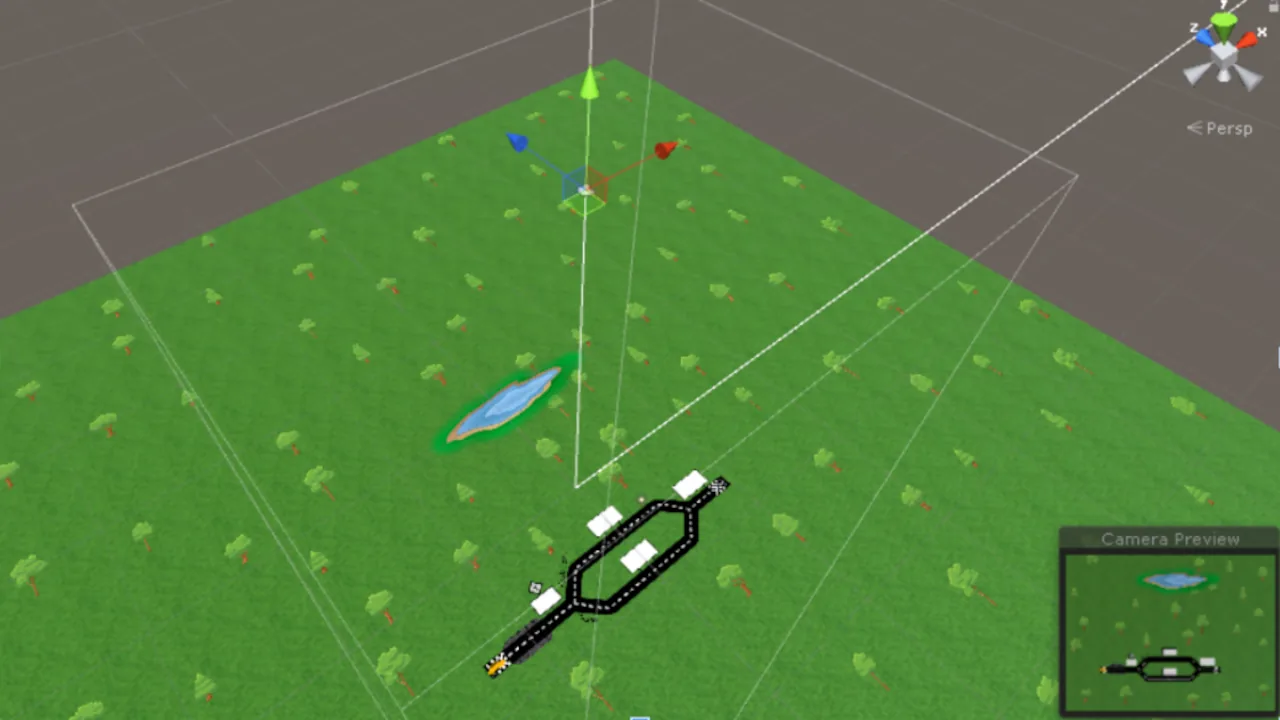
![Carpilator (2022) — Inside Unity, showing the scenery and the placement of the orthographic camera]()
Carpilator (2022)
Inside Unity, showing the scenery and the placement of the orthographic camera
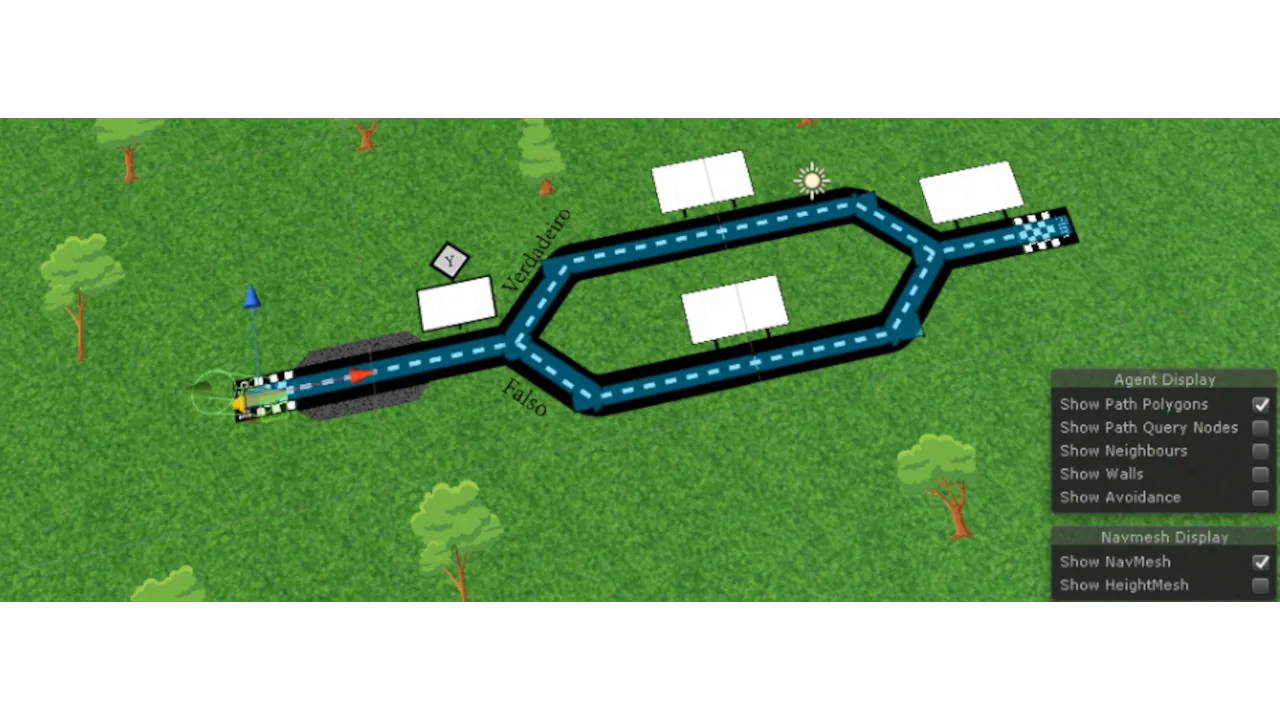
![Carpilator (2022) — Inside Unity, showing the NavMesh used by the car]()
Carpilator (2022)
Inside Unity, showing the NavMesh used by the car
-
VaporR (2021)
Final paper (PDF, in Portuguese) Download for Windows Download for AndroidGameplay:
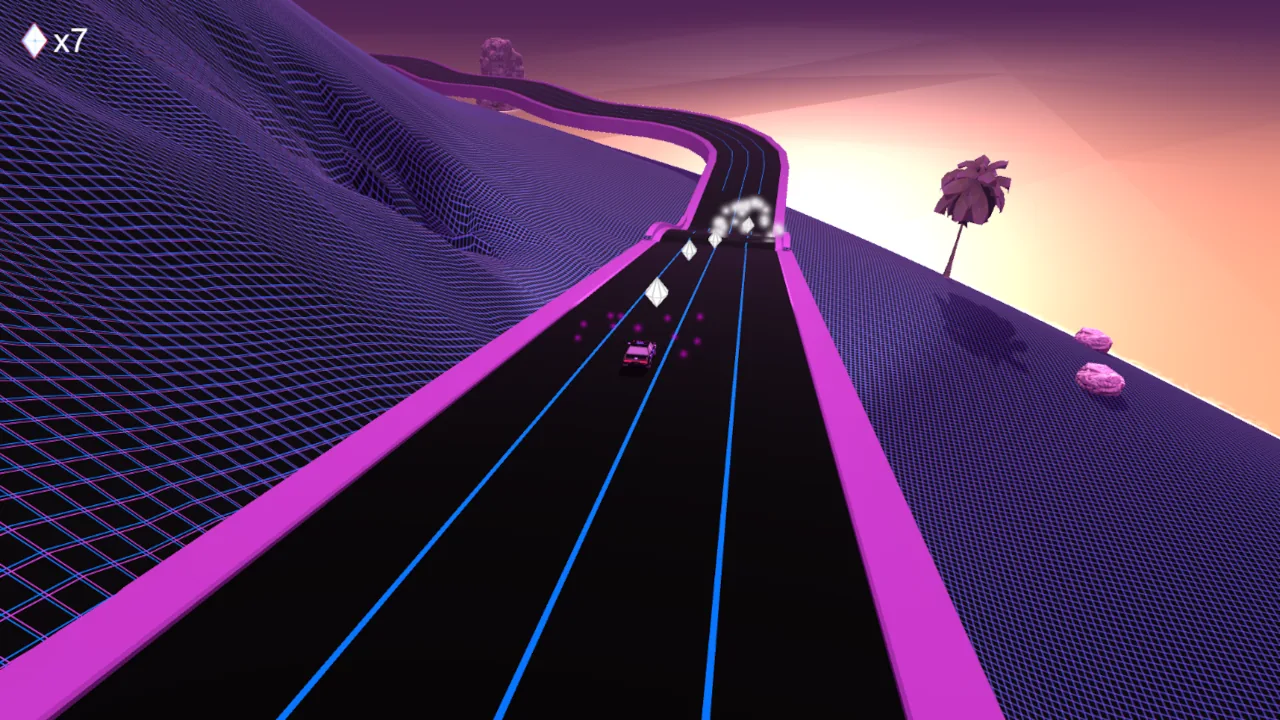
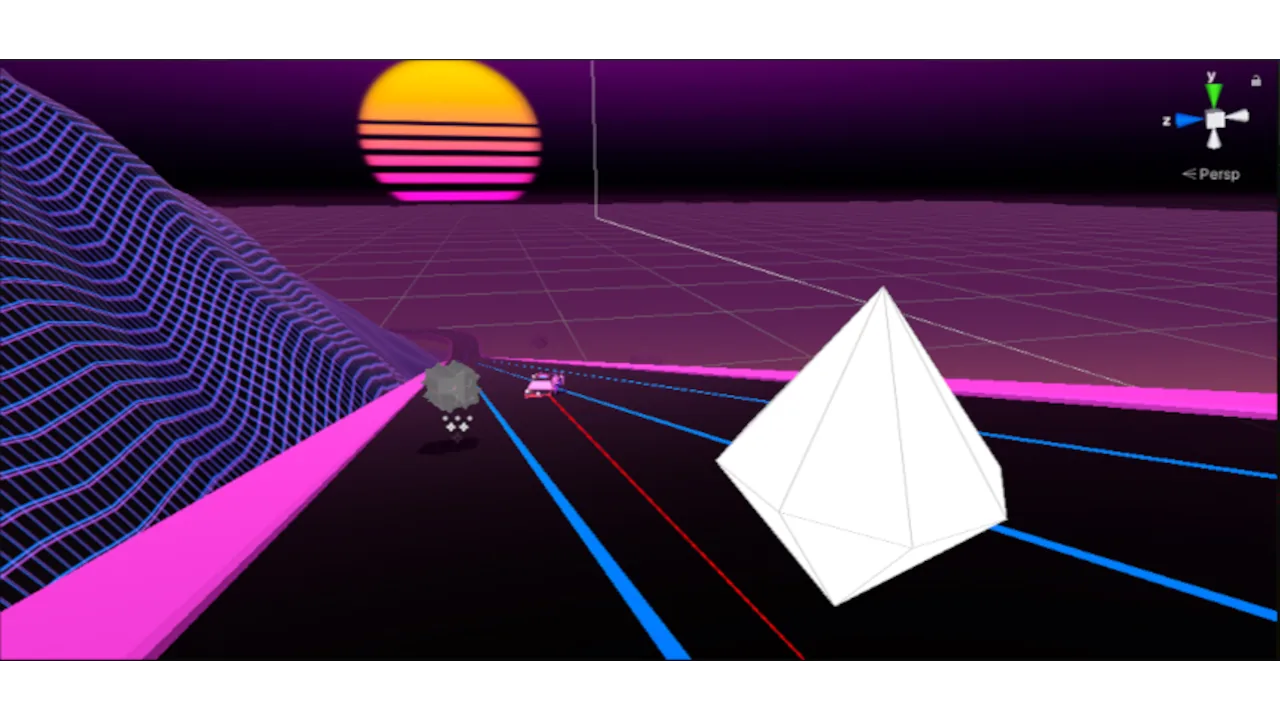
A rhythm game with track-driving elements, in which the player steers a vehicle through a 3D scene split into four lanes, moving sideways to collect points and dodge obstacles along the way. The run progresses in sync with the background music, since the interactive elements of the track are generated from real-time analysis of the sound spectrum, including beat detection and changes in pitch. The experience therefore combines reflexes, a sense of rhythm and motor coordination, as the player follows the flow of the music in a continuous loop of scoring and avoiding collisions.
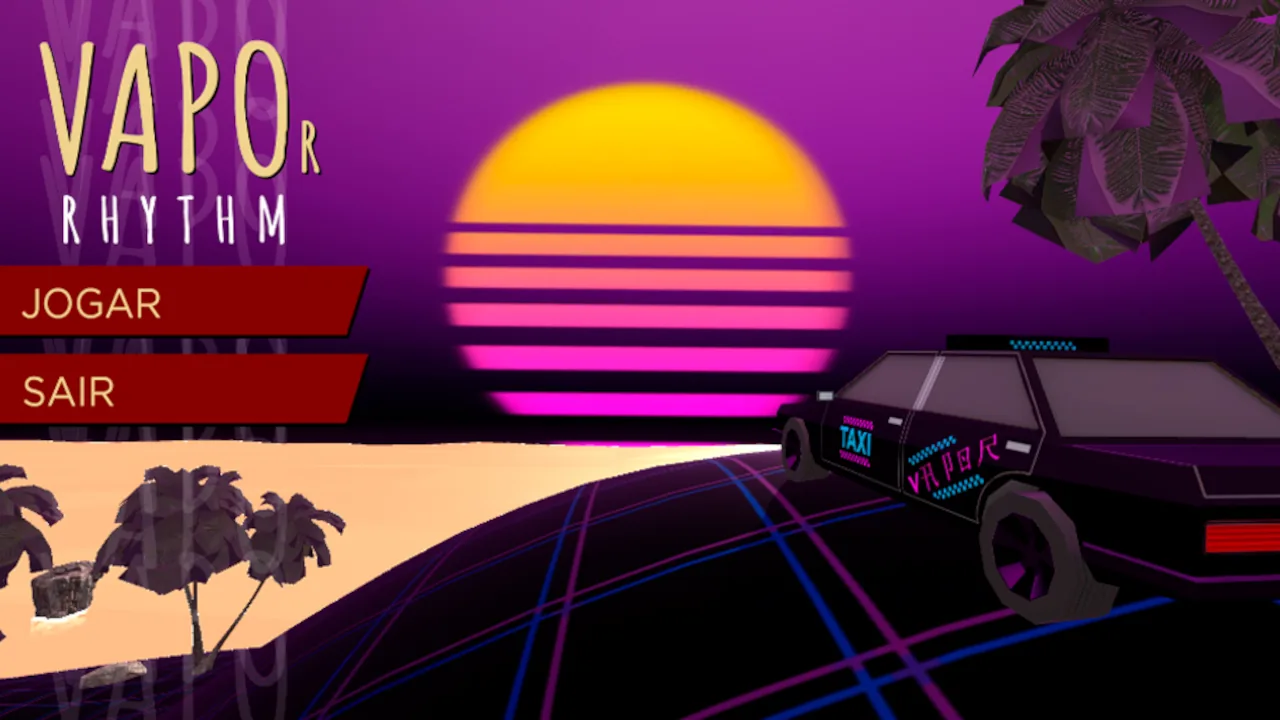
![VaporR (2021) — Title screen]()
VaporR (2021)
Title screen
![VaporR (2021) — Overview of the track and the items]()
VaporR (2021)
Overview of the track and the items
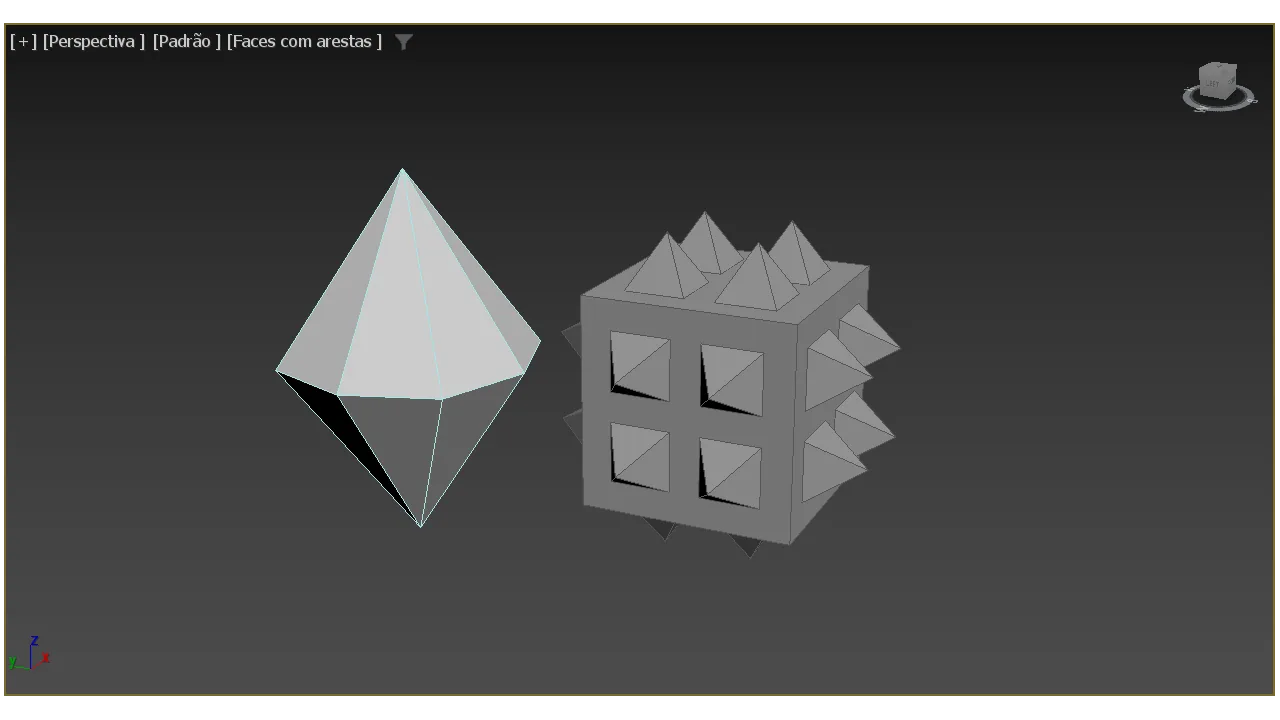
![VaporR (2021) — Wireframe of the scoring items and the obstacles]()
VaporR (2021)
Wireframe of the scoring items and the obstacles
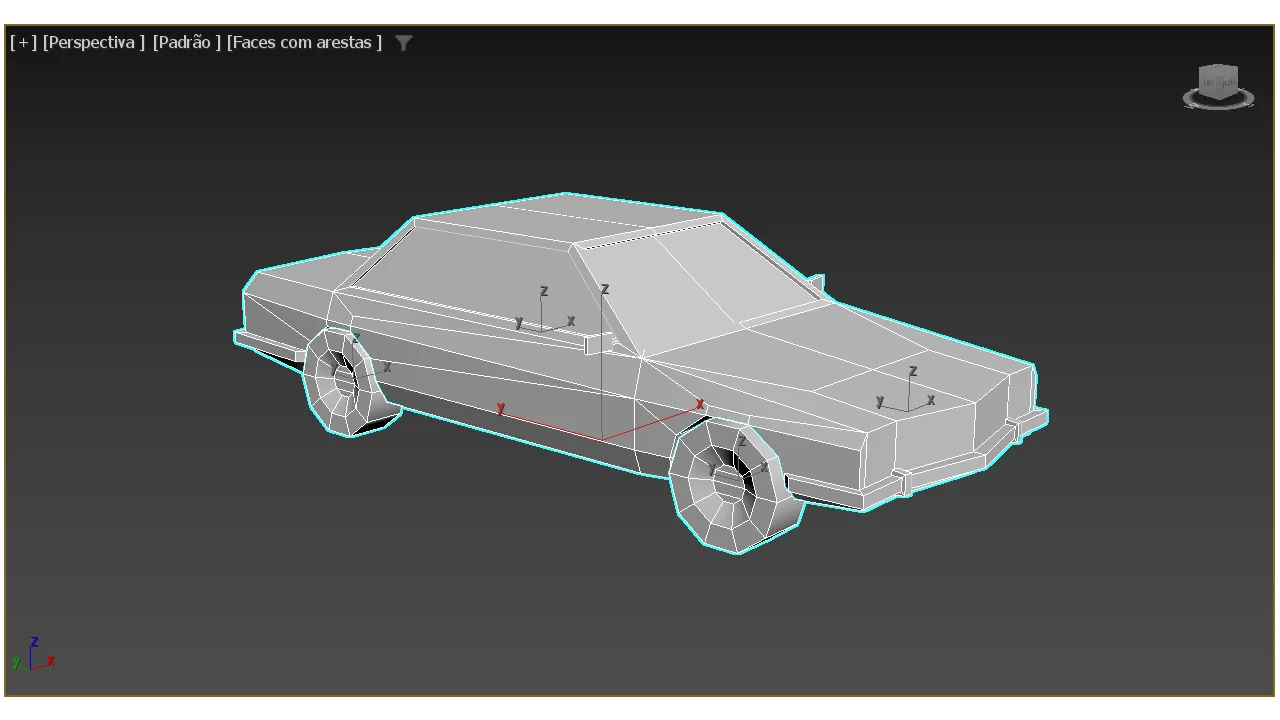
![VaporR (2021) — Wireframe of the car model]()
VaporR (2021)
Wireframe of the car model
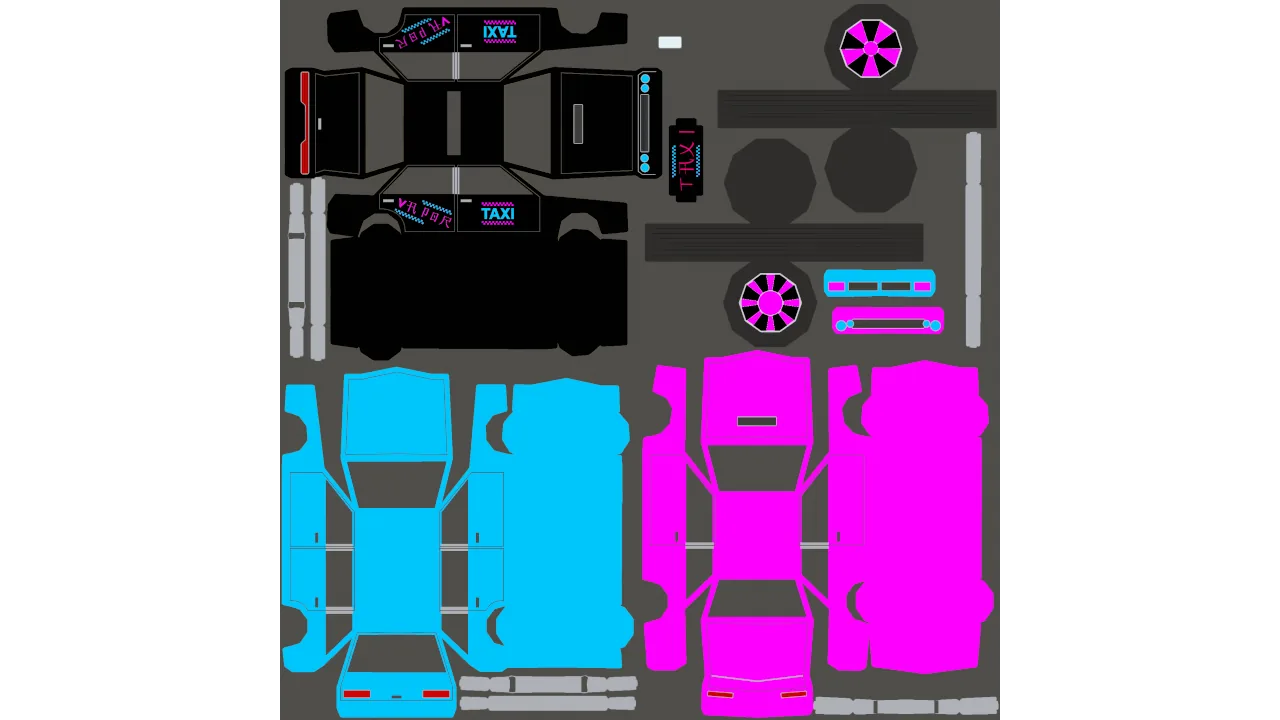
![VaporR (2021) — Albedo texture of the car]()
VaporR (2021)
Albedo texture of the car
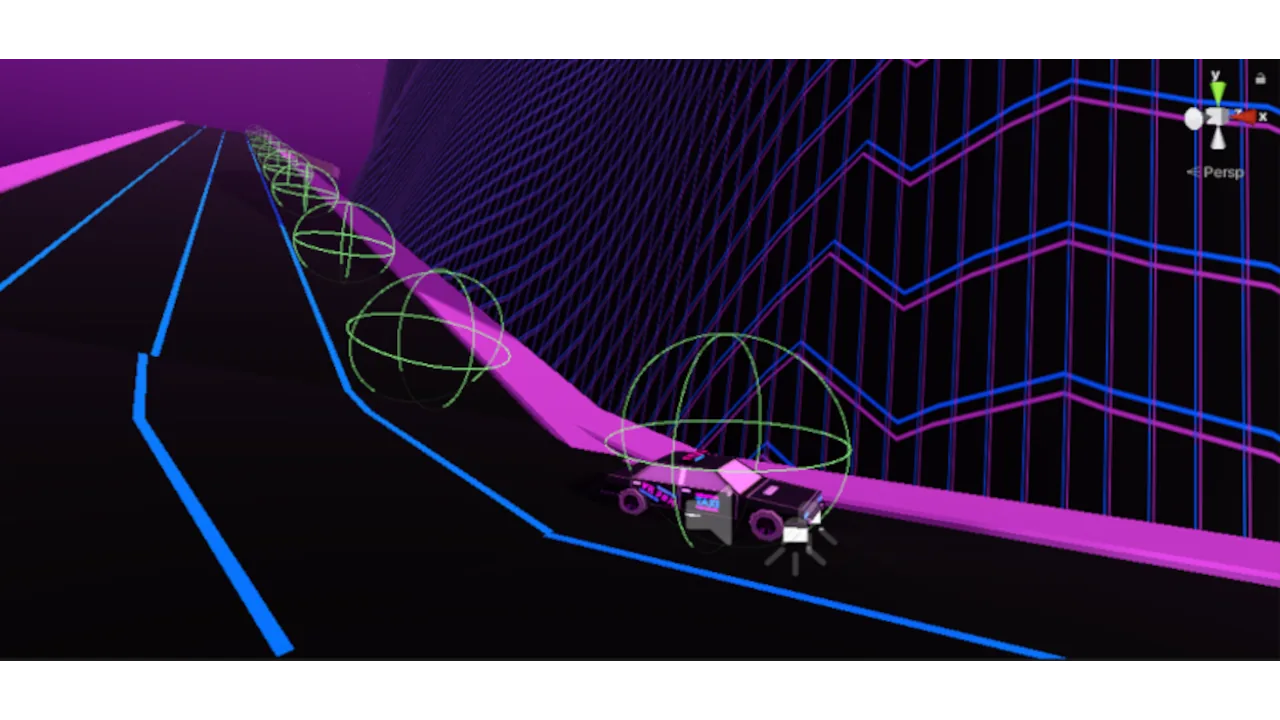
![VaporR (2021) — Inside Unity, at the points where the car can move]()
VaporR (2021)
Inside Unity, at the points where the car can move
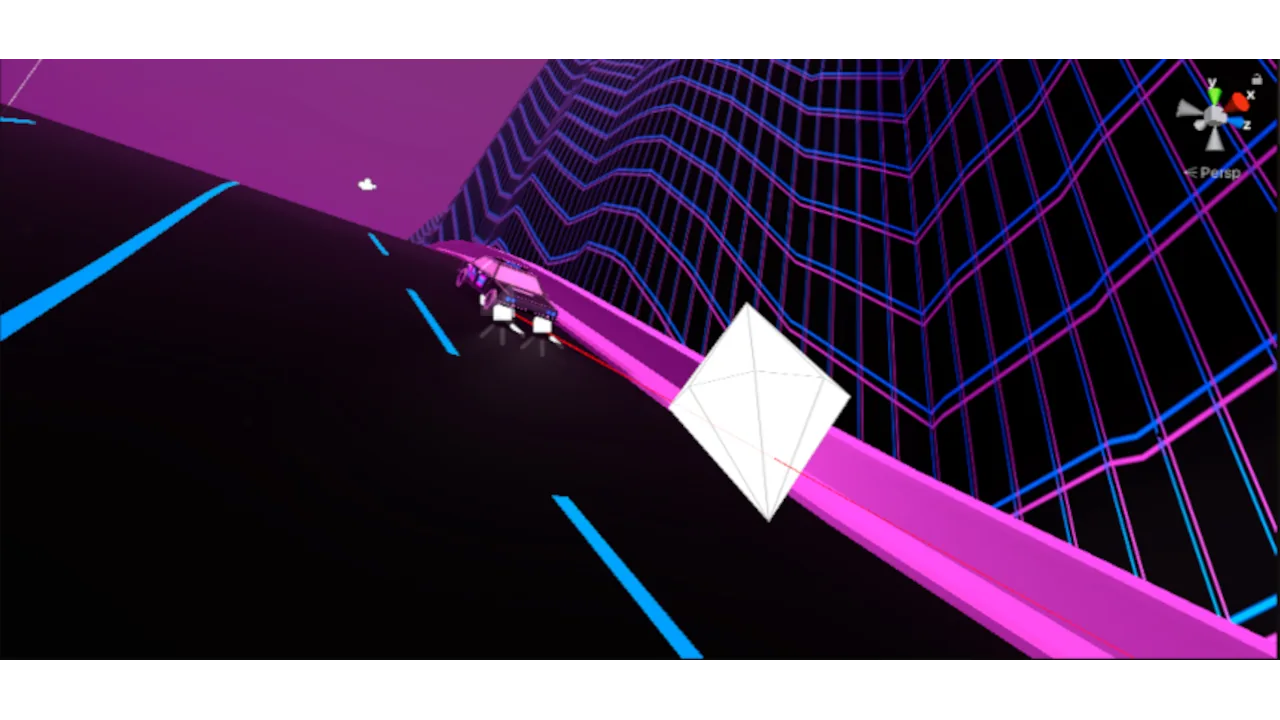
![VaporR (2021) — Inside Unity, showing the camera and a successful movement item]()
VaporR (2021)
Inside Unity, showing the camera and a successful movement item
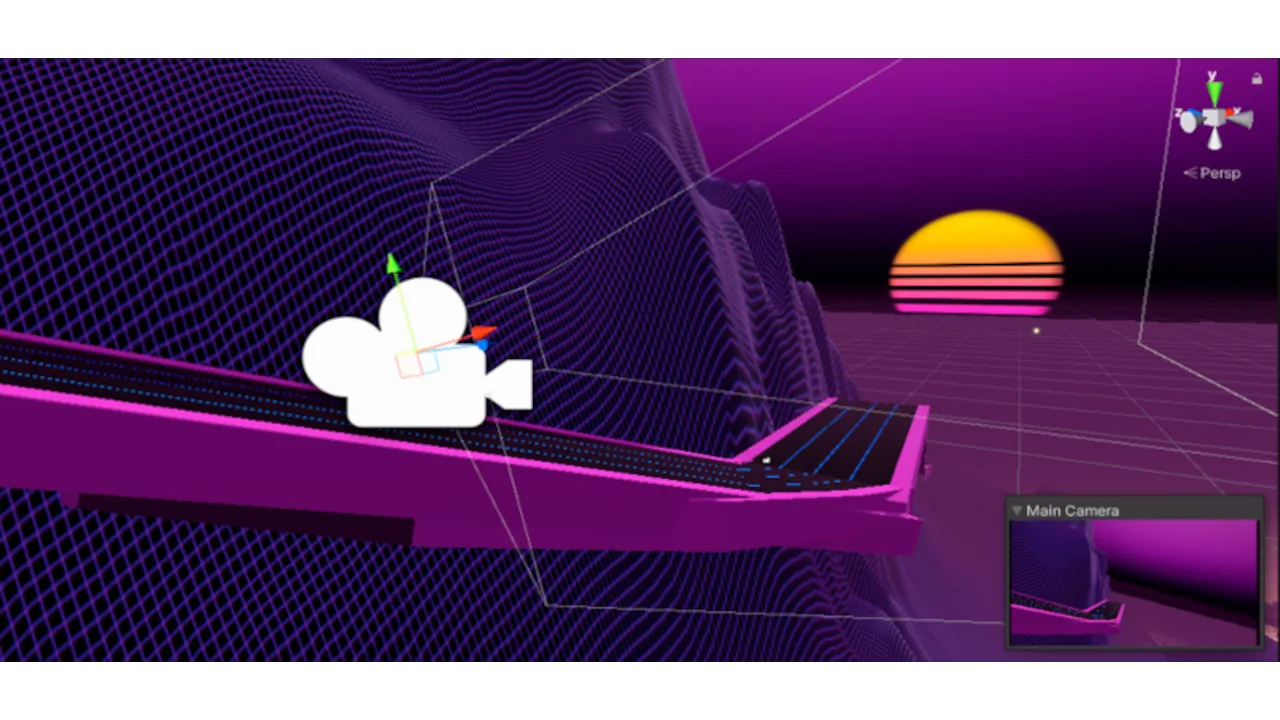
![VaporR (2021) — Inside Unity, with the sunset highlighted]()
VaporR (2021)
Inside Unity, with the sunset highlighted
![VaporR (2021) — Inside Unity, with the scoring items and the obstacles highlighted]()
VaporR (2021)
Inside Unity, with the scoring items and the obstacles highlighted
-
Laboratório Curie (2018)
Final paper (PDF, in Portuguese) Download for Windows Download for AndroidGameplay:
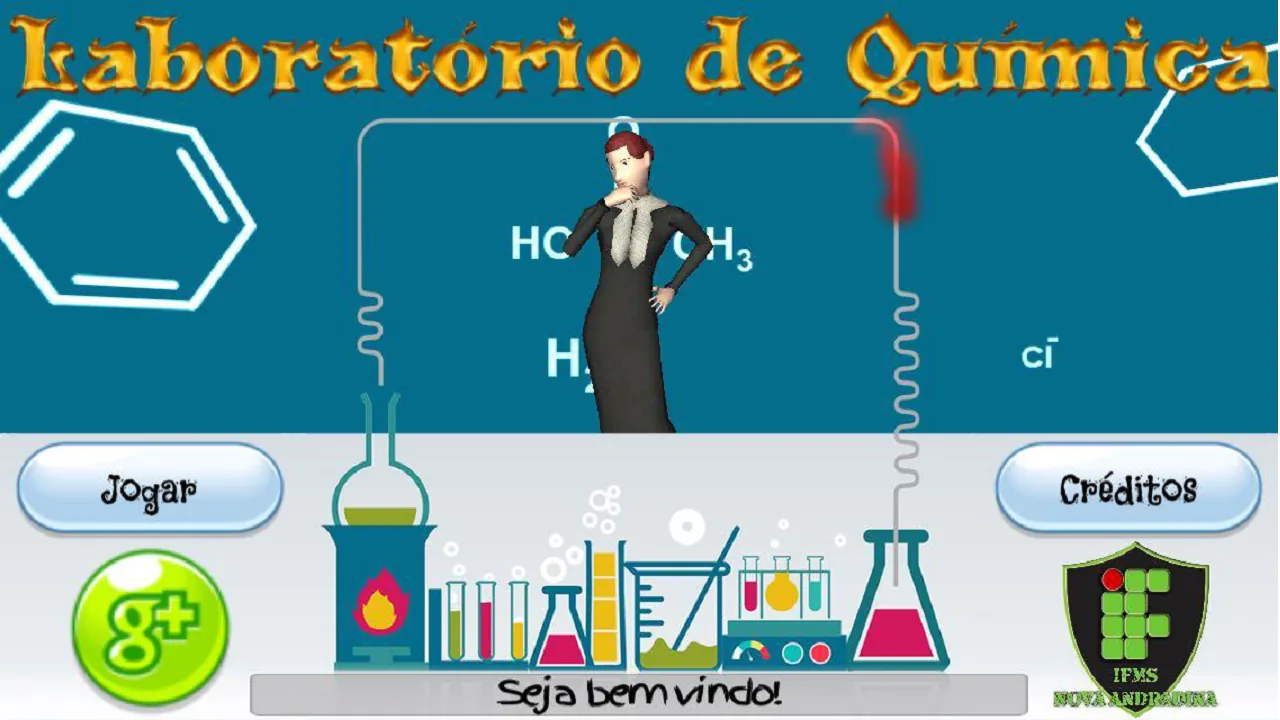
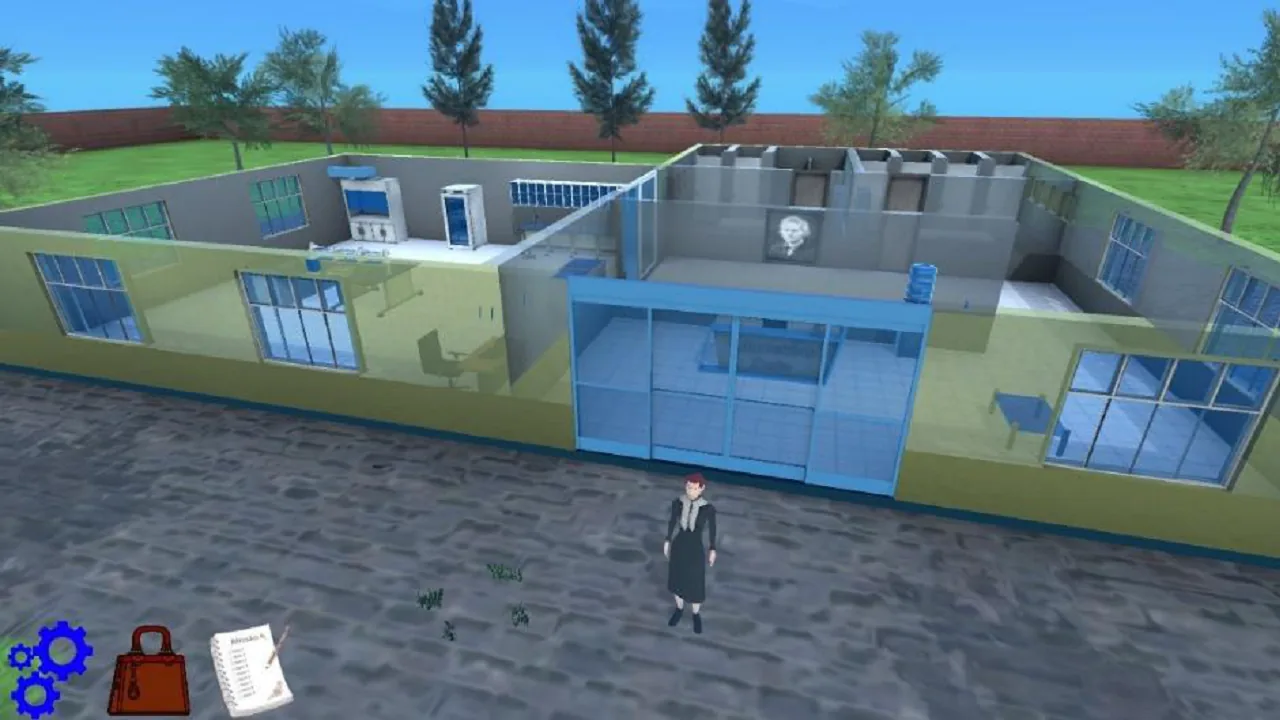
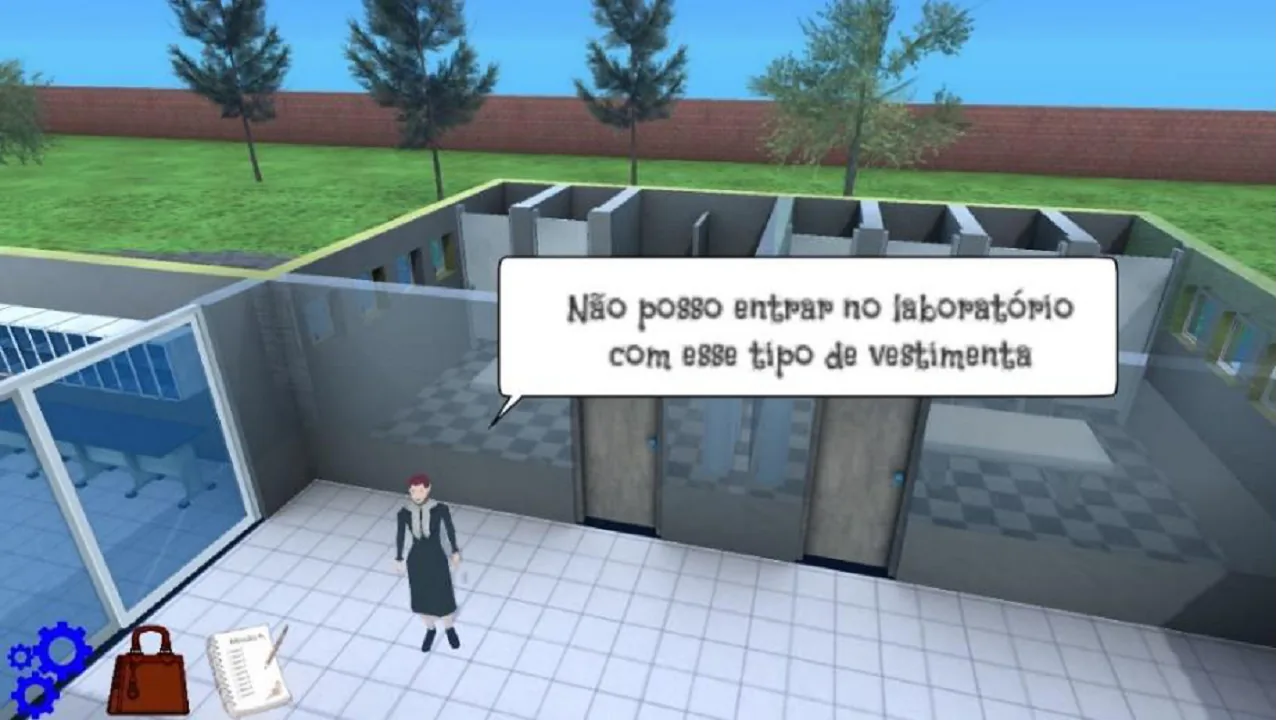
An educational game about exploring and interacting in a 3D environment, in which the player controls Marie Curie inside a chemistry laboratory, in isometric perspective and with touch controls. The main loop involves moving the character around the scene, approaching objects, collecting and using items and managing an inventory, virtually simulating actions tied to laboratory practice. The project also covers creating new items by combining existing ones, and levels about the correct use of safety equipment, so that progression is tied to carrying out practical activities and learning the proper use of laboratory materials and instruments. Gameplay therefore combines spatial exploration, object handling, touch interaction and applied learning, seeking to reproduce the experience of a real laboratory in a playful and accessible way.
![Laboratório Curie (2018) — Title screen.]()
Laboratório Curie (2018)
Title screen.
![Laboratório Curie (2018) — The scene with the game’s laboratory and the modelled 3D items.]()
Laboratório Curie (2018)
The scene with the game’s laboratory and the modelled 3D items.
![Laboratório Curie (2018) — The character’s dialogue box.]()
Laboratório Curie (2018)
The character’s dialogue box.
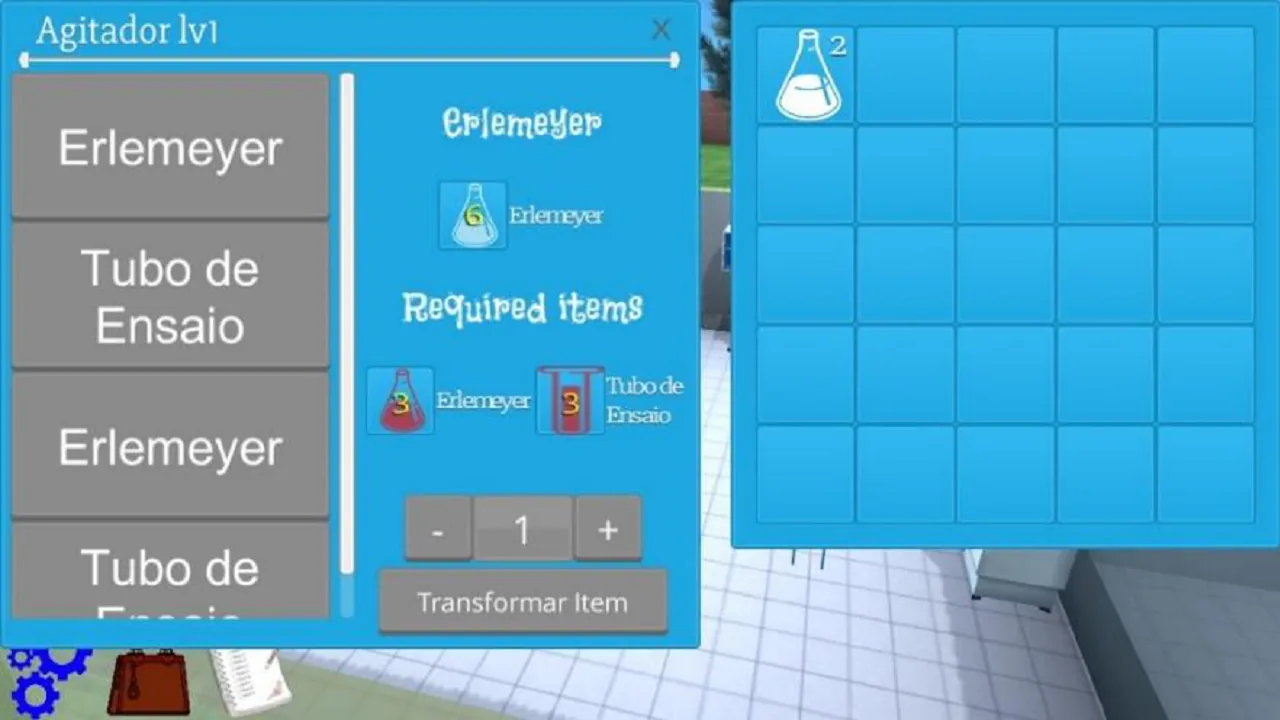
![Laboratório Curie (2018) — Interface of the stirrer, where some transformations can be carried out.]()
Laboratório Curie (2018)
Interface of the stirrer, where some transformations can be carried out.
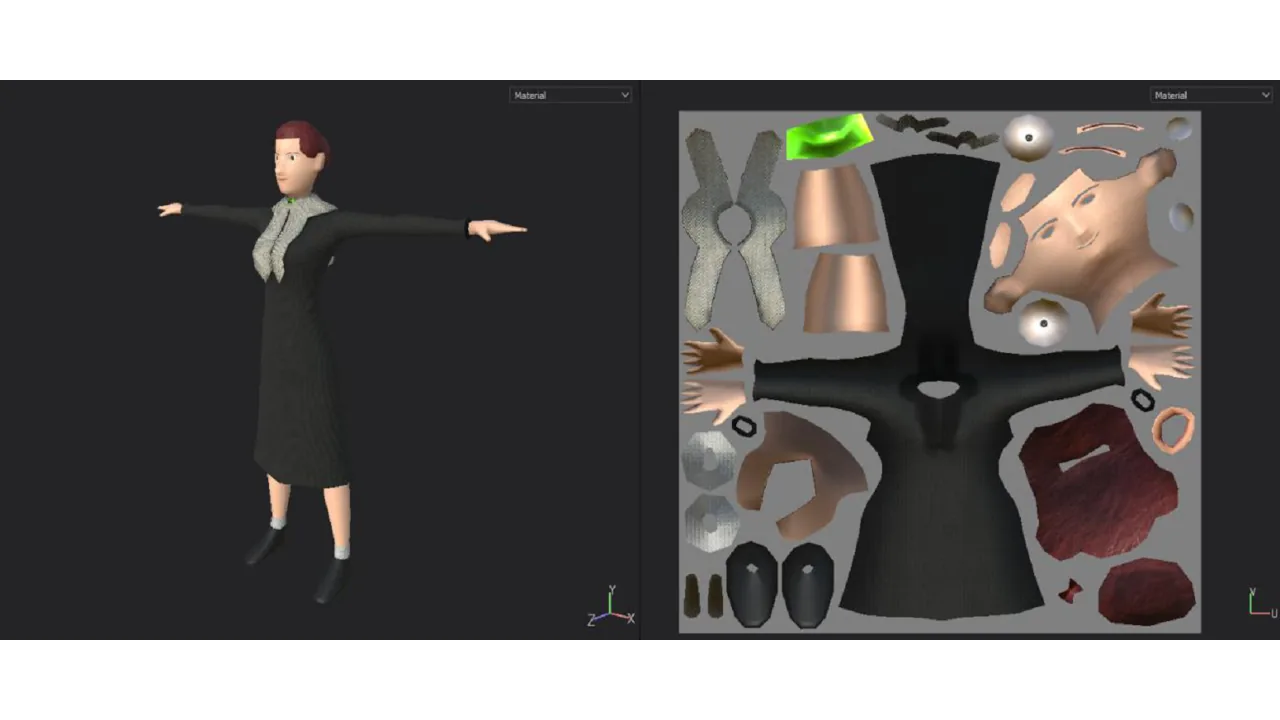
![Laboratório Curie (2018) — An example of a UV map coloured in Adobe Substance]()
Laboratório Curie (2018)
An example of a UV map coloured in Adobe Substance
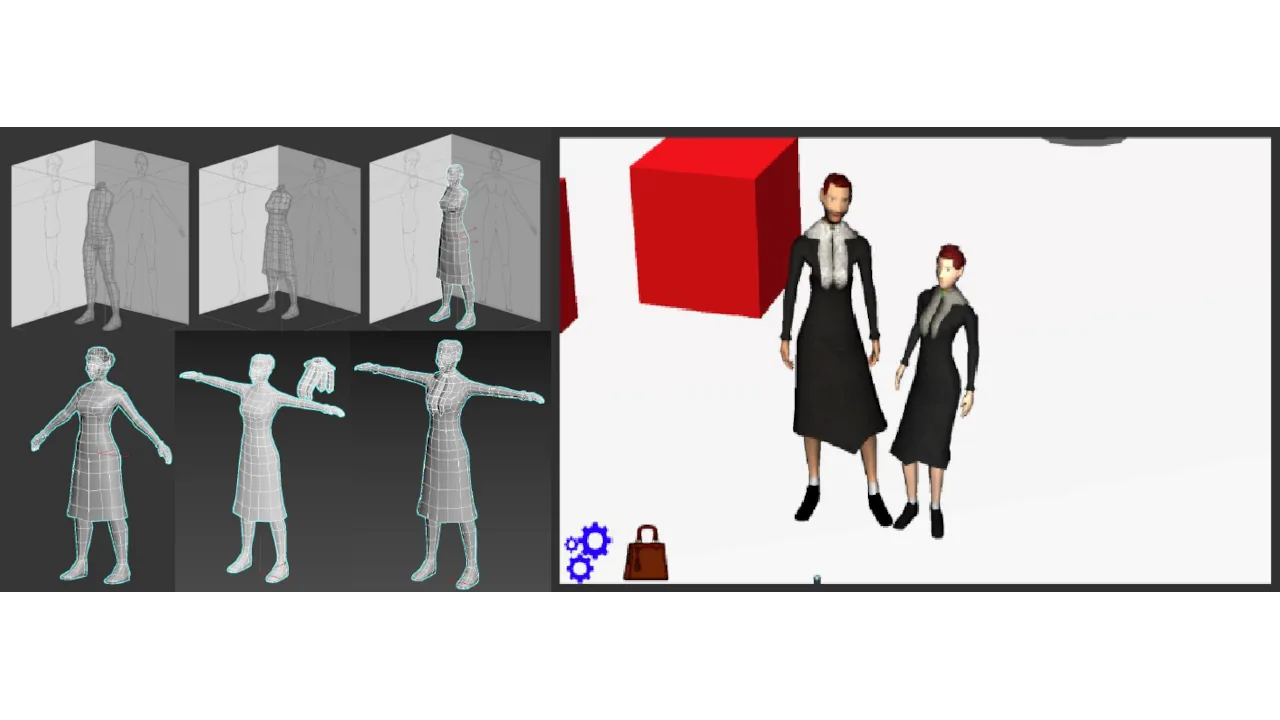
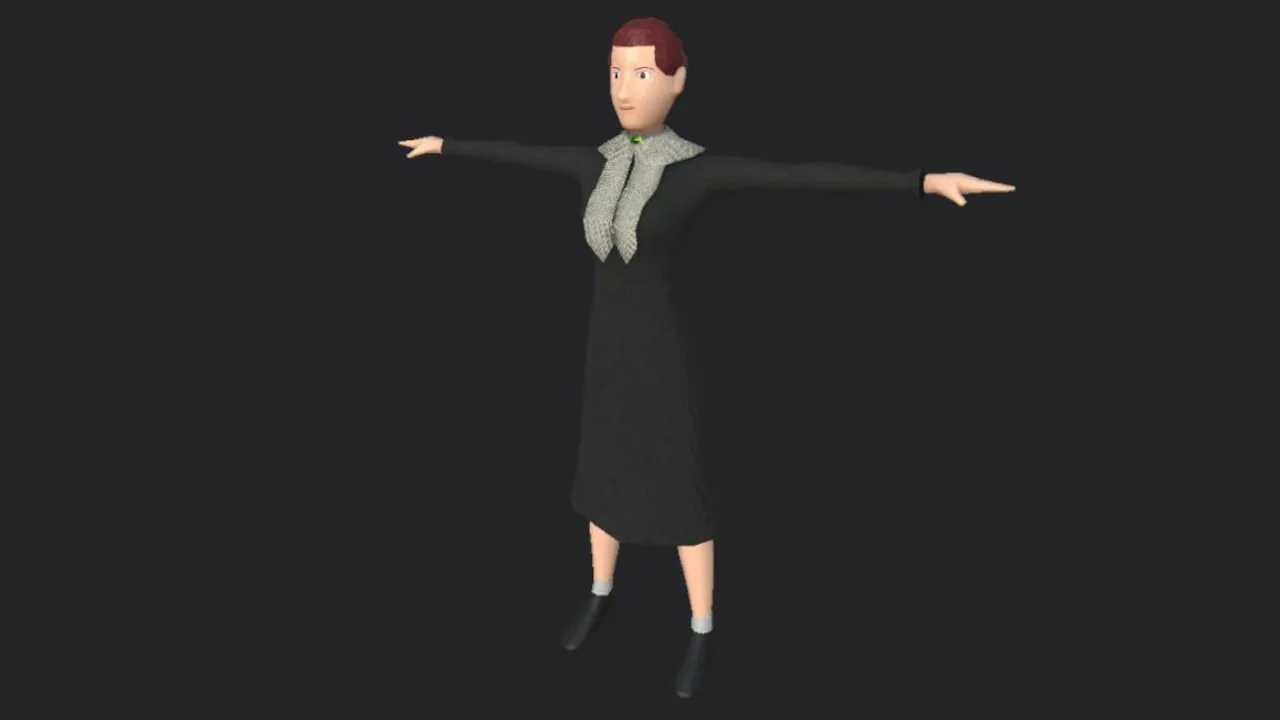
![Laboratório Curie (2018) — How the 3D model of the main character evolved.]()
Laboratório Curie (2018)
How the 3D model of the main character evolved.
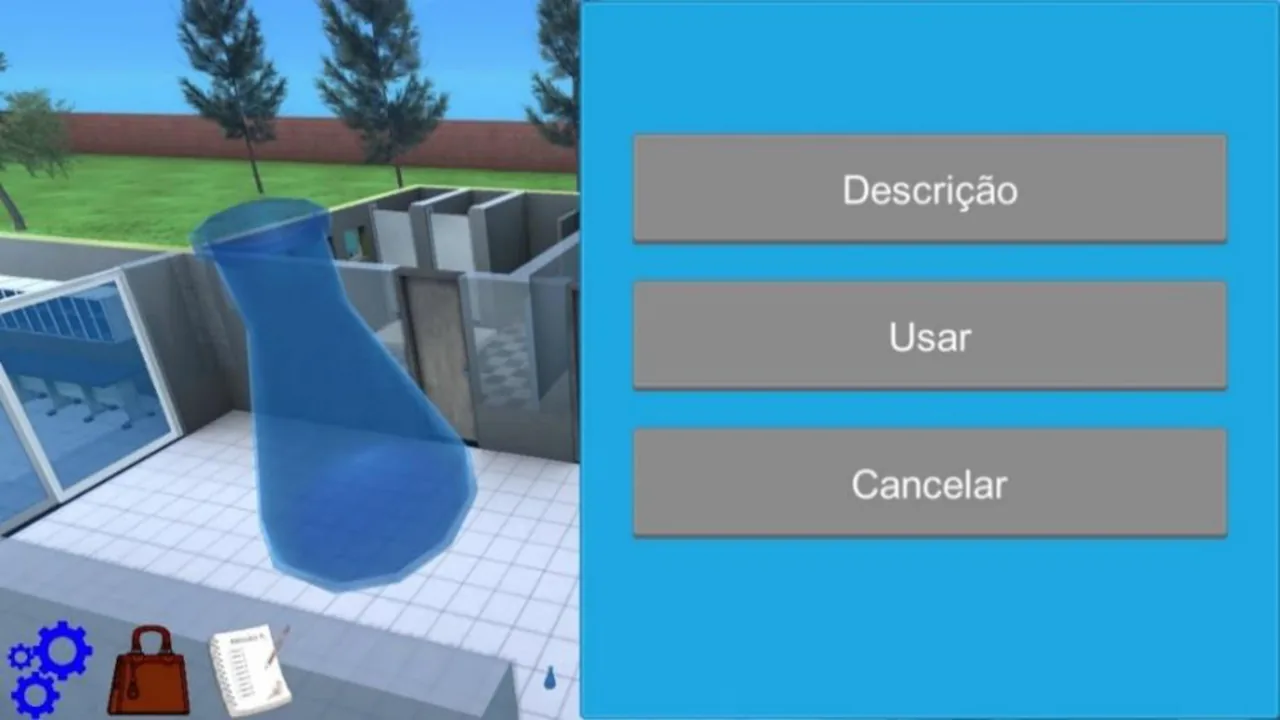
![Laboratório Curie (2018) — The interface with an object selected.]()
Laboratório Curie (2018)
The interface with an object selected.
![Laboratório Curie (2018) — The final Marie Curie model.]()
Laboratório Curie (2018)
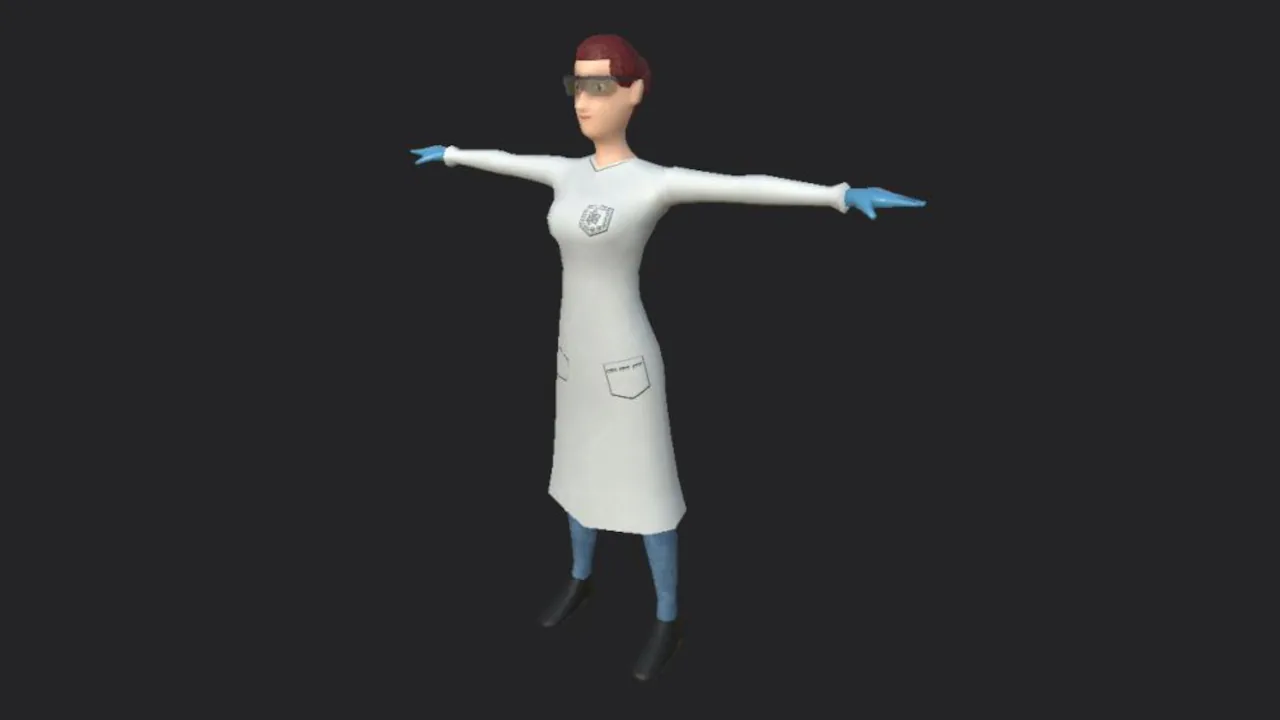
The final Marie Curie model.
![Laboratório Curie (2018) — The final Marie Curie model wearing safety equipment.]()
Laboratório Curie (2018)
The final Marie Curie model wearing safety equipment.
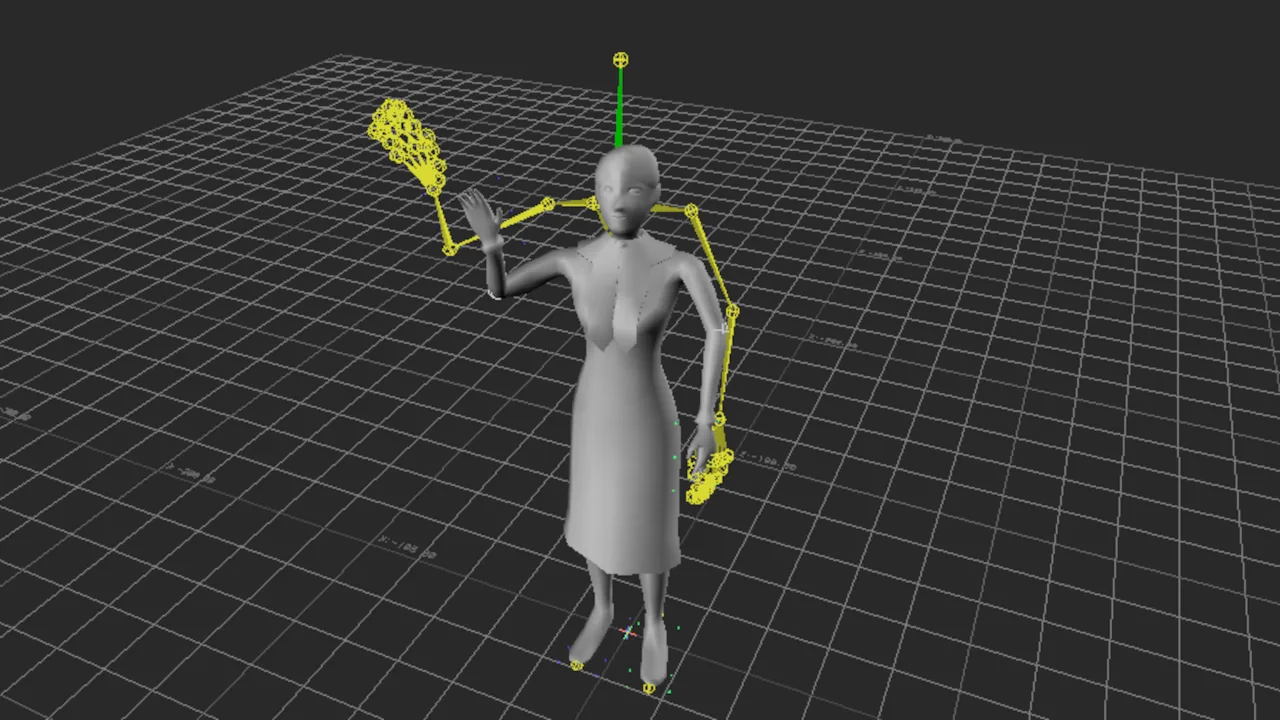
![Laboratório Curie (2018) — An example of the model animated in MotionBuilder.]()
Laboratório Curie (2018)
An example of the model animated in MotionBuilder.